
Loading buyer guide
Hurry, don't miss savings on selected furniture & more.* Shop all offers
A comparison-led look at surveillance cameras with spotlights, low-light features and higher-resolution video, including how to separate true camera options from doorbells, NVRs and mounting accessories.
Use our barcode scanner to match products instantly to find the best prices, find products with ease using our voice search and build wish lists and your favourites at the click of a button.
TP-Link Tapo vs Eufy security cameras: storage, specs and value
Tapo looks especially strong when you want low-cost indoor coverage or a specific spec such as pan-and-tilt or 4K solar, while Eufy can make sense if its storage approach and add-on camera format fit equipment you already own.
Ring vs Google nest security cameras: which ecosystem suits your home?
Ring and Google Nest are often compared by shoppers who already own smart speakers, displays or doorbells. The better choice is usually the one that fits your existing home setup, gives you the camera style you need and keeps ongoing costs predictable.
Security camera brands compared: Ring, Eufy, Reolink, Tapo and Blink
Ring, Eufy, Reolink, Tapo and Blink all sit in the same broad Surveillance Cameras market, but they are not interchangeable buys. The right choice depends on whether you value a doorbell-led setup, battery convenience, higher-resolution outdoor coverage, lower entry cost, local recording options or the best offer available today.
Blink vs Tapo security cameras: best for budget buyers
Blink and Tapo both appeal to shoppers who want home security without overspending, but they suit different buying habits. Blink is often attractive if you want simple wire-free cameras and an Amazon-connected setup, while Tapo is especially strong when you are comparing low-cost indoor cameras, mains-powered options and models with flexible storage choices.
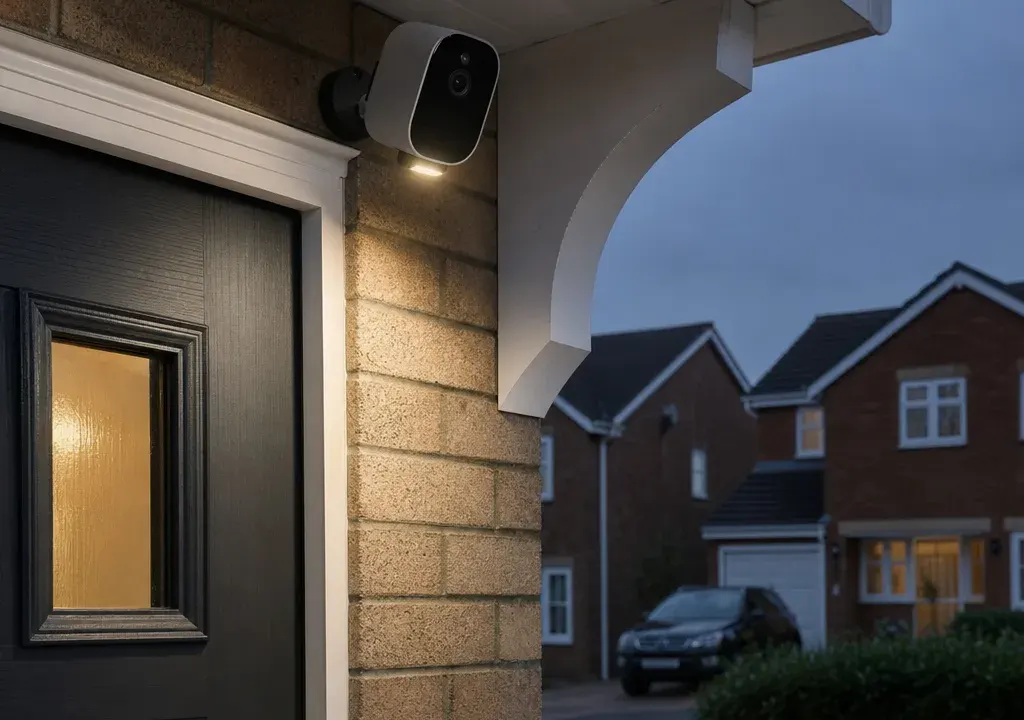
Colour night vision sounds like an obvious upgrade, but the best choice depends on where the camera will be fitted and what you need to recognise in the footage. A driveway, side passage, garden office and indoor hallway all create different lighting challenges.
When comparing Surveillance Cameras, focus on the features that change the buying decision: whether the camera offers colour night viewing, whether it uses a spotlight or low-light processing, the video resolution, the field of view, the power source and whether it is designed for outdoor use. Live retailer prices and offers should then help you decide which option gives the best value today.
Colour night vision is most useful when you need more context after dark, such as the colour of clothing, a vehicle or an object being carried. In some locations, a standard infrared night mode may be enough, especially if you only need to see movement or general activity.
If the area is very dark, look for cameras described with a spotlight, floodlight, low-light capability or colour night vision. A spotlight camera can help illuminate the scene, but it may also be more visible to neighbours and passers-by. That can be a benefit if you want deterrence, but it may not suit discreet monitoring.
Among the supplied catalogue examples, the Ring Spotlight Cam Pro is clearly positioned around a spotlight-style design, while models such as the IMOU Bullet 3 3K and TP-Link Tapo C460 KIT 4K 8MP Solar Panel Security Camera suggest higher-resolution outdoor-style security use from their names. Before buying, check the live product details for the exact night vision wording, because similar-looking cameras can use different night modes.
Resolution matters because it affects how much detail you may see in recorded footage. A 1080p camera can be suitable for general monitoring, while 3K and 4K models are aimed at shoppers who want more image detail, particularly over a wider outdoor area.
The Ring Spotlight Cam Pro is listed with 1080p HDR video in the catalogue data, while the IMOU Bullet 3 3K and TP-Link Tapo C460 KIT 4K 8MP Solar Panel Security Camera suggest higher-resolution options. Higher resolution can be appealing, but also consider how the footage will be stored, viewed and transmitted. A higher-resolution camera is less useful if your Wi-Fi coverage is weak where the camera is installed.
For indoor rooms or close-range viewing, a lower-cost option such as the TP-Link Tapo C100 or Tapo C200 may be enough, depending on the final specification. For driveways, entrances and larger gardens, it is worth comparing higher-resolution cameras alongside field of view and night-time lighting features rather than choosing on resolution alone.
Not every product in a Surveillance Cameras listing is designed for the same job. Some are compact indoor cameras, some are outdoor bullet or spotlight cameras, some are video doorbells, and some are supporting equipment rather than cameras.
For an outdoor wall, porch or garden path, check for outdoor suitability in the retailer’s live specification before you compare price. Look for clear wording on weather resistance and installation requirements, rather than assuming any security camera can be mounted outside.
The Ring Video Doorbell Pro 2 is a doorbell-style product, so it should be compared with other entrance-monitoring options rather than with general outdoor cameras. The TP-Link VIGI NVR1008H is an NVR, which is part of a recording system rather than a standalone camera. Hikvision DS-1280ZJ-XS, DS-1250ZJ and related housing or mount products sit closer to Accessories for Surveillance Cameras, so they are relevant if you need fitting hardware but should not be mistaken for camera units.
Power is one of the biggest practical differences between surveillance camera options. Mains-powered cameras may suit fixed indoor positions or professionally planned systems, while battery, add-on and solar-assisted models can be more flexible where wiring is difficult.
The TP-Link Tapo C460 KIT 4K 8MP Solar Panel Security Camera is described with a solar panel in the catalogue title, which may appeal if you want to reduce charging or wiring demands. The Eufy S210 Add-On Camera sounds like an expansion camera, so check whether it requires an existing base station or compatible system before treating it as a standalone purchase.
If you are comparing a low-cost indoor camera with a more expensive outdoor spotlight or solar option, the price difference may be justified by installation flexibility, outdoor design or system compatibility. The key is to compare the complete set-up, not just the camera body.
A wider field of view can cover more of a garden, driveway or room, but it may make distant details look smaller. A narrower view can be better for a gate, doorway or corridor where the subject is likely to pass through a predictable area.
Pan-and-tilt indoor cameras can be useful where you want flexible room coverage. The TP-Link Tapo C200 is commonly positioned in catalogue listings as a different style from a fixed bullet or spotlight camera, so compare whether you need static outdoor coverage or adjustable indoor viewing. Always confirm the live retailer specification for the actual viewing angle and movement features.
For colour night vision, field of view matters because the camera still needs enough usable light across the area you want to monitor. A spotlight may illuminate the centre of the scene better than the edges, so read the product details carefully if edge-to-edge night coverage is important.
Retailer prices and discounts can change quickly, so use live offers as a final comparison layer rather than the only reason to buy. A heavily discounted indoor camera is not good value if you need an outdoor spotlight camera, and a premium system component is not useful if it is incompatible with your set-up.
From the supplied catalogue context, there are budget-friendly indoor-style options from TP-Link, higher-resolution outdoor-style options from IMOU and TP-Link, a spotlight option from Ring, an add-on camera from Eufy, system hardware from TP-Link VIGI and mounting accessories from Hikvision. That variety is useful, but it also means shoppers need to filter carefully.
A sensible shortlist might include one indoor camera, one outdoor high-resolution camera and one spotlight or low-light model. Then compare live retailer prices, availability, included accessories, app or system requirements and any ongoing costs shown by the retailer before committing.
Choose a spotlight or colour night vision model if you need more recognisable colour detail after dark and are comfortable with visible illumination. Choose a higher-resolution outdoor camera if daytime detail and wider-area coverage matter most. Choose a compact indoor camera if you mainly want to monitor rooms, pets, deliveries inside a porch or general movement.
If you already own compatible equipment, an add-on camera may be the most efficient buy, but only after checking system requirements. If you are building a multi-camera wired or networked set-up, recording hardware such as an NVR may be part of the plan, but it should be compared separately from standalone cameras.
For installation, remember the small extras: mounts, junction boxes, housings, extension cables, memory cards or other Accessories for Surveillance Cameras can affect the final cost and ease of fitting. A camera that looks cheaper at first glance may need extra parts to work in your chosen location.
Not always. Colour night vision can provide more useful context, but it usually depends on available light, low-light processing or a built-in light. Infrared night vision may be sufficient for simple movement monitoring in darker areas.
For close-range indoor use, 1080p may be enough. For driveways, gardens or wider outdoor areas, 3K or 4K options may offer more detail, but you should also compare field of view, Wi-Fi strength, storage and night-time performance.
No. Check the live retailer specification for outdoor suitability before buying. A camera should be designed for the conditions and mounting position you have in mind.
Surveillance camera listings often include system components and accessories. An NVR records footage from compatible cameras, while mounts and housings help with installation. They are useful products, but they are not camera replacements.
Compare the current price against the features you actually need, including resolution, night vision type, power source, outdoor suitability and compatibility. A lower price only represents good value if the product fits your installation and monitoring needs.
The best colour night vision security camera is not simply the one with the brightest headline feature. Start with the location, decide how much night-time detail you need, then compare resolution, viewing angle, power and outdoor suitability.
Use Surveillance Cameras listings to build a shortlist, but separate true cameras from doorbells, NVRs and Accessories for Surveillance Cameras. Once the practical fit is clear, live retailer offers can help you choose the option that gives the strongest value on the day you buy.
