
Loading buyer guide
Hurry, don't miss savings on selected furniture & more.* Shop all offers
Choosing between uPVC and timber is not just about which looks better. Frame material, glazing, size availability and retailer choice all affect value, especially when you compare Windows across side-hung, tilt and roof formats.
Use our barcode scanner to match products instantly to find the best prices, find products with ease using our voice search and build wish lists and your favourites at the click of a button.
Best windows for conservatories and sunrooms
Bright extensions ask more of a window than a standard room does. Size, glazing, frame material and opening style all affect comfort, ventilation and the overall look, so a useful shortlist starts with how the space will actually be used.
Top hung, side hung or centre pivot windows: which opening style is best?
Choosing between window opening styles is less about one being ‘best’ and more about where it will sit, how often you will open it, and how much usable space you have around it.
Casement vs sash windows: which suits your home?
Choosing between a casement window and a sash-style design usually comes down to how the window opens, the space around it, the look of the property and how much flexibility you need from your budget.
Velux window sizes explained: which size should you choose?
Choosing a Velux roof window is easier once you understand what the size codes and dimensions mean, and why a low-looking offer may be for flashing or an accessory rather than the full window.
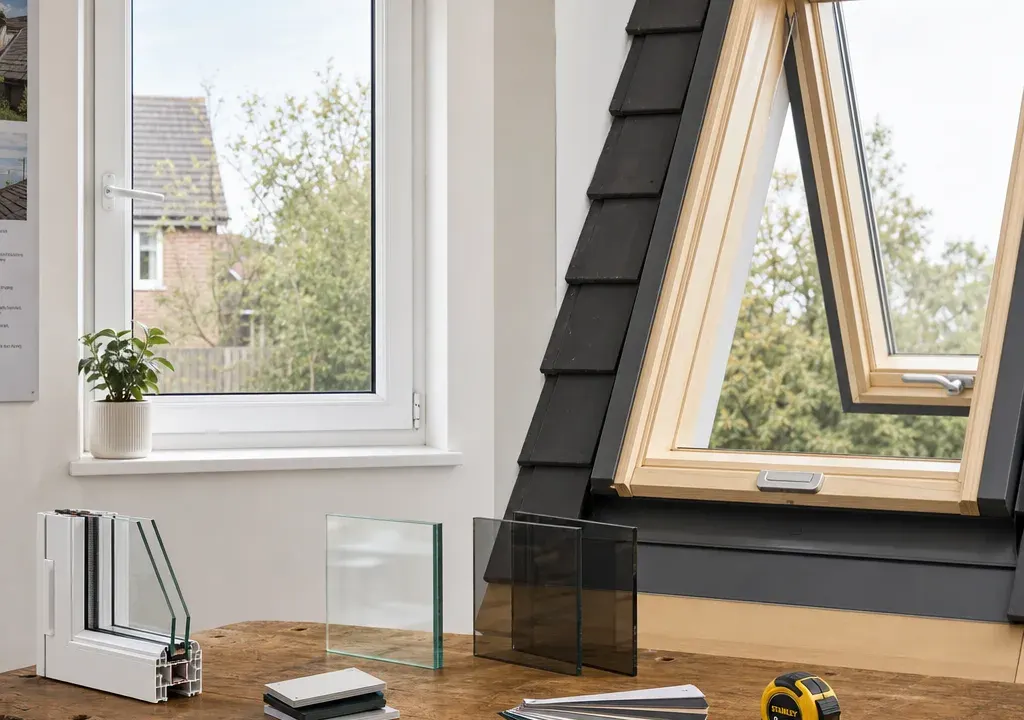
Choosing between uPVC and wooden windows is usually a value decision, not simply a style decision. The frame material affects appearance, maintenance expectations, available formats and, in many cases, the kind of glazing and sizes you will see in the catalogue.
For this comparison, the supplied Windows catalogue data includes one clear uPVC side-hung example, one wood-framed Velux tilt window example, several aluminium roof window examples, and related products such as window sills and roof window accessories. That mix is useful because it shows an important point: the best-value option is not always the cheapest product on the page, and products are not always directly interchangeable.
uPVC is likely to be the better-value choice if you want a straightforward replacement-style window and the available size, colour and opening type suit the job. In the supplied catalogue, the Crystal uPVC black right-hand side-hung clear window in 610 x 820 mm is listed at a lower catalogue price than the supplied wood-framed Velux tilt window example, which makes it a sensible starting point for shoppers comparing upfront cost.
Wooden windows may be better value if the look, interior finish or roof-window format is central to the project. The supplied Velux wood tilt window is a double-pane 55 x 98 cm roof-style option, so it is not a like-for-like alternative to the uPVC side-hung window. Its value depends on whether that format, brand, size and material suit the room.
If your brief is simply “spend less”, compare uPVC options first. If your brief is “match a particular room style or roof window specification”, timber may justify a higher catalogue price, provided the measurements and glazing are right.
The supplied uPVC example is a Crystal side-hung window. uPVC is often chosen for practical domestic window projects because it is commonly associated with modern replacement windows and tends to appear in accessible price bands, although the exact value depends on size, finish and specification.
The supplied timber example is a Velux wood tilt window. Wood can appeal when a warmer internal finish is wanted, especially in rooms where the window frame is a visible design feature. However, in this catalogue snapshot, the wood-framed product sits at a higher listed price than the uPVC side-hung example, so it needs to earn its place through suitability rather than material preference alone.
Several supplied products are aluminium, including Valeo and Velux roof or side-hung style entries. These should not be treated as direct answers to the uPVC versus wooden question, but they are useful comparison anchors. Some aluminium roof-window-related products in the list are lower-priced than both the uPVC and wood examples, yet they may be for a different opening type, roof use or installation context. Always compare the actual product type before comparing prices.
In the supplied product data, the uPVC side-hung window is listed at £222 after a stated reduction from £290. The wood-framed Velux tilt window is listed at £352.97 after a stated reduction from £442.68. On that snapshot alone, uPVC has the lower upfront catalogue price.
That does not automatically mean every uPVC window is better value than every wooden window. The examples differ by brand, format, opening style, dimensions and glazing description. A side-hung clear uPVC window for a wall opening is a different buying decision from a wood tilt window designed for a roof-window context.
The best way to compare offers is to narrow your shortlist first. Decide whether you need Side-Hung Windows, Tilt Windows, Roof Windows, Fixed Windows or another format, then compare frame materials within that same type. Once the opening style and size are similar, price comparisons become much more meaningful.
Size is one of the biggest value filters in Windows. The supplied uPVC example is 610 x 820 mm, while the supplied wood tilt example is 55 x 98 cm. The catalogue also includes multiple Velux aluminium roof window entries such as 55 x 78 cm, 55 x 98 cm, 78 x 98 cm, 78 x 118 cm and 94 x 160 cm.
That wider spread of roof-window sizes suggests shoppers looking at Roof Windows or Tilt Windows may have more catalogue examples to compare than someone looking specifically for a uPVC side-hung replacement in this supplied set. However, availability changes by retailer and product range, so it is worth filtering carefully rather than assuming one material always offers more choice.
Measure the structural opening, check whether the stated size refers to the frame or product size as presented by the retailer, and make sure the opening direction suits the room. A discounted window in the wrong size is not a saving.
The supplied products include several glazing descriptions. The Crystal uPVC side-hung product is described as clear. The Velux wood tilt window is described as double-pane. Several aluminium examples are described as triple-pane, including a Valeo aluminium side-hung window and selected Velux roof window entries.
Glazing can affect perceived value because two products with similar dimensions may not have the same pane description. For example, a triple-pane aluminium roof window and a double-pane wood tilt window are not directly comparable just because they both sit in the Windows category.
When comparing uPVC and timber, check the glazing line as carefully as the frame material. If one product states double-pane and another gives only a clear-glass description, you may need to inspect the retailer’s product information before treating them as equivalent.
The supplied examples come from several retailers, including Wilko.com for the uPVC side-hung window and Bradfords for the Velux wood tilt window. Other catalogue entries are associated with retailers such as B&Q, Amazon, eBay, OnBuy and Buycarparts.
Retailer choice can influence value because product availability, reductions, fulfilment options and the exact listed specification can vary. The point is not to assume one retailer is better, but to compare the complete offer: product type, material, size, glazing description and any visible saving in the listing.
For a window purchase, it is also sensible to check whether the listing is for the full window unit, an accessory, flashing, a sill or a roof-window component. The supplied catalogue includes a telescopic pole and solid wood window sills as well as full window-style products, so reading the title closely helps avoid false comparisons.
Choose uPVC if you are replacing a straightforward wall window and want to keep the initial product cost controlled. The supplied Crystal uPVC side-hung example is the clearest match for that type of decision, especially if its 610 x 820 mm size and right-hand opening suit the space.
Choose timber if the internal finish, brand range or roof-window style is part of the brief. The supplied Velux wood tilt double-pane option is more expensive in the snapshot, but it may be the more relevant choice for a roof-style installation where that material and format are wanted.
Do not ignore aluminium if your project is actually a roof window, side-hung specialist window or accessory-led installation. The catalogue includes several aluminium Velux and Valeo examples with double or triple-pane descriptions and varied sizes, which may offer stronger value in specific Windows subcategories even though they are outside the core uPVC versus timber choice.
Start with the location: wall opening, roof opening, loft space, outbuilding or internal project. Then pick the relevant format, such as Side-Hung Windows, Roof Windows, Sliding Windows, Top Hung Windows or Tilt Windows.
Next, compare only products with suitable dimensions. After that, look at frame material, glazing description and opening direction. Finally, compare the catalogue price, any visible reduction and retailer availability.
If the product is not a full window, treat it separately. Window Sills, Window Shutters, Sun Tunnels and accessories can sit close to window products in browsing results, but they solve different problems and should not be used as direct price comparisons against uPVC or wooden windows.
In the supplied catalogue snapshot, the uPVC side-hung example is listed at a lower price than the wood-framed Velux tilt example. However, the products are different styles and sizes, so it is best to compare uPVC and timber options within the same window type before deciding.
It can be, but only when the material, finish, size and format match the project. A timber roof-style tilt window may be better value for a room where the look and specification matter, while uPVC may be better for a cost-conscious wall-window replacement.
Not without checking the rest of the specification. The supplied catalogue includes double-pane and triple-pane descriptions, but products also differ by material, size and opening type. Glazing is one part of the value comparison, not the whole decision.
Some supplied aluminium products are roof-window-related or different in format, size or component type. A lower listed price does not necessarily mean it is a substitute for a uPVC or wooden window. Compare the intended use first.
Filter by window type, size and opening style first. Then compare material, glazing description, retailer availability and price signals. This avoids treating accessories, sills or roof-window components as direct alternatives to full windows.
For most buyers comparing the supplied examples, uPVC looks like the stronger upfront-value choice where a side-hung wall window is the right fit. The listed uPVC example costs less than the listed wooden tilt window and may suit a straightforward replacement brief.
Wooden windows become more compelling when the frame finish, room style or roof-window format matters enough to justify the higher catalogue price. The key is to compare products that solve the same installation problem, not just products that sit in the same Windows category.
Before choosing, narrow your search by window type, confirm the size, read the glazing description and compare retailer offers carefully. That will give you a much clearer view of value than judging uPVC and timber on material alone.
