
Loading buyer guide
Hurry, don't miss savings on selected furniture & more.* Shop all offers
Casement and sash-style windows can both work well, but they suit different rooms and renovation plans. Here’s how to compare opening format, dimensions, materials, glazing and value signals before you buy.
Use our barcode scanner to match products instantly to find the best prices, find products with ease using our voice search and build wish lists and your favourites at the click of a button.
Best windows for conservatories and sunrooms
Bright extensions ask more of a window than a standard room does. Size, glazing, frame material and opening style all affect comfort, ventilation and the overall look, so a useful shortlist starts with how the space will actually be used.
Top hung, side hung or centre pivot windows: which opening style is best?
Choosing between window opening styles is less about one being ‘best’ and more about where it will sit, how often you will open it, and how much usable space you have around it.
Velux window sizes explained: which size should you choose?
Choosing a Velux roof window is easier once you understand what the size codes and dimensions mean, and why a low-looking offer may be for flashing or an accessory rather than the full window.
Best sound reducing windows for busy roads
Traffic noise asks more of a window than a thicker pane of glass. For homes near busy roads, the better comparison is between glazing specification, frame airtightness, opening style, size and the parts that complete the installation.
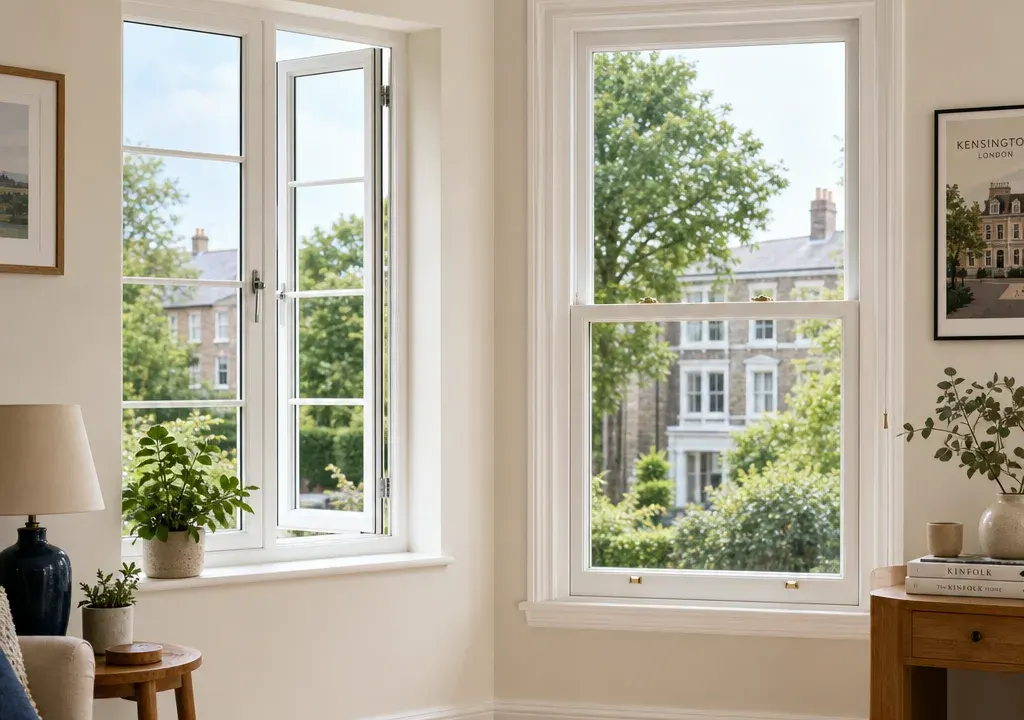
Casement and sash-style windows solve the same basic problem in different ways. A casement design is hinged, often opening outwards or inwards from the side, top or bottom. A sash-style window usually moves by sliding, most commonly vertically or horizontally, although modern products can blur the lines with tilt or pivot functions.
For shoppers comparing Windows, the best choice is rarely about one style being universally better. It depends on the opening you already have, whether you want to preserve a traditional look, how much ventilation control you need, and which dimensions are realistically available without major building work.
This comparison uses product catalogue information, price and value signals, retailer availability and merchandising data. It does not imply physical product testing. Use it as a decision framework before checking the exact specification, installation requirements and suitability of any product you are considering.
Choose casement if you want a straightforward hinged opening, simple room ventilation and a style that is widely available across Side-Hung Windows, Top Hung Windows and some Tilt Windows. Casement-style products tend to be easy to understand when comparing listings because the key details are usually hand, hinge position, frame material, glazing and size.
Choose sash-style if the look of the building matters as much as the opening. Sliding Windows and sash-style designs can suit period-inspired rooms, narrow spaces where an outward-opening sash would be awkward, or areas where you want the window to move within the plane of the frame rather than swing into a path or over an exterior obstruction.
If you are replacing an existing window, start with the current aperture and opening direction. If you are planning a loft, extension or specialist installation, broaden the comparison to Roof Windows, Roof Dome Windows, Sun Tunnels and Fixed Windows, because the right answer may not be a traditional casement or sash at all.
Casement windows are defined by their hinged action. In the supplied catalogue examples, side-hung and tilt formats show how varied this group can be. A uPVC side-hung product in a 610 x 820 mm size sits in a higher band than several smaller aluminium roof-window-related listings, while larger branded tilt formats can move into a much higher price band. That range shows why you should compare specification rather than assuming all casements cost the same.
The main buying question is where the sash will swing. A right-hand side-hung window, for example, is not interchangeable with every opening. Check the hand, hinge side and whether the window is intended for vertical wall use, roof installation or another application. A product described as a Roof Window or Tilt Window may not be suitable where you need a conventional wall-mounted casement.
Materials also matter. uPVC is common for domestic replacement windows and is often chosen for a low-maintenance finish. Aluminium appears in several catalogue examples and is common in roof-window and specialist formats. Wood also appears in some tilt-window listings, where the interior finish may be part of the appeal. Do not choose on material alone; match it to the frame design, glazing, required finish and installation context.
Casement-style products are often a good fit when you want maximum simplicity in comparing the essentials: measured size, opening direction, glazing type and material. They are less ideal where an outward opening would clash with a walkway, balcony, shutter, exterior feature or planning expectation.
Sash-style windows are usually chosen for their look and their sliding action. Rather than swinging open, the moving pane travels within the frame, which can be helpful in tight spaces. They are often associated with traditional façades, but the practical benefit is just as important: they do not need the same clearance arc as a side-hung casement.
When comparing sash-style options, dimensions are especially important because the proportions affect both appearance and usability. A tall, narrow opening may suit a vertical sliding sash-style product, while a wider opening may lead you towards horizontal Sliding Windows. If the existing property has a strong traditional character, the visual proportions, frame thickness and bar layout may be just as influential as the headline price.
Sash-style products can be harder to compare like for like because listings may vary in whether they emphasise the frame, the glazing unit, the opening mechanism or the heritage styling. Look beyond the style name and check the exact opening format. A product described as sliding, tilt, sideswing or side-hung may serve a different purpose even if it appears similar in a product image.
If you want the look of a sash but need easier access for ventilation or cleaning, compare modern tilt and sliding mechanisms carefully. Do not assume every sash-style window tilts, locks in the same way or suits the same type of opening. The product specification should make this clear before purchase.
Dimensions are the first filter. Catalogue examples range from compact 40 x 40 cm roof-window-style products to larger 94 x 160 cm tilt formats, with mid-sized roof-window listings such as 55 x 78 cm, 55 x 98 cm, 78 x 98 cm and 78 x 118 cm also appearing. Those examples are not interchangeable; they show how quickly the category can spread across very different use cases.
For a replacement wall window, measure the existing opening and compare it with the product’s stated width and height. Also check whether the listed measurement refers to the frame, the aperture, the visible glazed area or another standard used by the manufacturer. If the listing is unclear, it is safer to confirm before buying than to work backwards from an image.
For roof spaces, the size decision is not only about daylight. You also need to consider pitch, flashing compatibility, opening reach and whether accessories such as telescopic poles are needed. One catalogue example is a pole for operating a skylight rather than a window itself, which is a useful reminder to separate complete windows from accessories when comparing offers.
For finishing work, do not forget related items such as Window Sills and Window Shutters. A good-value window can become less attractive if you have not budgeted for the surrounding components needed to complete the installation neatly.
Material affects appearance, maintenance expectations and compatibility with the rest of the building. In the supplied product data, uPVC, aluminium, wood and solid wood accessories all appear across the wider Windows category. That does not mean one is automatically best; it means you should compare how the material fits the room, the frame style and any surrounding finishes.
Glazing is another key difference. Some listings describe double-pane or triple-pane glazing, while others focus on the frame, flashing or accessory type. Triple-pane may sound appealing, but it should be assessed alongside the full specification, the installation location and the total cost. If glazing performance is central to your decision, check the manufacturer’s stated values rather than relying on the product title alone.
For casement windows, compare whether the glazing and frame specification matches the room’s needs: bedrooms, kitchens and loft spaces all create different priorities for ventilation, privacy and reach. For sash-style products, check whether the glazing choice affects frame thickness or the visual balance of the window, particularly on older properties where proportions matter.
Colour is worth checking too. A black uPVC side-hung example sits in the catalogue data, while aluminium and wood finishes also appear. If you are replacing only one window, match the existing exterior as closely as possible unless you are deliberately changing the look of the property.
The supplied catalogue data shows a broad spread rather than a single neat price ladder. Smaller roof-window-related items and accessories can sit in lower price bands, mid-sized aluminium roof-window listings can appear below many full replacement wall-window examples, and larger branded tilt windows can move into the several-hundred-pound range. That is why comparing by style alone can be misleading.
When assessing value, separate complete products from parts, accessories and installation-related components. A telescopic pole, flashing-related listing, window sill or shutter is not a direct alternative to a complete side-hung or sash-style window. It may be essential for the project, but it belongs in a different part of your budget.
Discounts can be useful signals, but they should not drive the decision on their own. A reduced product is only good value if the dimensions, opening format, material and glazing match your needs. The supplied examples include products with visible discount signals, yet the most suitable choice still depends on the job you are trying to complete.
A sensible comparison order is: fit first, function second, finish third, price fourth. If two products satisfy the first three points, then price, availability and retailer terms become more meaningful.
For a straightforward replacement in a modern room, a casement-style product is often the easier comparison. Look at Side-Hung Windows if you want a familiar hinged format, or Tilt Windows if the opening action better suits the room. Check hand, dimensions and material before comparing offers.
For a period-inspired frontage, a sash-style or Sliding Windows option may be more sympathetic. Focus on proportions, frame design and how the sliding action will work day to day. If the room is small or close to an exterior obstruction, the lack of a swing arc can be a real advantage.
For lofts and converted spaces, do not force the casement-versus-sash decision if Roof Windows, Top Hung Windows or Sideswing Windows are more appropriate. In this part of the category, size, reach and installation compatibility may matter more than traditional styling.
For spaces where daylight matters but opening is not essential, Fixed Windows or Sun Tunnels may deserve a look. They will not replace the ventilation role of an opening casement or sash, but they can be relevant when the main aim is bringing light into a darker area.
Confirm the opening location: vertical wall, roof, extension, outbuilding or another setting. A product’s style name is not enough if the installation context is wrong.
Check the exact dimensions and what those dimensions refer to. Compare width, height and any compatibility notes before assuming a close size will fit.
Match the opening format to the room. Consider clearance, reach, ventilation control and whether the window could interfere with furniture, shutters, blinds or exterior features.
Compare material and glazing together. uPVC, aluminium and wood all appear in the wider category, and double-pane or triple-pane wording should be checked against the full specification.
Separate windows from accessories. Poles, sills, shutters and installation components can be important, but they should not be compared as if they are complete window units.
Only then compare price bands, offers and availability. A lower upfront price is not useful if it creates extra work or does not suit the opening.
Not always. Price depends on size, material, glazing, brand, opening mechanism and whether you are looking at a complete window or an accessory. Compare products by specification and fit before judging value.
A sash-style or sliding option can work well where there is limited clearance because it does not swing out into the room or exterior space. A compact casement can still be suitable if the hinge direction and opening arc are practical.
Compare the full glazing specification rather than relying only on the phrase double-pane or triple-pane. The right choice depends on the room, frame, installation and your priorities. Check the manufacturer’s stated details before buying.
Only in a broad sense. Roof Windows, Tilt Windows and Top Hung Windows may use hinged or pivoting actions, but they are designed for different installation contexts. Compare roof products with roof products unless you are still deciding the overall project type.
The biggest mistake is comparing on price before confirming the product type. A complete side-hung window, a roof-window accessory, a sill and a flashing-related item may all appear in the wider Windows category, but they serve different roles.
Casement windows are usually the clearer choice when you want a hinged, easy-to-compare replacement with defined dimensions, material and glazing. Sash-style windows make more sense when sliding operation, traditional proportions or limited clearance are priorities.
Before choosing, compare the actual product details: dimensions, opening format, material, glazing and whether the listing is a complete window or an accessory. Once those essentials are right, offers and price bands become genuinely useful rather than distracting.
