
Loading buyer guide
Hurry, don't miss savings on selected furniture & more.* Shop all offers
Pane count is only one part of the buying decision. Use glazing type, U-values where shown, frame material, window style and live offer pricing to judge whether triple glazing is a worthwhile upgrade over double glazing.
Use our barcode scanner to match products instantly to find the best prices, find products with ease using our voice search and build wish lists and your favourites at the click of a button.
Best windows for conservatories and sunrooms
Bright extensions ask more of a window than a standard room does. Size, glazing, frame material and opening style all affect comfort, ventilation and the overall look, so a useful shortlist starts with how the space will actually be used.
Top hung, side hung or centre pivot windows: which opening style is best?
Choosing between window opening styles is less about one being ‘best’ and more about where it will sit, how often you will open it, and how much usable space you have around it.
Casement vs sash windows: which suits your home?
Choosing between a casement window and a sash-style design usually comes down to how the window opens, the space around it, the look of the property and how much flexibility you need from your budget.
Velux window sizes explained: which size should you choose?
Choosing a Velux roof window is easier once you understand what the size codes and dimensions mean, and why a low-looking offer may be for flashing or an accessory rather than the full window.
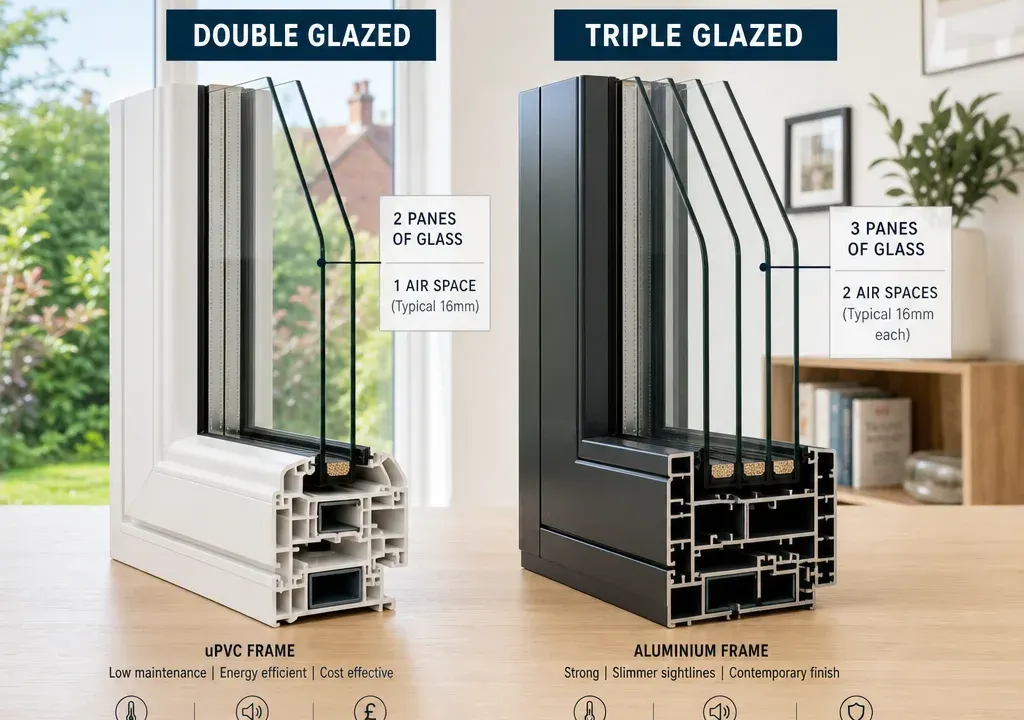
Triple glazing often sounds like the obvious premium choice, but it is not automatically the best value for every Windows project. A well-specified double glazed window may be a smarter buy than a triple glazed option that does not suit the opening, room use or frame material.
The catalogue examples for Windows show why that matters. Some triple-pane listings appear among lower-priced offers, while some double-pane branded roof or tilt windows sit much higher. That does not mean triple glazing is always cheaper; it means you need a like-for-like comparison before deciding whether the upgrade is worth paying for.
Before comparing prices, decide what problem you are trying to solve. A bedroom facing a cold, exposed side of the house may justify a different specification from a utility room, garage area or small landing window. Likewise, Roof Windows, Side-Hung Windows, Tilt Windows and Fixed Windows all have different practical roles.
Triple glazing may be more appealing where comfort, draught reduction and heat retention are high priorities. Double glazing may still be perfectly sensible where the room is used less often, the budget is tighter, or the existing frame and installation quality are likely to have a bigger impact than adding another pane.
For roof spaces, also consider how the window opens and how it will be used day to day. A Roof Window or Top Hung Window may need compatible flashing, easy operation and suitable sizing as much as a particular glazing type.
If a product lists a U-value, use it as one of your key comparison points. In simple terms, a lower U-value usually indicates better insulation performance. That can help you compare double and triple glazed options more fairly than pane count alone.
However, do not fill in the blanks yourself. If one listing gives a U-value and another does not, you cannot safely assume the unlisted product is better or worse. In that case, compare the other available specifications and check the product details before buying.
A good shortlist might include one double glazed option and one triple glazed option in the same window type, similar size and similar frame material. If the triple glazed version has a clearly better listed U-value and the price difference is modest, the upgrade is easier to justify. If the U-value is not shown or the products are very different, treat the comparison with caution.
The supplied catalogue data includes a mixture of window types, accessories and related products. That is useful for spotting offers, but not every listing is a fair comparison. A telescopic pole for a skylight or Window Sills should not be compared with a complete window when assessing the cost of double versus triple glazing.
Among the window examples, triple-pane listings include aluminium Side-Hung Windows and Roof Windows, with offer prices shown at the time of comparison. There is also a double-pane wood Tilt Window example in the data. The double-pane example is not directly comparable with every triple-pane listing because it differs by style, material, size and product type.
That is the key lesson: a lower-priced triple-pane product is not automatically the better deal, and a higher-priced double-pane product is not automatically poor value. Check whether you are comparing the same opening style, dimensions, frame material, glazing type and included components.
Glazing gets most of the attention, but the frame matters too. The catalogue examples include aluminium, uPVC and wood. Each material can affect appearance, maintenance expectations, weight, suitability for the opening and overall price.
Aluminium frames are commonly chosen for a slimmer, modern look, but the exact performance depends on the product design. uPVC is often considered for practical everyday replacements, while wood may appeal where the finish and interior look are important. Do not assume the glazing upgrade alone defines quality.
When comparing a double glazed wood Tilt Window with a triple-pane aluminium Roof Window, you are comparing more than glass. The material, mechanism and intended location are different, so the price difference should not be treated as the cost of triple glazing alone.
Triple glazing is more likely to make sense when you are already buying a high-priority window for a regularly used living space, bedroom or converted roof area. It is also easier to justify if the product lists a strong U-value, the frame material suits your home, and the live offer price is close to a comparable double glazed alternative.
It may also be worth considering when you are replacing several Windows at once and want a more consistent specification across the home. In that situation, compare total project cost rather than the price of one window in isolation.
Do not forget installation. A poorly fitted premium window can undermine the benefit of a better specification. If fitting costs, compatible parts or specialist installation requirements make the triple glazed option much more expensive overall, double glazing may provide better value.
Double glazing may be the better choice when the triple glazed alternative is not a close match for the opening, does not list enough performance information, or pushes the total project beyond budget. It can also be a sensible option for smaller openings, secondary spaces or rooms where other improvements would deliver more noticeable value.
A double-pane listing with the right size, frame, opening style and installation compatibility can be a safer buy than a cheaper triple-pane product that needs compromises. In Windows, fit and suitability are not minor details; they are central to whether the purchase works.
If you are choosing between Roof Windows, Sliding Windows, Sideswing Windows or Tilt Windows, focus first on the way the window will be used. The best glazing choice is the one attached to the right window for the space.
First, filter out accessories and related products so you are only comparing complete Windows where that is what you need. Window Shutters, Window Sills, poles and flashing items can be useful, but they should not distort your glazing comparison.
Second, match the basics: window type, dimensions, frame material and glazing type. Third, check whether a U-value is listed and compare it only with other clearly stated figures. Fourth, look at the live offer price and any discount signal without assuming the offer will remain unchanged.
Finally, compare the total package. The right decision is not always the cheapest double glazed window or the cheapest triple glazed window. It is the product that gives the best balance of specification, fit, material, performance information and current value for your particular project.
No. Triple glazing can offer an upgraded specification, but it is only better value when the window type, frame, size, U-value information and total cost suit your project. A well-matched double glazed window may be the smarter purchase in some rooms.
Use pane count as a starting point, but U-values are more useful when they are listed. A lower U-value generally indicates better insulation performance, although you should only compare figures that are clearly provided by the product listing.
Catalogue prices can vary because of brand, size, material, window style, included components and live offers. A triple-pane side-hung window and a double-pane wood roof or tilt window are not necessarily like-for-like, so the price gap may not reflect glazing alone.
It can be, especially in a frequently used room where comfort and insulation matter. But with Roof Windows, also check size, opening style, frame material, compatible parts and installation requirements before paying more for triple glazing.
Check the glazing type, frame material, exact dimensions, opening direction or style, U-values where listed, what is included, and the current offer price. Make sure you are comparing complete windows with complete windows, not accessories or separate parts.
Triple glazing is worth considering, but it should earn its place in your basket. The strongest case is a like-for-like triple glazed option with suitable dimensions, the right frame material, clear performance information and a live price that does not stretch the overall project too far.
For many shoppers, the best approach is to compare double and triple glazed Windows side by side within the same style, whether that is Roof Windows, Side-Hung Windows, Tilt Windows or another category. Once you compare the full specification rather than the pane count alone, the better-value choice becomes much clearer.
