
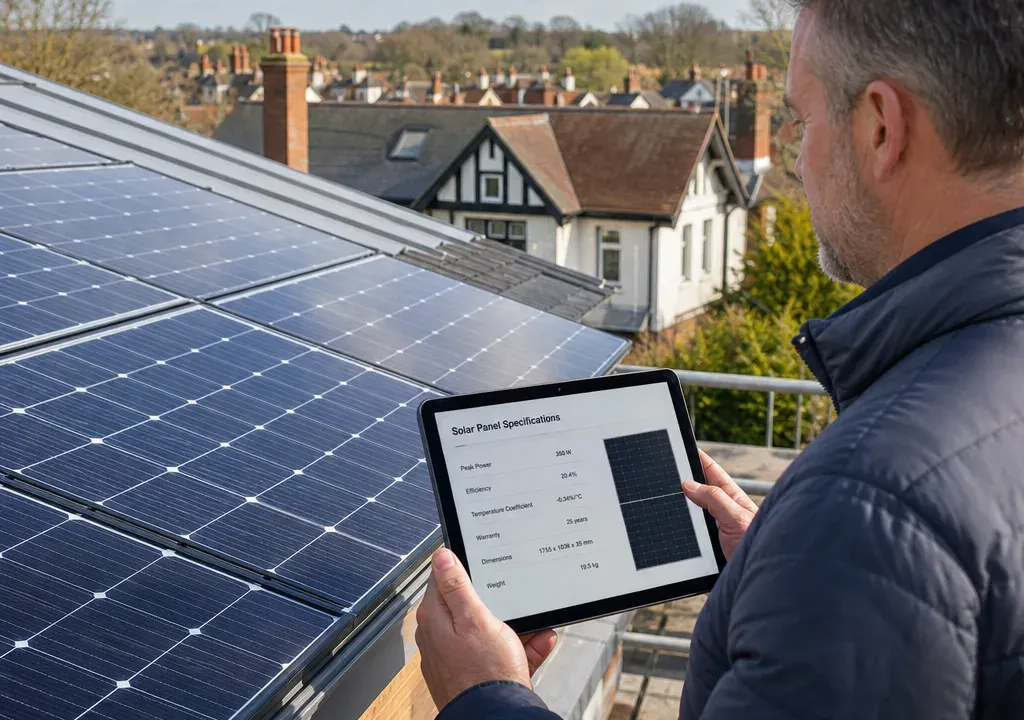
N-type versus P-type is one of the more technical comparisons in Solar Panels, but it should not be treated as a shortcut to the best buy. The cell technology matters, yet it sits alongside more practical details such as wattage, dimensions, inverter compatibility, mounting requirements and warranty wording.
For shoppers, the useful question is not simply “Which technology is better?” It is “Which panel gives me the most suitable output, fit and long-term value for my roof, garden building, campervan, battery system or portable setup?”
What N-type and P-type actually mean
N-type and P-type describe the silicon base used in a solar cell. In simple terms, P-type cells have traditionally been widely used in mainstream panels, while N-type cells are increasingly found in newer high-efficiency module ranges.
N-type panels are often associated with technologies such as TOPCon or heterojunction, while many P-type panels use PERC-style cell designs. However, product titles do not always state this clearly, so you should not assume a panel is N-type or P-type unless the listing or manufacturer specification says so.
The important buying point is that cell technology is only one part of performance. A well-priced P-type panel with clear warranty details and the right dimensions may be a better choice than a more expensive N-type option that does not fit your installation or lacks transparent specifications.
Compare efficiency before headline wattage
Wattage tells you the panel’s rated output under standard test conditions. Efficiency tells you how much output the panel can produce from its surface area. If roof space is limited, efficiency becomes especially important because a smaller number of higher-efficiency panels may produce more power in the space available.
N-type panels are often marketed around higher efficiency, but you should still compare the actual percentage stated by the manufacturer. Do not rely on the technology label alone. A product that discloses cell technology, efficiency and dimensions gives you much more to compare than a listing that only states “solar panel” and a wattage figure.
If dimensions are available, divide the rated wattage by the panel area to get a practical sense of output density. This is particularly useful when comparing larger domestic panels against compact Solar Panels for sheds, touring, portable charging or small off-grid projects.
Use wattage carefully, especially with kits and bundles
Wattage comparisons are straightforward when a listing clearly states one panel and one output. They become less clear when a product is sold as a multi-piece kit, includes accessories, or uses wording that could refer to each panel rather than the whole pack.
For example, the supplied catalogue includes compact and portable options such as a 100W Excel solar charger, a 12V 30W Sodial portable solar panel and an Eco-Worthy 240W bifacial kit described as two 120W monocrystalline modules. These are different buying situations, not direct substitutes for a full roof array.
There are also listings in Solar Panels that are not panels at all, such as Victron Energy charge controllers, Huawei inverters and mounting brackets. These can be essential system parts, but they should not be compared with panels on wattage or cell technology. When comparing offers, first separate panels, controllers, inverters, brackets and complete kits.
Check price per watt, but do not stop there
Price per watt can be a useful first filter when wattage and price are both clearly stated. Based on the supplied catalogue data, the Eco-Worthy 240W bifacial two-panel kit at £99.99 works out at roughly 42p per watt before considering any extra equipment. The Excel Compact 100W solar charger at £45.36 works out at roughly 45p per watt, while the Sodial 12V 30W portable panel at £15.40 is roughly 51p per watt.
Those figures are only a starting point. They do not tell you whether the panel uses N-type or P-type cells, whether the warranty is suitable, whether the dimensions fit, or whether additional brackets, cabling, controllers or installation parts are needed.
Be especially cautious with multi-pack wording. A listing such as a 200W four-piece solar panel offer needs checking carefully: is the advertised wattage the total output, the output per panel, or part of a wider kit description? The answer changes the price-per-watt calculation significantly.
Dimensions can decide the better buy
A lower-cost panel is not good value if it does not physically fit the available space. For roofs, you need to think about panel length and width, clearances, shading, orientation and the mounting system. For portable or leisure use, folded size, weight and cable practicality may matter more than maximum wattage.
If you are comparing N-type and P-type panels for a home installation, look for both the module dimensions and the rated output. A slightly more efficient N-type panel may allow a neater array or higher output on a constrained roof. On a larger roof, a cheaper P-type option could still make financial sense if the overall system design works.
For installations involving Floor, Wall & Roofs, the mounting surface also matters. Roof type, wall mounting and outbuilding use can all affect which brackets and rails are suitable, so include mounting parts in your total comparison rather than treating the panel price in isolation.
Read warranty wording, not just the warranty length
Solar panel warranties usually need a closer look because there can be more than one type. A product warranty may cover the panel as a product, while a performance warranty may describe expected output over time. The details and exclusions matter.
When a listing discloses cell technology but gives little warranty information, compare it cautiously against a product that states the warranty more clearly. If you are considering a larger roof system, installer support and compatibility with inverters, batteries and monitoring equipment may also influence your decision.
Avoid assuming that N-type automatically means better cover. The strongest listing is the one that clearly sets out the panel specification, output, dimensions, warranty terms and what is included in the box.
Brand range and system compatibility
Solar Panels shoppers often compare familiar system brands, portable charging brands and budget accessory brands in the same results. That can be confusing because the products serve very different purposes.
In the supplied catalogue context, brands such as Eco-Worthy, Renogy, Excel and Sodial appear around panels or charging products, while Victron Energy and Huawei appear around controllers, inverters or power system components. A strong comparison should ask whether you are buying a panel, a portable charger, an inverter, a charge controller or a complete setup.
If you are building a system rather than replacing a single part, check voltage, controller requirements, inverter compatibility and whether the panel is intended for grid-tied, off-grid, vehicle, shed or portable use. Cell technology is not a substitute for matching the whole system correctly.
When N-type is likely to be worth considering
N-type panels are worth a closer look when roof space is limited, when the efficiency figure is clearly higher, and when the listing provides transparent details on wattage, dimensions and warranty. They may also appeal if you are comparing newer module ranges and want to maximise output from a smaller surface area.
They are less compelling if the listing does not disclose enough information to verify the benefits. If a product simply uses premium-sounding wording without stating the cell technology, efficiency or warranty, compare it with more transparent alternatives before paying extra.
When P-type can still be the sensible choice
P-type panels can still be a sensible choice when the price per watt is competitive, the panel fits the available space, and the warranty details are acceptable for your use. For many buyers, especially those with enough roof or ground space, overall value may matter more than having the newest cell type.
If you are buying for a shed, van, boat, garden building or small off-grid project, practical compatibility may outweigh the N-type versus P-type distinction. The right wattage, controller and mounting setup will usually matter more than the cell label alone.
Frequently asked questions
Are N-type solar panels always better than P-type panels?
No. N-type panels are often associated with higher-efficiency modern cell designs, but the better choice depends on the actual efficiency, wattage, dimensions, warranty, compatibility and price. Always compare the full specification.
How do I know if a solar panel is N-type or P-type?
Check the product specification or manufacturer information. Terms such as TOPCon or heterojunction often relate to N-type technology, while PERC is commonly associated with P-type designs, but you should not assume unless the listing states it clearly.
Is price per watt the best way to compare solar panels?
It is a useful starting point when wattage and price are clear, but it is not enough on its own. You should also compare efficiency, physical size, warranty wording, included accessories and whether the product is a panel, kit, inverter or controller.
Do I need N-type panels for a small off-grid setup?
Not necessarily. For portable, shed or leisure setups, the right wattage, charge controller, voltage and mounting arrangement may be more important. N-type technology is most useful to compare when space and efficiency are key constraints.
Conclusion
The best way to compare N-type and P-type solar panels is to move from the label to the evidence. Look for disclosed cell technology, efficiency, wattage, dimensions, warranty wording and what is included in the offer.
If the data is complete, N-type may justify attention where space is tight and efficiency matters. If the value, fit and warranty are stronger, a P-type panel can still be the more sensible buy. For any Solar Panels purchase, compare products and offers on the total system you need, not just the most eye-catching specification.
