
Loading buyer guide
Hurry, don't miss savings on selected furniture & more.* Shop all offers
Limited roof space makes every panel choice more important. Here is how to compare compact solar panels, portable panels, mounting parts and related equipment when usable roof area is the deciding factor.
Use our barcode scanner to match products instantly to find the best prices, find products with ease using our voice search and build wish lists and your favourites at the click of a button.
Best solar panels for campervans
Campervan solar works best when the panel, controller, cabling and mounting style all suit the way you travel. Compare wattage, roof space, kit contents and connector compatibility before chasing the biggest discount.
Ecoflow vs Jackery solar panels
EcoFlow and Jackery are often compared by shoppers looking for portable solar charging, but the best choice depends on the listing details: wattage, foldability, connector support, stated efficiency, bundle contents and the real value of any offer.
Renogy vs Victron Energy solar panels
Renogy and Victron Energy often appeal to different solar shoppers: one is easier to compare around panel bundles, while the other is strongest when you are building a broader power system around charge control and inverter hardware.
JA Solar vs Renogy solar panels
JA Solar and Renogy often suit different solar shoppers: one is usually considered for fixed roof or commercial-style arrays, while the other is commonly browsed for off-grid, vehicle, camping and smaller DIY set-ups. The right choice depends less on the logo and more on wattage, panel format, installation plans, warranty terms and live retailer availability.
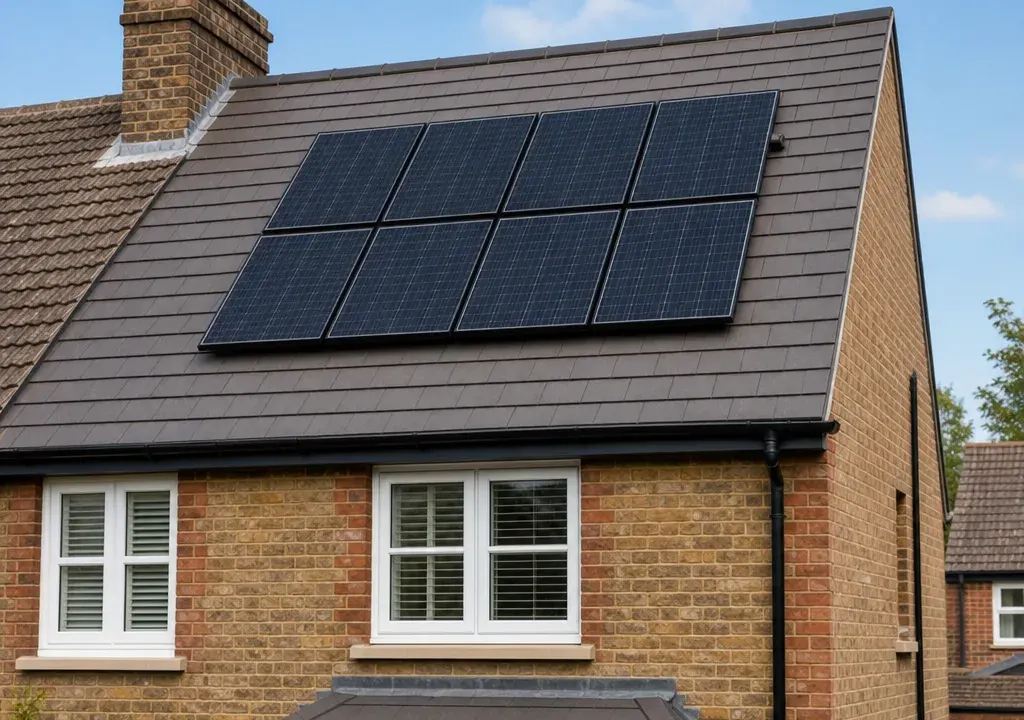
Small roofs call for a different kind of solar panel comparison. When space is tight, the question is not simply which panel has the highest wattage, but which option gives the most useful output for the area, weight and installation style available.
For shoppers comparing Solar Panels, the best short list will usually separate true roof panels from portable chargers, hobby panels, mounting accessories and system components such as inverters or charge controllers. They can all be useful, but they do not solve the same problem.
A small roof may still have a workable section, but the usable area is often reduced by obstructions, awkward angles, roof windows, chimneys, vents, shade and access margins. Before comparing panels, estimate the uninterrupted area where panels could realistically sit.
Once you know the likely panel zone, compare product dimensions first. A higher-wattage panel is only helpful if it actually fits. Where dimensions are not shown clearly in a listing, it is worth checking before getting attached to the headline output.
For constrained roofs, rectangular panel shape can matter as much as wattage. Two smaller panels may fit around obstacles more easily than one larger panel, while a set of four panels may need more uninterrupted layout space even if the total output looks appealing.
Wattage is the easiest number to compare, but it needs context. A 200W panel, a 100W compact charger and a 30W portable panel are not direct substitutes for the same job. They suit different levels of energy demand and different installation expectations.
Among the supplied comparison examples, the Renogy ShadowFlux Anti-Shading Solar Panel 200W 4 Pieces is positioned around a higher-output multi-panel setup. The Eco-Worthy 240W Solar Panel Bifacial 2pcs 120 Watt 12 Volt Monocrystalline Generation Module is another higher-output option, split across two 120W panels. For a small roof, that split-panel format may be worth comparing against a single larger module if the roof shape is awkward.
At the lighter-duty end, the Excel Compact 100W Solar Charger Adventurer and the Sodial 12V 30W Portable Solar Panel are more clearly suited to smaller-scale charging uses than to replacing a full domestic roof array. They may still be relevant if your aim is topping up leisure, shed, camping or off-grid equipment rather than maximising household generation.
When roof space is tight, panel type becomes more important because you are trying to get the most useful output from a limited area. Monocrystalline panels are often chosen where efficiency and compactness are priorities, but always compare the stated specification on the product listing rather than assuming every panel performs the same.
The Eco-Worthy example is described as bifacial and monocrystalline. Bifacial panels are designed to make use of light from more than one side, but the real benefit depends heavily on where and how the panel is mounted. On a small roof with little reflective surface beneath the panel, you should not assume the bifacial design will automatically transform output.
Anti-shading features are also worth noticing. The Renogy ShadowFlux option is described as anti-shading, which may be relevant where a small roof has partial shade during the day. Even so, compare the full specification and layout carefully, because shading from chimneys, neighbouring buildings or trees can affect any solar setup.
Solar Panels listings often include related items that are useful but not panels in their own right. In the candidate set, the Sodial Solar Panel Mounting Brackets 16pcs Aluminum 30-45mm are mounting accessories, while the Huawei SUN2000-25K-MB0 Inverter, Victron Energy Smart Solar MPPT RS 450 200 Charge Controller and Victron Energy MultiPlus-II units are system components rather than solar panels.
These products can be essential parts of a wider setup, but they should not be compared against panels by wattage or roof suitability. For a small-roof project, it is better to first decide the panel arrangement, then check which inverter, charge controller, mounting and cabling requirements apply.
This distinction is especially important when comparing live offers. A heavily discounted accessory or inverter may look attractive in a product grid, but it does not increase roof generation unless it is compatible with the panels and the wider system design.
Weight is a practical constraint for small roofs, sheds, garages and outbuildings. A compact panel may still be unsuitable if the mounting surface is not appropriate. Because the supplied catalogue examples do not all provide weights, shoppers should treat weight as a must-check detail before purchase rather than an afterthought.
For permanent roof installations, the combined weight of panels, brackets and any other mounting equipment matters. For portable or temporary use, carrying weight and storage size may be more important than roof load.
If a listing does not make weight, mounting method or compatibility clear, compare it with alternatives that provide fuller specification. A slightly less powerful panel with clearer fit information can be the safer shortlist choice for a constrained space.
Brand can help you organise a comparison, but it should not replace specification checks. In the supplied candidates, brands include Renogy, Eco-Worthy, Excel, Sodial, Xtorm, Victron Energy and Huawei. They cover very different product types, from small solar boards and portable panels to inverters and charge controllers.
For small roofs, compare brands by the information they provide: panel wattage, dimensions, panel type, connection details, mounting guidance and compatibility with other system parts. A recognisable name is useful only if the product itself fits the roof and the intended use.
It is also worth separating established system hardware from panel choices. For example, Victron Energy and Huawei products in the candidate list are not roof panels; they belong in the supporting-equipment part of your comparison.
Live prices and discounts are useful for spotting offers, but small-roof solar buying should not be led by discount percentage alone. A low-cost micro solar board or a set of brackets may show a strong saving, but it will not meet the same need as a roof panel kit or a higher-output module.
The Sodial Micro Solar Board Photovoltaic 5pcs 2-3v 100ma Cells With Wires and the Sodial 5V 3A Solar Panel Stabilizer DIY Kit are examples where the product appears more suited to small electronics or DIY use than to a roof generation project. They may be good comparisons within a hobby or repair context, not as alternatives to domestic panels.
When comparing offers, look at the cost against the usable wattage, the number of panels supplied, whether the panel type suits your layout, and whether you will need additional mounting or system components. The best value for a small roof is usually the option that fits cleanly and avoids unnecessary extras, not simply the one with the biggest headline reduction.
For a compact roof array, prioritise panels with clear wattage, dimensions, panel type and mounting information. Multi-panel options such as the Renogy 200W four-piece set or Eco-Worthy 240W two-panel set are worth comparing where the roof can accommodate their layout.
For awkward roof sections, smaller individual panels can sometimes be easier to place, but you need to check whether the total output still justifies the installation and whether the electrical setup remains practical.
For sheds, camping, leisure charging or occasional off-grid use, compact products such as the Excel 100W solar charger or Sodial 30W portable panel may be more relevant than a permanent roof panel. In that situation, portability, connection type and storage matter as much as wattage.
For a wider home improvement project, the neighbouring Floor, Wall & Roofs area may also be relevant when thinking about mounting surfaces and roof suitability, but the panel comparison itself should stay focused on Solar Panels specifications.
For a small roof, look for panels with strong output for their footprint, clear dimensions and suitable mounting options. Monocrystalline panels are often considered where space is limited, but the best choice depends on the exact roof area, shading and system design.
Several smaller panels may fit awkward roof spaces more easily, especially around obstructions. One larger panel can be simpler if there is enough clear area. Compare the total wattage, dimensions and layout before deciding.
Portable panels can be useful for leisure, shed or temporary charging needs, but they are not always a substitute for a fixed roof installation. Check the intended use, output, mounting method and connection details.
Efficiency matters more when space is limited because you have less area to work with. However, you should compare efficiency alongside dimensions, wattage, panel type, weight and price rather than using it as the only deciding factor.
Discounts can highlight good offers, but they should not drive the whole decision. For small roofs, fit, usable wattage, panel type, compatibility and any extra equipment needed are more important than the biggest saving alone.
The best solar panels for small roofs are the ones that make limited space work efficiently, with dimensions, wattage, weight and panel type all lining up with the roof layout. A high-output option is only worthwhile if it fits properly and suits the wider system.
Use the Solar Panels category to compare live offers, but keep separating panels from accessories, inverters and small DIY parts. That simple discipline makes it much easier to spot the right shortlist for a constrained roof area.
