
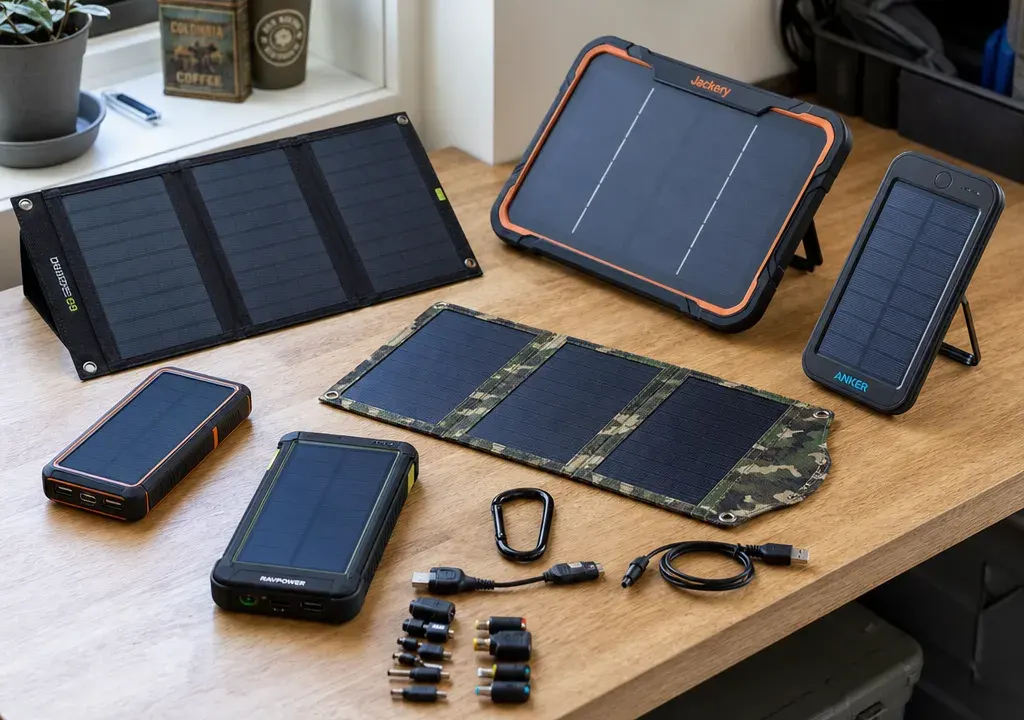
Budget Solar Panels are not all built for the same job. A low-cost micro board for electronics projects, a portable 30W panel, a 100W charger and a 240W module kit can all appear in the same category, but they suit very different buyers.
The useful comparison is not simply the lowest ticket price. For a budget buy, look at the stated wattage, whether the wattage is for one panel or a full kit, the price per watt, what accessories are included and whether the retailer’s delivery options change the final cost or convenience.
The budget shortlist: which offers look strongest?
1. Eco-Worthy 240W Solar Panel Bifacial 2pcs 120 Watt 12 Volt Monocrystalline Generation Module: This stands out on value where the catalogue price is £99.99 against a stated 240W kit output. That works out at roughly 42p per watt, the strongest price-per-watt figure among the clearly stated higher-output panel options supplied. It is best suited to shoppers who need a more useful amount of power than a small trickle panel can provide and who are already comfortable checking the rest of the system requirements.
2. Excel Compact 100W Solar Charger Adventurer: At a catalogue price of £45.36 and a stated 100W output, this comes in at about 45p per watt. It has a lower upfront cost than the Eco-Worthy kit while still offering a practical step up from very small panels. It is a sensible comparison point for camping, leisure and portable charging setups, provided the connections and controller requirements match your equipment.
3. Sodial 12V 30W Portable Solar Panel: At £15.40 for a stated 30W panel, the rough price per watt is about 51p. The total output is modest, but the upfront cost is also low. This kind of option is worth considering for small 12V maintenance or light portable use, as long as you are realistic about the limited wattage.
4. Renogy ShadowFlux Anti-Shading Solar Panel 200W 4 Pieces: The catalogue price is £194.99 and the product title states 200W with four pieces. Based only on the 200W figure in the title, the price per watt is around 97p. Before judging it as cheaper or dearer than the alternatives, confirm whether the wattage refers to the total kit or individual pieces, and check whether the anti-shading feature and kit format are important for your installation.
5. Sodial Micro Solar Board Photovoltaic 5pcs 2-3v 100ma Cells With Wires: At £7.74, this is one of the lowest-priced items in the supplied catalogue, but it is not a like-for-like alternative to a 30W, 100W or 240W panel. The 2-3V and 100mA specification points to small electronics or DIY experimentation rather than meaningful system output. Buy it only if you specifically need micro photovoltaic cells.
Do not compare accessories as if they were panels
Some low-priced listings in Solar Panels are useful, but they are not panels. The Sodial 5V 3A Solar Panel Stabilizer DIY Kit is a small support component, not a generating panel. The Sodial Solar Panel Mounting Brackets 16pcs Aluminium 30-45mm listing is mounting hardware, not a power source.
Higher-priced items such as Victron Energy charge controllers, Victron Energy MultiPlus-II units and the Huawei inverter are also not budget panels. They may be relevant in a wider solar setup, but they should be compared in terms of compatibility, system role and electrical requirements rather than ranked against panels on price per watt.
This matters because a very low headline price can be misleading if the item is only a bracket, stabiliser, controller or inverter. When comparing products, first decide whether you are buying a panel, a kit, a mounting part or an electrical system component.
How to choose the right budget option
For the lowest workable outlay, start with the smallest panel that genuinely suits the task. A 30W portable panel can be appealing because it keeps the spend down, but it will not behave like a 100W charger or a 240W module kit. If your devices or battery setup need more input, a slightly higher upfront price can be better value than buying too small and replacing it later.
For best price per watt from the supplied panel candidates, the Eco-Worthy 240W kit and Excel 100W charger look more competitive than the lowest-priced micro boards. Price per watt is not the only factor, but it helps cut through large discounts and makes different wattages easier to compare.
For DIY electronics, micro solar boards are a separate decision. They can be cheap and useful for small experiments, but they should not be chosen as a substitute for a proper portable or fixed panel. Check voltage, current and wiring requirements carefully before buying.
For a more complete portable setup, look beyond the panel price. You may need a compatible charge controller, cables, adaptors, mounting hardware or a battery. A product that looks cheap can become less attractive if essential extras are missing, while a kit can offer better convenience if the included parts match your project.
Core specifications worth checking before checkout
Wattage is the first figure to check, but confirm whether it is the total output of the kit or the output of each panel. Product titles can be brief, so read the retailer specification carefully before relying on a price-per-watt calculation.
Voltage is just as important for compatibility. A 12V panel or kit is commonly considered for leisure batteries and small off-grid setups, while small 2-3V cells are aimed at a different type of DIY use. Do not assume that a cheap panel will connect safely or usefully to your existing equipment without the right controller and connections.
Panel type can also influence your shortlist. The Eco-Worthy candidate is described as bifacial, 12 volt and monocrystalline in the product title. Those terms may matter for your project, but they do not remove the need to check dimensions, mounting method and compatibility in the live product details.
Kit contents should be checked line by line. A listing may show a panel image but still require separate cables, brackets or a controller. If your project involves fixing panels to a surface, it may also be worth comparing suitable products in Floor, Wall & Roofs so the mounting plan is considered alongside the panel choice.
Brand availability and retailer offer checks
The supplied catalogue includes budget and value-led options from brands such as Sodial, Excel, Eco-Worthy and Renogy, plus system components from Victron Energy and Huawei. Sodial appears across several lower-priced accessories and small panels, while Eco-Worthy, Excel and Renogy appear in more output-focused panel listings.
Availability across different retailers can affect the final decision even when the panel price looks attractive. Before buying, compare the live product page for delivery cost, delivery speed, return conditions, seller details and whether all kit parts ship together. The cheapest panel price is not always the cheapest completed purchase.
Also look at the product images and specification depth. A listing with clear imagery and enough technical detail is easier to assess than one where the wattage, contents or connector type remain unclear. If the information is incomplete, treat the offer as higher risk and compare alternatives in Solar Panels before committing.
Best choice by buyer type
Choose the Eco-Worthy 240W kit if your priority is the strongest price-per-watt signal among the supplied panel options with clear stated output, and you are comfortable checking the rest of the system requirements yourself.
Choose the Excel Compact 100W Solar Charger Adventurer if you want a lower upfront spend than a 240W kit but still need a practical output level for portable or leisure use.
Choose the Sodial 12V 30W Portable Solar Panel if you need a very low-cost, modest-output option and understand that 30W is limited compared with larger kits.
Choose micro solar boards only for small DIY electronics or educational projects. They may be cheap, but they are not a replacement for a standard solar panel kit.
Do not choose an inverter, charge controller, stabiliser or mounting bracket as your main solar panel purchase. Those items may be part of the wider setup, but they solve different problems.
Frequently asked questions
What is the best budget solar panel in this comparison?
Based on the supplied catalogue data, the Eco-Worthy 240W kit has the strongest price-per-watt signal among the clearly stated panel options, at roughly 42p per watt. The Excel 100W charger is also competitive with a lower upfront price. Always check the live retailer listing before buying.
Is the cheapest solar panel always the best value?
No. The cheapest item may be a micro board, bracket or accessory rather than a useful panel for your project. Compare wattage, voltage, kit contents and delivery options before deciding whether a low price is genuinely good value.
How do I work out solar panel price per watt?
Divide the product price by the stated wattage. For example, a £99.99 panel kit with a stated 240W output is about 42p per watt. Make sure the wattage refers to the full kit, not just one part of the listing.
Do I need extra parts with a budget solar panel?
Often, yes. Depending on the panel and your setup, you may need a charge controller, cables, mounting hardware, adaptors or a battery. Check the product contents carefully and avoid assuming that everything shown in a wider setup is included.
Conclusion
The best budget Solar Panels are not simply the lowest-priced listings. For most buyers, the strongest value comes from matching the panel output to the job, checking price per watt and making sure the kit includes the parts you actually need.
If you are comparing offers today, shortlist by wattage first, remove accessories that are not panels, then check live retailer delivery options and final checkout cost. That approach gives you a clearer view of real value than discount percentage alone.
