
Loading buyer guide
Hurry, don't miss savings on selected furniture & more.* Shop all offers
Choosing between Anker and Jackery? Focus on how each panel fits your power station, travel style and budget rather than assuming one brand suits every buyer.
Use our barcode scanner to match products instantly to find the best prices, find products with ease using our voice search and build wish lists and your favourites at the click of a button.
Best solar panels for campervans
Campervan solar works best when the panel, controller, cabling and mounting style all suit the way you travel. Compare wattage, roof space, kit contents and connector compatibility before chasing the biggest discount.
Ecoflow vs Jackery solar panels
EcoFlow and Jackery are often compared by shoppers looking for portable solar charging, but the best choice depends on the listing details: wattage, foldability, connector support, stated efficiency, bundle contents and the real value of any offer.
Best solar panels for small roofs
A small roof does not automatically mean solar is off the table. The key is comparing wattage, footprint, panel type, weight and supporting equipment together, rather than chasing the largest headline output.
Renogy vs Victron Energy solar panels
Renogy and Victron Energy often appeal to different solar shoppers: one is easier to compare around panel bundles, while the other is strongest when you are building a broader power system around charge control and inverter hardware.
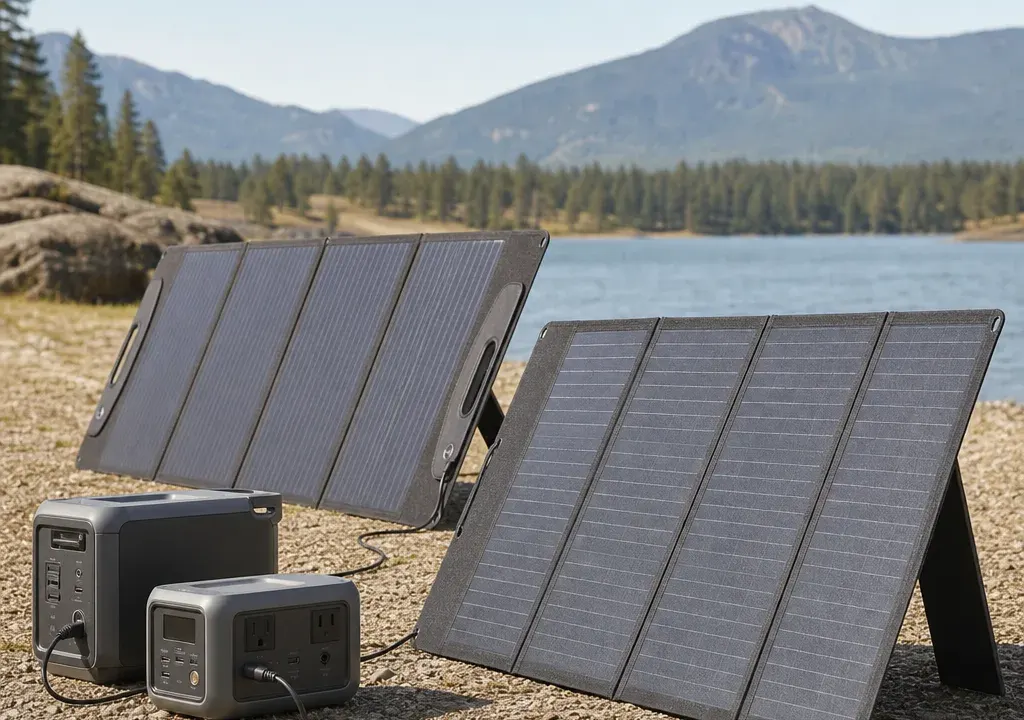
Anker and Jackery solar panels are usually considered by shoppers who want portable charging for camping, garden offices, emergency top-ups or off-grid weekends. They sit in a different buying space from roof-mounted home systems, inverters and mounting hardware, so it helps to compare them as portable energy accessories rather than as full domestic installations.
The right choice is not simply the panel with the highest wattage. A panel that folds neatly, uses the connector your power station needs and is available in a useful bundle can be better value than a more powerful option that requires extra adapters or is awkward to carry.
This comparison guide is based on product catalogue signals, value indicators, retailer availability and merchandising information. It does not imply hands-on physical testing. Use it as a decision framework when comparing current Solar Panels offers, especially as stock, bundles and retailer pricing can change.
Before comparing Anker and Jackery directly, decide whether you need a light travel panel, a higher-output portable setup or a bundle with a power station. The most suitable panel for a festival weekend is not necessarily the same one you would choose for regular van use or a garden workspace.
If your priority is occasional phone, tablet or small power station top-ups, portability and simple setup may matter more than maximum output. If you are trying to recharge a larger portable power station, wattage and compatibility become more important, because a smaller panel may take longer in real-world conditions.
It is also worth separating portable Solar Panels from the wider solar category. Current marketplace listings can include small DIY photovoltaic boards, mounting brackets, charge controllers, inverters and fixed modules from other brands. Those products may be useful in the right project, but they are not like-for-like alternatives to Anker or Jackery foldable panels for portable charging.
Wattage is the first number most shoppers compare, but it should be read as a guide to potential output rather than a guaranteed everyday result. Weather, angle, shade and the power station’s input limit can all affect what you actually receive.
When comparing Anker and Jackery, look at the range of wattages each brand currently offers through retailers. Lower-wattage panels are usually easier to carry and store, while higher-wattage options can be more suitable for larger power stations or longer off-grid sessions. The best value often sits where panel output and device input are well matched.
Check your power station’s maximum solar input before paying extra for a higher-wattage panel. If the power station cannot accept the panel’s full output, you may not benefit from the extra capacity. Equally, if you choose a panel that is too small for a large power station, charging may feel slow for your needs.
For many buyers, portability is where Anker and Jackery comparisons become most practical. A portable panel should be easy enough to move, angle and pack away. Look for clear information on folded format, carry handle design, stand arrangement and whether the panel suits the space you expect to use it in.
If you travel by car, a larger foldable panel may be manageable. If you are carrying kit to a campsite or using public transport, a smaller and lighter option may be more sensible. A panel that looks good on wattage alone can be frustrating if it is too bulky for your usual trip.
Also compare how the panel stands up. Some portable Solar Panels have integrated kickstands or folding supports, while others may require more careful positioning. The easier the panel is to angle towards the sun, the more likely you are to use it properly.
Connector compatibility is one of the most important checks when choosing between Anker and Jackery solar panels. Portable panels are often bought to work with a specific power station, and the connector type, voltage range and input requirements need to line up.
If you already own an Anker power station, start by checking which Anker panels are listed as compatible, then compare whether any Jackery panel would require an adapter. Do the same in reverse if you own a Jackery power station. Adapters may be convenient, but they add cost and another point to verify before buying.
Read product descriptions carefully for connector names and included cables. Avoid assuming compatibility from the brand name alone, particularly if you are comparing older and newer models. If the listing is unclear, it is safer to choose an option with explicit compatibility information than to rely on guesswork.
Anker and Jackery panels are often considered alongside portable power stations, so bundle availability can be a major part of the decision. A panel sold with a compatible power station may be easier for a first-time buyer because the key parts are intended to work together.
However, a bundle is not automatically the best-value option. Compare the bundled contents against buying the panel and power station separately. Check whether the panel wattage is sufficient for the power station included, and whether the bundle contains the cables or adapters you expect.
Bundles are especially useful when you are starting from scratch. If you already own a power station, a standalone panel may make more sense, provided it is compatible. Compare products and offers across retailers rather than focusing only on the headline bundle discount.
Prices and availability for Solar Panels can move quickly, especially around seasonal travel periods and promotional events. Instead of treating Anker or Jackery as automatically cheaper, compare the current retailer offers for the specific wattage and bundle you want.
Look beyond the main price. Consider what is included, whether the product is a panel only or a bundle, and whether any cables, cases or accessories are part of the offer. A cheaper listing may not be better value if you need to buy additional items before it works with your setup.
Stock also matters. If one brand has the ideal panel but it is unavailable, a comparable option from the other brand may be the more practical buy. For time-sensitive trips, availability can be just as important as small differences in specification.
Choose Anker first if you already use Anker portable power products and can find a panel with clear compatibility, suitable wattage and a retailer offer that makes sense. Staying within one ecosystem can make the buying process simpler, provided the listing confirms the required connector and input match.
Choose Jackery first if you already own a Jackery power station or find a Jackery bundle that matches your intended use. As with Anker, the strongest reason to choose the brand is not the logo alone, but a well-matched panel, compatible connection and practical portability.
If you are brand-neutral, compare the two ranges by use case. For occasional top-ups, focus on ease of carrying and storage. For larger power stations, prioritise wattage and input compatibility. For first-time buyers, give extra weight to complete bundles that remove uncertainty around matching components.
The wider Solar Panels category can include very different products, from small DIY solar boards and compact chargers to rigid panels, brackets, inverters and charge controllers. Catalogue examples in the market include products such as micro photovoltaic boards, portable chargers, bifacial modules, mounting brackets and power conversion equipment.
Those products can be useful, but they should not be compared directly with Anker and Jackery foldable panels unless your project genuinely overlaps. A roof, wall or fixed installation may involve different components and considerations from a portable camping or backup charging setup.
If your project is closer to property installation, look more broadly at Solar Panels and related areas such as Floor, Wall & Roofs rather than limiting the search to portable power station panels. For portable charging, stay focused on wattage, folding design, connectors and bundles.
First, identify the power station or device you want to charge. Check its solar input limit and connector requirements before comparing panel prices.
Second, choose a wattage range that suits your use. Smaller panels can be easier to move, while higher-output options may be better for larger power stations or longer off-grid use.
Third, compare portability. Look at folded size, carrying method, stand design and whether the panel is realistic for your car, tent, balcony, garden or van setup.
Fourth, check what is included in the box. Cables, adapters and bundle contents can materially affect value.
Finally, compare current retailer pricing and stock across both Anker and Jackery. The better buy is the one that fits your equipment, your trip and your budget at the time you are ready to order.
Neither brand is automatically better for every buyer. The right choice depends on the wattage you need, whether the panel fits your power station, how portable it is and what current retailer offers are available.
Do not assume it will work without checking. You need to confirm connector type, voltage range and input compatibility. Some combinations may require an adapter, while others may not be suitable.
Not always. A higher-wattage panel can help with larger power stations, but only if the power station can accept the input and you are happy with the extra size or weight. For light use, a smaller panel may be more practical.
A bundle can be useful if you are buying your first portable power setup and want matched components. A standalone panel may be better if you already own a compatible power station. Compare the full contents and current offers before deciding.
Check wattage, folded size, weight, connector details, included cables, compatibility notes, bundle contents, retailer stock and the total value of the offer. These details are more useful than comparing brand names alone.
For most shoppers, the Anker versus Jackery decision comes down to fit rather than brand loyalty. Start with the power station or device you need to charge, then compare wattage, portability, connector details, bundle contents and live retailer availability.
If both brands offer a suitable option, choose the one that gives you the clearest compatibility and best overall value at the time. A well-matched portable solar panel is far more useful than a higher-spec model that is awkward to carry or difficult to connect.
