
Loading buyer guide
Hurry, don't miss savings on selected furniture & more.* Shop all offers
Before choosing between Rock and IT Luggage, look beyond the badge. The best-value suitcase is usually the one with the right capacity, practical wheels, useful security features and a fair current offer for your travel plans.
Use our barcode scanner to match products instantly to find the best prices, find products with ease using our voice search and build wish lists and your favourites at the click of a button.
What size suitcase do you need for a weekend, week or fortnight?
Suitcase sizing is less about buying the biggest case and more about matching litres, height and packing style to the length of your trip. Here’s how to compare cabin bags, medium cases and large suitcases using real catalogue examples.
Antler vs Eastpak luggage: which is right for your trip?
Choosing between Antler and Eastpak is less about picking a famous luggage name and more about matching the case to your route, packing habits and budget. Here’s how to compare sizes, features, offers and availability without being distracted by a big discount alone.
Best luggage sets for families
Family luggage works best when the pieces solve different jobs: a large hold case for shared clothing, cabin bags for essentials, and smaller children’s options or accessories for organisation. The best value is not always the biggest discount, so compare included sizes, usable capacity, colour, retailer availability and the cost per case before you buy.
Best lightweight luggage for easier travel
Lightweight luggage is not just about picking the smallest case. The right choice depends on listed weight, capacity, dimensions, trip length and how much structure you need for clothes, tech and extras.
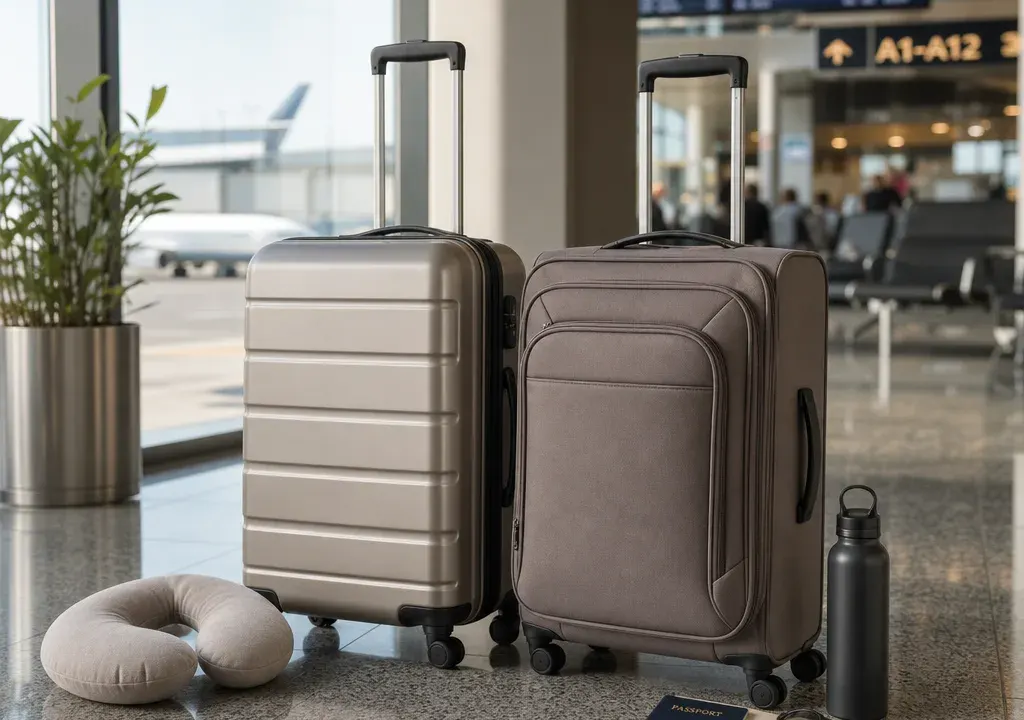
Rock and IT Luggage are often considered by UK shoppers who want dependable suitcases without drifting into premium pricing. Both brands can make sense, but value is not just about choosing the cheapest case on the day. It is about matching the suitcase to the journey, then checking whether the current offer genuinely suits the size, features and build you need.
This comparison is designed to help you decide between the two brands when browsing Luggage, Suitcases, Cabin Bags or Suitcase Sets. It uses comparison-led buying criteria such as current offer signals, available sizes, materials, wheel types, lock features, colours and retailer availability. It does not claim physical testing, and you should always check the individual product listing before buying.
Choose Rock if the specific model you are looking at gives you the features you care about, such as a hard shell, spinner wheels, an integrated lock or a colour you will easily recognise on the carousel, at a sensible current offer. Rock can be a strong value choice when the feature list feels complete for the price rather than stripped back.
Choose IT Luggage if your priority is low weight, roomy packing capacity or a straightforward case for occasional travel. IT Luggage is often considered by shoppers who want practical luggage without overpaying for features they may not use.
The important point is that neither brand is automatically better in every size or range. A discounted large suitcase from one brand may be better value than a full-price equivalent from the other, while the result could reverse for Cabin Bags. Compare the exact model, not just the brand name.
For short city breaks, a cabin case is usually the first comparison to make. Look at the stated dimensions, capacity and airline suitability information on the product page. Do not assume every cabin-sized case will work for every airline, because size rules can vary and may change.
For family holidays or longer trips, larger Suitcases or Suitcase Sets may offer better overall value than buying several separate pieces. However, a set is only worthwhile if you will use most of the sizes. A three-piece set that sits in the loft for most trips is not automatically better value than one well-chosen medium case.
For children, Children’s Luggage has different priorities. Manoeuvrability, weight, recognisable colours and ease of packing can matter more than maximum capacity. If you are buying for a child, compare the practical handling details carefully rather than simply picking the smallest adult suitcase.
The live price matters, but so does what you get for it. A lower-priced suitcase can be poor value if it lacks the wheel layout, capacity or shell type you need. A higher-priced case can be better value if it saves you buying again for a different trip type.
When comparing Rock and IT Luggage, check the current selling price against the original price where shown, but treat big discounts as a prompt to investigate rather than a guarantee of quality. Look at whether the discount is on the right size and colour, whether the retailer has stock, and whether comparable alternatives are available from other luggage brands in the same category.
Catalogue data across Luggage often shows that reductions can appear on a wide range of products, from cabin cases and large suitcases to packing accessories. That means the best buy on any given day may be driven by availability as much as brand preference. If two similar cases are close in price, the one with the better size, wheels and internal layout for your trip is usually the smarter choice.
Size is one of the biggest reasons shoppers end up disappointed. A large suitcase can look like a bargain, but it may be awkward for trains, car boots or solo travel. A compact cabin case may be convenient, but poor value if you regularly need checked luggage.
For Rock vs IT Luggage, compare the stated height, width, depth and litre capacity if provided. Capacity can be especially useful when two cases look similar in photos but pack differently. Also check whether external pockets or an expanding section change the usable space.
Think in terms of your most common journey. If you travel mainly for weekends, a cabin case plus Packing Cubes may be better value than a larger suitcase. If you take longer holidays, a medium or large case may justify spending more, especially if it reduces the need for an extra bag.
Rock is often associated with hard-shell suitcase options, while IT Luggage is commonly considered by shoppers looking at lightweight and practical designs. That said, ranges change, so always compare the exact product materials and construction details on the listing.
A hard shell may appeal if you want a structured case that holds its shape and is easy to wipe clean. It can be a good choice for checked luggage, particularly if you want a case that looks neat and feels more protective around packed items. The trade-off can be weight, flexibility and sometimes less forgiving packing space.
A soft-sided suitcase may suit travellers who like external pockets, lighter handling or a little more give when packing. It can be practical for car travel, trains and short breaks. The trade-off is that it may not offer the same rigid structure as a hard shell. Value depends on which compromise suits your travel habits.
Wheel design can change how a suitcase feels day to day. Two-wheel cases are usually pulled behind you and can be simple and stable on uneven surfaces. Four-wheel spinner cases are easier to move upright through airports, hotel lobbies and stations, especially when the case is heavy.
When comparing Rock and IT Luggage, check whether the model has two wheels, four spinner wheels, double spinner wheels or any stated wheel detail. If you often travel through airports, four-wheel movement may be worth paying for. If you drag luggage along pavements or over kerbs, wheel durability and clearance may matter more than effortless spinning.
Also look at the handle arrangement. A telescopic handle that suits your height and a well-placed side handle can make lifting into cars, overhead racks and hotel rooms much easier. A suitcase that is awkward to move can feel poor value no matter how good the initial offer looked.
Many shoppers compare suitcase locks, but the right level of security depends on how you travel. An integrated combination lock can be convenient because there is no separate padlock to lose. Some cases may state particular lock features on the product page, while others may rely on standard zips and your own lock.
Do not assume all Rock or IT Luggage models include the same lock type. Compare the exact listing and check whether the lock is integrated, whether the zip pulls fit a padlock, and whether the design suits international travel. Avoid paying extra for a feature you do not need, but do not ignore lock details if you regularly check luggage into the hold.
Luggage Straps and Luggage Tags can add visibility and organisation without requiring a more expensive suitcase. They are worth considering if you are choosing a simple case and want easier identification at baggage reclaim.
Colour is not only a style decision. A distinctive suitcase can be easier to spot, which is useful on busy trips. Black, navy and grey are versatile, but they are also common. Brighter colours can help identification, though they may show scuffs differently depending on the finish.
When comparing Rock and IT Luggage, check which colours are actually available in the size you want. Sometimes the strongest offer is only on one colour. That can still be good value if you like it, but less so if you are settling for a shade you would not normally choose.
If you choose a common colour, small Luggage Accessories such as tags, straps or handle wraps can help make the case easier to recognise. That can be a more cost-effective upgrade than paying more for a rare colourway.
A good luggage deal is only useful if the size, colour and quantity you need are available from a retailer you are happy to buy from. Availability can vary between single suitcases, multi-piece sets and accessories, so compare retailer options rather than assuming the first visible offer is the best one.
Check the listing details carefully, especially for delivery information, returns wording, product images and the exact model name. Similar-looking suitcases can differ in size, material, wheel layout or included features. A small difference in wording can mean you are comparing two different products.
It is also worth comparing Rock and IT Luggage against the wider Luggage category. Alternative brands and product types may be on offer, and seeing the broader market helps you judge whether a current price looks competitive for the specification.
Rock is likely to be the better value option when you want a suitcase with a more structured feel and the specific model offers the size, wheel type, lock feature and colour you want at a fair live price. It may suit shoppers who want a case that looks robust and travel-ready without stepping into a much higher price bracket.
It is also worth favouring Rock if the product listing gives you clearer information for comparison. Details such as shell material, dimensions, capacity, wheel type and lock style make it easier to judge value. If those details are missing on a competing product, the cheaper option may be harder to assess.
Rock may be less compelling if the offer is on a size you will rarely use, or if you are paying extra for a finish or feature that does not matter for your trips. Value still depends on the individual suitcase.
IT Luggage is likely to be the better value option if your priority is a lightweight, spacious case for practical travel and the current offer is strong for the size you need. It may appeal if you want simple, functional luggage rather than a feature-heavy design.
It can also make sense for families or occasional travellers who need extra packing capacity without overspending. In that situation, compare single cases with Suitcase Sets to see whether buying multiple pieces together genuinely works for your household.
IT Luggage may be less suitable if the particular model lacks a wheel type, lock feature or material you consider essential. A low price is only good value if the suitcase will be convenient to use more than once.
Not automatically. Rock may be better if the model has the shell type, wheels and lock features you want at a fair current offer. IT Luggage may be better if you prioritise low weight, packing space and simple practicality. Compare the exact suitcase rather than choosing by brand alone.
For Cabin Bags, focus first on dimensions, weight, wheel layout and handle comfort. Either brand can be a sensible option if the case fits your travel needs, but you should check the product listing carefully against your airline’s latest size rules.
Suitcase Sets can be better value if you will use most of the sizes. If you only need one case for your usual trips, a single suitcase with the right capacity and features may be the smarter buy.
Packing Cubes can improve organisation, Luggage Scales can help avoid overpacking, and Luggage Tags or Luggage Straps can make a case easier to identify. These accessories can sometimes improve the usefulness of a simple suitcase without upgrading to a more expensive model.
The better-value choice between Rock and IT Luggage depends on the specific suitcase in front of you. Compare size, capacity, material, wheel type, lock features, colour options and retailer availability before deciding.
If you want a structured case with a fuller feature set, Rock may be the stronger pick when the live offer is right. If you want lightweight practicality and useful packing space, IT Luggage may be the better buy. Either way, the smartest approach is to compare products and offers across Luggage, then choose the case that fits your actual trips rather than the one with the loudest discount.
