
Loading buyer guide
Hurry, don't miss savings on selected furniture & more.* Shop all offers
Choosing between familiar luggage brands is easier when you look beyond the logo. Here’s how to compare Salter, Rock, IT Luggage and wider luggage deals using size, specification, discount depth and real trip needs.
Use our barcode scanner to match products instantly to find the best prices, find products with ease using our voice search and build wish lists and your favourites at the click of a button.
What size suitcase do you need for a weekend, week or fortnight?
Suitcase sizing is less about buying the biggest case and more about matching litres, height and packing style to the length of your trip. Here’s how to compare cabin bags, medium cases and large suitcases using real catalogue examples.
Antler vs Eastpak luggage: which is right for your trip?
Choosing between Antler and Eastpak is less about picking a famous luggage name and more about matching the case to your route, packing habits and budget. Here’s how to compare sizes, features, offers and availability without being distracted by a big discount alone.
Best luggage sets for families
Family luggage works best when the pieces solve different jobs: a large hold case for shared clothing, cabin bags for essentials, and smaller children’s options or accessories for organisation. The best value is not always the biggest discount, so compare included sizes, usable capacity, colour, retailer availability and the cost per case before you buy.
Best lightweight luggage for easier travel
Lightweight luggage is not just about picking the smallest case. The right choice depends on listed weight, capacity, dimensions, trip length and how much structure you need for clothes, tech and extras.
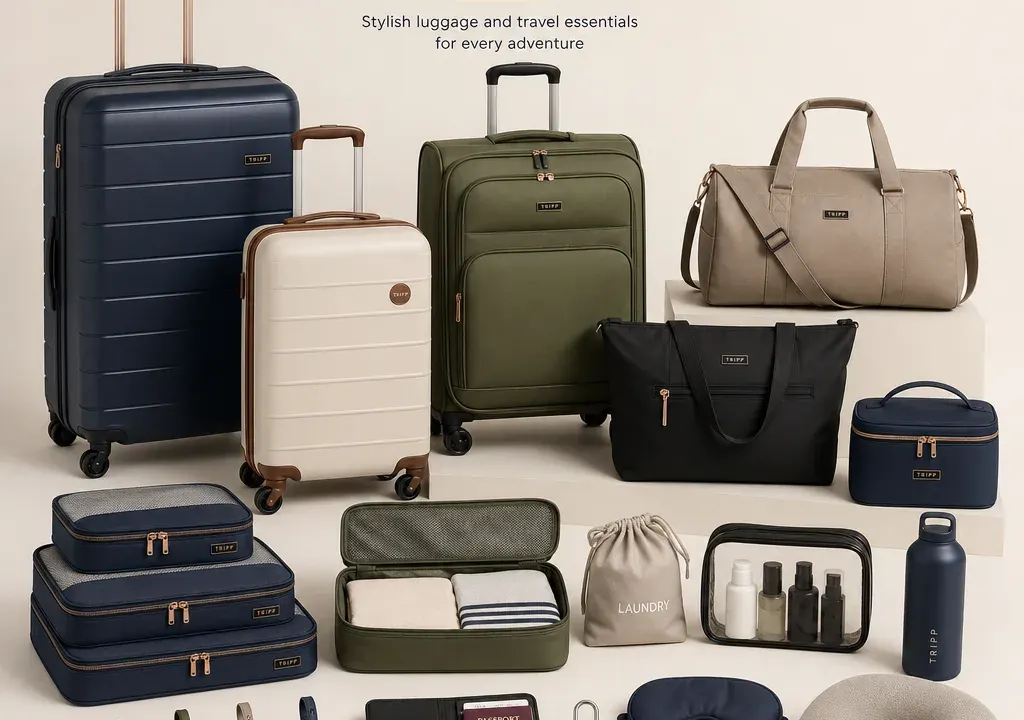
If you are comparing Salter, Rock and IT Luggage, the best-value choice will usually depend on the trip you take most often. A low-cost cabin bag can be excellent for weekends, while a larger suitcase may be better value if it saves you from buying extra capacity later.
The current product catalogue snapshot supplied for this guide includes a wider mix of Luggage examples rather than individual Salter, Rock or IT Luggage model rows. For that reason, this guide avoids making unsupported claims about specific models from those brands. Instead, it uses available luggage candidates as comparison context and shows how to judge value fairly when those brands appear in your shortlist.
Before comparing Salter, Rock and IT Luggage, decide what job the bag needs to do. A cabin bag, a checked suitcase, a children’s case and a luggage set are not direct substitutes, even if they are all discounted.
For short breaks, look first at Cabin Bags and compact Suitcases. In the supplied comparison set, examples include a 5 Cities 21 inch or 55cm carry-on listed at £16.99 and an Eastpak Tranverz 51cm option listed at £75.68. These sit in very different price brackets, so the better-value choice depends on whether you simply need a low-cost carry-on or prefer a more substantial travel bag.
For longer trips, capacity becomes more important. The Eastpak Tranverz L example is listed with dimensions of 79 x 40 x 33 cm and a 121 litre capacity, which gives shoppers a clear size reference when comparing large luggage. If you are choosing between similar large cases from Salter, Rock or IT Luggage, this is the kind of specification to check before looking at the discount percentage.
For family travel or shared packing, Suitcase Sets can look strong on value because you get multiple pieces in one purchase. The Groundlevel Regency hard shell set of 4, listed at £74.99 in the supplied data, is a good example of how a set can change the value equation. However, only buy a set if you will use the different sizes; unused cases are not a saving.
A headline discount can be useful, but it should not be the only reason to buy. The supplied examples show discount signals ranging from 50% to 86%, including the Eastpak Tranverz L listed at £30.78 against an original price of £218.99, and the Eastpak Tranzshell 54cm listed at £99.95 against an original price of £220. These figures help flag possible value, but shoppers should still compare size, use case and retailer availability.
When comparing Salter, Rock and IT Luggage products, use the same method. If two cases are close in price, check whether one gives you a more suitable size, a feature you will actually use, or a format that fits your travel habits better. A larger checked suitcase may not be better value for someone who mainly travels with hand luggage.
Also be cautious when comparing original prices. A deep discount can be attractive, but the current selling price and practical usefulness matter more than the size of the reduction. A £16.99 carry-on may be better value for a student weekend trip than a heavily reduced large suitcase, while the reverse may be true for a two-week family holiday.
The supplied catalogue examples include a mix of formats, from soft-sided Eastpak travel cases to a Groundlevel hard shell luggage set and a Samsonite Intuo spinner 69cm listed in black. Each format can suit a different buyer.
Hard shell luggage may appeal if you prefer a more structured case. Soft-sided luggage can be useful if you want a bag that feels more flexible to pack. A wheeled laptop backpack, such as the Monolith 2-in-1 Wheeled Laptop Backpack 45cm listed at £60.05, is a different proposition again: it is aimed more at work travel and commuting than traditional holiday packing.
When looking at Salter, Rock and IT Luggage, do not assume one shell type is automatically best. Compare the product title, images and specifications carefully. Look for the details that matter to your trip: cabin suitability, checked size, wheel layout, compartments, laptop storage or whether it is part of a matching range.
Value is not only about the number on the product card. Availability through a retailer you are comfortable buying from can matter, particularly if you need luggage before a specific departure date. The supplied examples include products listed through retailers such as OnBuy, Absolute Snow, Amazon, Euroffice, Wardow, Robert Dyas, Studio, Lakeland, The Nursery, RunningXpert and Groupon UK.
That does not mean one retailer is automatically better than another. It simply means you should compare the full offer: the current listed price, the product details, the availability status shown, and any information the retailer provides before checkout. Prices and stock can change, so treat catalogue data as a comparison snapshot rather than a permanent promise.
If you are choosing between similar Salter, Rock and IT Luggage cases, retailer availability may be the tiebreaker. A slightly higher-priced option can still be the better purchase if it is the right size and available when you need it.
Sometimes the smartest luggage purchase is not another suitcase. Luggage Accessories can improve how you use a bag you already own, especially for occasional travel.
The supplied candidates include Thule Compression Packing Cube Small in white listed at £13, Peers Hardy Peanuts Snoopy 2 Luggage Tags listed at £9.50, and Go Travel Luggage Tags Pack of 2 in yellow and green listed at £1.99. These are not comparable with suitcases, but they show why the Luggage category should be viewed as a complete travel setup rather than just cases.
Packing Cubes can help separate clothing and smaller items. Luggage Tags can make bags easier to identify. Luggage Scales may be useful if you regularly pack close to airline weight limits. Luggage Straps can also be worth considering if you want extra visibility or organisation, though you should always check the product details before buying.
If your shortlist is specifically Salter, Rock and IT Luggage, make a simple side-by-side comparison rather than choosing on brand recognition alone. Start with the size you need, then compare current price, capacity, shell type, weight if shown, wheel style, compartments and whether the case is sold singly or as part of a set.
For cabin travel, check the stated dimensions against the airline you use most often. Do not rely on the words “cabin” or “carry-on” alone, because allowances can vary. For checked luggage, focus on capacity and practical packing space rather than just overall height.
For best value, ask three questions: will I use this size regularly, does the current price look competitive against similar luggage, and are the features relevant to how I travel? If the answer to all three is yes, you are much closer to a sensible purchase.
A strong luggage deal usually has several value signals working together. In the supplied data, products with a clear product image and a meaningful discount are easier to compare because shoppers can assess both the visual format and the price signal. However, an image and discount do not prove quality, so use them as starting points only.
Look for specific measurements, capacity information, a clear brand and retailer, and a product type that matches your journey. The Eastpak Tranverz L example is useful because it includes dimensions and litres. The Monolith wheeled laptop backpack is useful because the title clearly explains its hybrid role. The Groundlevel set is useful because it identifies that four pieces are included.
When Salter, Rock or IT Luggage options appear alongside these kinds of products, compare like with like. A suitcase set should be compared with other suitcase sets, a 55cm carry-on with similar cabin bags, and a luggage accessory with other accessories rather than full cases.
Not always. The cheapest option may be good value if it fits your trip and will be used often, but a slightly more expensive suitcase can be better value if it offers the right size, format and practical features.
Compare the exact products rather than the brands alone. Check the current price, size, capacity where shown, shell type, wheels, compartments, retailer availability and whether the bag suits cabin or checked travel.
They can be, especially for households that will use several sizes. They are less compelling if you only need one case, as unused pieces take up storage space and reduce the real value of the purchase.
Choose cabin luggage for short trips and lighter packing. Choose a larger suitcase if you regularly travel for longer periods or need more capacity. Always check current airline size and weight rules before relying on a bag for cabin travel.
They can. Packing cubes, luggage tags, luggage scales and straps may make travel easier or more organised, but they should be bought for a clear purpose rather than added simply because they are inexpensive.
The best-value luggage choice is the one that matches your trip, not just the one with the biggest discount. When comparing Salter, Rock and IT Luggage, use current catalogue prices as a starting point, then weigh them against size, features, retailer availability and how often you will use the case.
For a fair comparison, keep similar products together: Cabin Bags with cabin bags, Suitcases with suitcases, Suitcase Sets with sets, and accessories with accessories. That approach makes it much easier to spot genuine value across the wider Luggage range.
