
Loading buyer guide
Hurry, don't miss savings on selected furniture & more.* Shop all offers
Antler and Rock can appeal to different luggage shoppers, but the smartest choice is rarely made by brand name alone. Here’s how to compare the two when you care about price, practicality, durability signals and travel-ready features.
Use our barcode scanner to match products instantly to find the best prices, find products with ease using our voice search and build wish lists and your favourites at the click of a button.
What size suitcase do you need for a weekend, week or fortnight?
Suitcase sizing is less about buying the biggest case and more about matching litres, height and packing style to the length of your trip. Here’s how to compare cabin bags, medium cases and large suitcases using real catalogue examples.
Antler vs Eastpak luggage: which is right for your trip?
Choosing between Antler and Eastpak is less about picking a famous luggage name and more about matching the case to your route, packing habits and budget. Here’s how to compare sizes, features, offers and availability without being distracted by a big discount alone.
Best luggage sets for families
Family luggage works best when the pieces solve different jobs: a large hold case for shared clothing, cabin bags for essentials, and smaller children’s options or accessories for organisation. The best value is not always the biggest discount, so compare included sizes, usable capacity, colour, retailer availability and the cost per case before you buy.
Best lightweight luggage for easier travel
Lightweight luggage is not just about picking the smallest case. The right choice depends on listed weight, capacity, dimensions, trip length and how much structure you need for clothes, tech and extras.
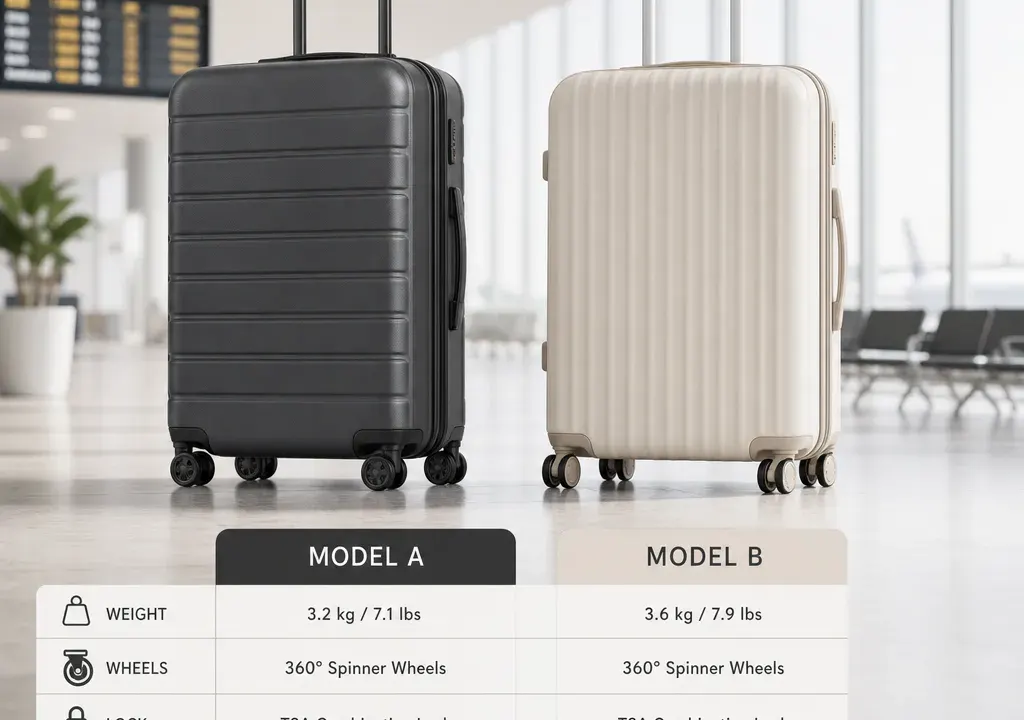
Antler vs Rock is a useful comparison if you are deciding whether to spend more on a suitcase with a stronger feature set or keep costs down and focus on the essentials. The catch is that luggage pricing moves around a lot, especially when retailers discount older colours, specific sizes or suitcase sets.
Because exact offers change, the right approach is to compare the Antler and Rock products available today against the same checklist: price range, shell material, weight, size, lock, wheels, colour options and stock. That gives you a clearer answer than simply assuming one brand is always the premium choice and the other is always the budget option.
Choose Antler if the product you are comparing offers the features you genuinely value at a price you are comfortable with. That may mean a lighter case, a preferred shell material, a more refined internal layout, a colour you will keep for years, or a size range that lets you match Cabin Bags with larger Suitcases.
Choose Rock if the current offer gives you the capacity, lock, wheel design and weight you need for less. If you travel occasionally, want a spare family case, or are buying multiple pieces at once, a lower live price can matter more than small finish upgrades.
The best decision is not “which brand is better?” but “which exact suitcase is better value today?” A discounted larger case may beat a full-price cabin model for one shopper, while a lighter carry-on may be worth paying more for if you use it every month.
Luggage is heavily promotion-led. In wider Luggage catalogue data, discounted products can vary widely by brand, size and retailer, so the original price is not always the most useful number. Focus on the current selling price, the size of the case and the features included at that price.
When comparing Antler and Rock, place products into simple buying bands: cabin case for short trips, medium suitcase for a week away, large suitcase for longer holidays, and Suitcase Sets for households or frequent travellers. A cheaper single case is not automatically better value than a set if you need several sizes, but a set is only worthwhile if you will actually use each piece.
Also compare like with like. A small cabin spinner should not be judged against a large checked suitcase simply because the prices are close. Capacity, weight and airline suitability can make two similar-looking deals very different in practice.
For hard shell luggage, product listings commonly refer to materials such as ABS, polypropylene or polycarbonate. Do not assume the material from the brand name or appearance. Check the product description for the exact shell material, especially if you are paying extra for a case that claims to be lighter or more impact-resistant.
If the listing does not clearly state the shell material, treat that as a reason to compare another option. A good value suitcase should make the basics easy to verify: shell type, dimensions, weight, capacity and lock details.
Soft-sided luggage is worth considering too, particularly if you like external pockets or a little flexibility when packing. However, if you are comparing Antler and Rock hard shell cases, the shell material and corner design are two of the first details to review.
A suitcase can look like a bargain until you factor in weight. A heavier case leaves less allowance for clothing and travel essentials, particularly on flights with strict baggage limits. When two Antler and Rock cases are close in price, compare the listed weight before choosing the cheaper one.
Capacity matters as much as external size. Two cases with similar height can offer different usable space depending on shell shape, internal dividers, handle housing and whether the case expands. If an expandable zip is listed, check whether the expanded dimensions still suit your travel plans.
For Cabin Bags, pay close attention to the stated dimensions rather than relying on the word “cabin”. Airline rules vary, and a case that suits one carrier may not suit another. For checked Suitcases, think about manoeuvrability and packed weight, not just litres.
Many modern suitcases include integrated combination locks, and some are described as TSA-compatible. If you travel internationally, especially to destinations where such locks are useful, this can be a feature worth prioritising. If you mainly travel within the UK or by car, it may be less important than weight, wheels or capacity.
Check whether the lock is built in or whether the case relies on a separate padlock. Built-in locks are convenient, but they should not be the only reason to choose one product over another. Zip quality, pullers, corner protection and how neatly the case closes are also part of the overall value picture.
If the lock type is not stated, compare another listing before buying. The best Luggage listings make security details clear without needing guesswork.
Wheel design changes how a suitcase feels in everyday use. Four-wheel spinner cases are easier to manoeuvre through airports, stations and hotel lobbies because they can roll upright beside you. Two-wheel cases can be simpler and may feel steadier over uneven pavements, although they need to be tilted and pulled.
Some listings describe double spinner wheels, which usually means each corner has a twin-wheel unit. When comparing Antler and Rock, check the wheel description and product images together. A suitcase that looks sleek but has small exposed wheels may not be the most practical choice for rougher surfaces.
If you are buying for city breaks, train travel or work trips, smooth rolling and handle comfort can be more important than maximum capacity. If you are buying a large family case, wheel stability and corner clearance become more important once the case is fully packed.
Antler and Rock comparisons are most useful when you start with the size you need. For short trips, compare Cabin Bags first. For holidays, compare medium and large Suitcases. For families, Suitcase Sets may be better value if the sizes are genuinely useful and can be stored at home.
Do not overbuy capacity. A large suitcase can encourage overpacking, may be harder to lift, and can be awkward in smaller hotel rooms or car boots. Equally, a cabin case that is too small for your packing style may push you into paying for extra baggage later.
If you already own a reliable cabin bag, you may get better value from a single checked case rather than a full set. If you are replacing everything, compare sets against buying individual pieces from the same range.
Colour choice is not just cosmetic. Black and navy are easy to match and often look businesslike, but they can be harder to spot on a luggage carousel. Brighter colours or textured finishes may be easier to identify, while still looking smart enough for regular travel.
Stock can vary by colour and size, so the cheapest Antler or Rock offer may only apply to one finish. Before choosing purely on price, check whether the colour you want is available in the size you need and whether matching pieces are available if you plan to build a set later.
If you prefer understated luggage, add Luggage Tags or Luggage Straps to make your case easier to recognise. These small Luggage Accessories can be a cheaper way to personalise a plain suitcase than paying more for a distinctive colour.
A brand comparison can change quickly when one retailer has limited stock, a seasonal colour or a reduced suitcase set. If an Antler case is discounted but only available in a size you do not need, a Rock case at a steadier price may be the better buy. The reverse can also be true.
Compare across the available Luggage listings rather than making a decision from one product tile. Look for consistent product information, clear images, stated dimensions and the size or colour you actually want. Availability is part of value: a theoretical bargain is not useful if it is not in stock in the right format.
It is also worth checking related categories before you buy. Packing Cubes can help you use a smaller case more efficiently, while Luggage Scales reduce guesswork before you leave home. If those accessories help you avoid buying a larger suitcase than you need, they can change the overall value of your luggage purchase.
First, decide your trip type: cabin-only, checked bag, family holiday or mixed travel. Then compare Antler and Rock only within that size group.
Second, check the live price against the features: shell material, weight, capacity, lock, wheels and whether the case expands. Do not pay extra for a feature you will rarely use.
Third, compare stock and colour. A slightly more expensive suitcase in the right size and colour may be a better long-term buy than the cheapest option left in limited stock.
Finally, consider the full travel setup. A good suitcase is only one part of Luggage. The right Luggage Tags, Luggage Straps, Packing Cubes or Luggage Scales can make a simpler case work harder.
Not automatically. Compare the exact Antler and Rock suitcases available at the time you buy. The better choice depends on live price, shell material, weight, capacity, locks, wheels, colour and whether the size you need is in stock.
Rock can be worth considering if the current product gives you the size and core features you need at a lower price. Check the material, wheel type, lock details and listed weight before deciding it is better value.
It may be worth paying more if the Antler case you are comparing is lighter, has the material you prefer, offers better size options for your travel habits, or includes features you will use often. The extra spend should be tied to clear benefits, not just the badge.
Buy a set if you will use most of the sizes and have room to store them. Buy individual Suitcases if you only need one specific size, such as a cabin case or a large checked case.
Useful add-ons include Luggage Tags for identification, Luggage Straps for visibility, Packing Cubes for organisation and Luggage Scales for checking packed weight before travel.
Antler vs Rock is best treated as a value comparison, not a fixed ranking. Antler may appeal when the feature set justifies the spend, while Rock may make more sense when the live price is lower and the suitcase still covers the essentials.
Before buying, compare the exact products side by side: price, shell material, weight, size, lock, wheels, colour and stock. That is the most reliable way to choose luggage that fits your trips, your budget and the way you actually pack.
