
Loading buyer guide
Hurry, don't miss savings on selected furniture & more.* Shop all offers
Recognisable ingredients can make a ready meal feel easier to understand, but the label is only one part of the buying decision. Here’s how to compare options without assuming simple means healthier, cheaper or better value.
Use our barcode scanner to match products instantly to find the best prices, find products with ease using our voice search and build wish lists and your favourites at the click of a button.
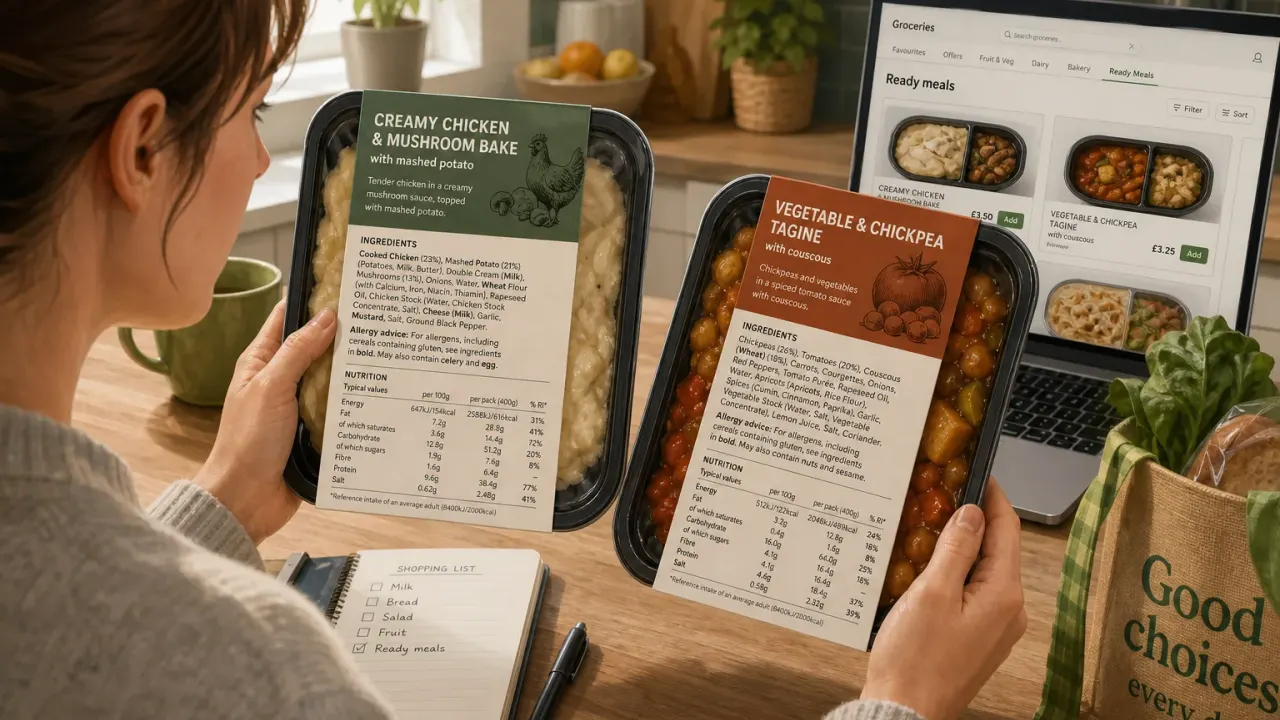
Ocado’s launch of a Simple Ingredients aisle gives shoppers another way to filter Food & Drinks products, including Ready Meals. For anyone who finds long ingredient lists tiring, that could be a useful shortcut.
But a shortcut is not the same as a complete buying decision. A ready meal made with more recognisable ingredients is not automatically healthier, cheaper, lower in salt, suitable for your diet, or better value for your household.
Coverage published on 12 October 2026 reported that Ocado was introducing a Simple Ingredients online aisle featuring more than 350 branded products made with recognisable ingredients and free from artificial additives [1]. The supplied brief for this draft identifies the announcement date as 8 October 2026, while the retrieved source available for citation is the 12 October 2026 coverage.
The useful part of a simple-ingredient filter is that it can reduce the amount of label-scanning you need to do at the start of a shop. If you are browsing Ready Meals after work, that can make it easier to find products that appear to match your preference for shorter or more recognisable ingredient lists.
However, the label should be treated as a starting point. The available evidence says the aisle groups products made with recognisable ingredients and without specified artificial additives, but it does not prove every product will be lower in calories, salt, sugar or saturated fat [1].
For shoppers, the practical takeaway is simple: use the aisle to create a shortlist, then compare the packs in the same way you would compare any other ready meal.
Ingredient lists and nutrition panels answer different questions. The ingredient list tells you what the product is made from, usually in descending order by weight. The nutrition panel helps you compare energy, fat, saturates, carbohydrate, sugars, protein and salt.
For ready meals, salt and saturated fat are especially worth checking because a single pack may represent a substantial part of a meal. If you are comparing two similar dishes, look at the nutrition information per serving as well as per 100g. Per 100g helps with like-for-like comparison; per serving tells you what you are likely to eat.
A meal with familiar ingredients can still be rich, creamy, salty or high in calories. Equally, a longer ingredient list does not automatically make a product unsuitable. The best comparison is between products that meet the same need: for example, two chilled curries, two pasta bakes or two vegetable-based ready meals.
Ready meals can look similar in a product grid while serving different appetites. Before comparing offers, check whether the pack is intended for one person, two people or a side-dish style serving. If the serving size is smaller than you need, the cheaper-looking option may not be better value once you add extras.
For online shopping, compare the price per portion where shown, and use live product modules for changing prices, offers and availability. If only a pack price is easy to see, check the stated serving count before deciding whether it suits your budget.
Also think about whether you will need to add rice, vegetables, salad, bread or a dessert to make the meal work. A slightly more expensive ready meal that is filling on its own may be better value for some households than a cheaper one that needs several add-ons.
A simpler ingredient list is not an allergen check. If you avoid milk, gluten, egg, nuts, sesame, soya or any other ingredient, read the allergen information every time. Recipes and manufacturing information can change, and a category filter cannot replace the pack details shown at the point of purchase.
The same applies if you are shopping for vegetarian, vegan, halal, kosher, low-salt or other dietary preferences. The available evidence does not show that Ocado’s Simple Ingredients aisle is designed to replace those dietary filters, so shoppers should continue using the relevant filters and product labels alongside it.
If a ready meal is for a child, an older relative, a pregnant person or someone with a medical dietary need, do not rely on front-of-pack wording alone. Use the product information and, where relevant, advice from a qualified professional.
Ocado cited retailer-supplied research and search data to explain the launch. The reported figures included a Clariti study finding that 74% of UK consumers preferred products with simpler, recognisable ingredients, and Ocado also reported year-on-year rises in searches for terms such as “unprocessed”, “wholefood” and “natural” [1].
Those figures are useful context for why the retailer created the aisle, but they should not be treated as independent proof that every shopper wants the same thing, or that every simple-ingredient ready meal will be a better buy.
For your own basket, the more important question is whether the product fits your taste, diet, time, storage space and budget. A trend can explain why a product is being promoted; it cannot decide whether it belongs in your weekly shop.
When comparing simple-ingredient ready meals, start with the dish type. Compare like with like: lasagne with lasagne, curry with curry, soup with soup, and so on. This avoids giving one product an unfair advantage just because it is a different style of meal.
Next, check the ingredient list for anything you specifically want to include or avoid. Then compare the nutrition panel per serving and per 100g, especially salt, saturated fat and calories if those matter to your household.
Finally, weigh up pack size, number of servings, storage and cooking method. A chilled meal may suit tonight’s dinner, while a freezer-friendly option may be better for backup meals. Offers can be useful, but only if the product will actually be eaten before it goes to waste.
Not automatically. A recognisable ingredient list can make a product easier to understand, but you still need to compare the nutrition panel, especially salt, saturated fat, calories and serving size.
No. It may help you shortlist products, but allergens, dietary suitability, nutrition and serving information still need checking on the product details before you buy.
Compare similar dishes, then check ingredients, allergens, nutrition per serving and per 100g, pack size, number of servings, storage needs and the live price or offer shown at the time.
Only if the product also suits your needs. Consider taste, nutrition, portion size, convenience and whether you would need to buy extra sides. A simpler label is one factor, not the whole value calculation.
Ocado’s Simple Ingredients aisle may be helpful if you want to browse ready meals with more recognisable ingredient lists, and the launch reflects a retailer response to ingredient-focused shopping behaviour reported in October 2026 [1].
The safest approach is to treat the label as a filter, not a verdict. Compare products and offers carefully, check the nutrition and allergen details, and judge value by the portion you will actually eat.
