Hurry, don't miss savings on selected furniture & more.* Shop all offers
63 Products
Trimmer Lines: Your essential buying guide
Check your grass trimmer or trimmer head instructions for the recommended line diameter. Finer line is generally suited to light lawn edging, while thicker line is intended for tougher grass and heavier vegetation where the tool is designed to accept it.
No. Compatibility depends on the maximum line diameter, the feed system and whether the tool uses loose line, a refillable spool or a specific pre-wound spool. Always match the line to your machine and head before buying.
Round line is a common general-purpose choice. Square or edged profiles are designed to give a more aggressive cut, while twisted line is often chosen for smoother operation. The best option depends on your tool, garden conditions and the finish you want.
Loose line is useful if your trimmer head can be refilled and you want to cut the length yourself. A pre-wound spool can be more convenient, but it must match the exact spool type required by your trimmer.
For occasional edging, a smaller pack may be enough. If you maintain a larger garden, cut around fences and paths often, or use thicker line that wears through faster on hard surfaces, a longer reel can be more practical.
Showing 50 of 63
The right trimmer line helps your tool cut cleanly without overloading the motor or jamming the feed system. Focus on compatibility first, then choose the profile and pack size that suit the jobs you do most often.
Start with the diameter recommended for your grass trimmer or trimmer head. Using line that is too thick can affect feeding and may put extra strain on the tool, while line that is too fine may wear quickly in tougher areas.
Also check whether your machine takes loose refill line, a universal-style spool or a brand-specific pre-wound spool. If you are comparing wider equipment and accessories, the Garden Power Tools category can help you stay within the right tool family.
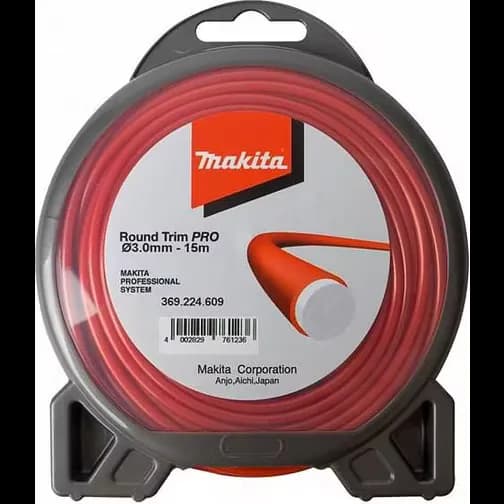
Round trimmer line is a dependable option for regular grass cutting and lawn edge maintenance. It is often the easiest profile to match with a wide range of domestic trimming jobs.
Square, star-shaped, twisted or serrated profiles are more specialised. They can be useful for denser grass or rougher patches, but should still be used only where your trimmer and head are designed to handle them.
For neat edges around lawns, paths and flowerbeds, a lighter line may be sufficient. For longer grass, nettles or rougher boundary areas, you may want to compare thicker or more robust line options.
If you often trim near walls, paving, fencing or gravel, expect the line to wear more quickly. A longer reel can be useful if you regularly work around hard surfaces.
Loose trimmer line on a reel gives you flexibility if your head can be rewound. It is worth checking the reel length and line diameter so you know exactly what you are comparing.
Pre-wound spools save time, but fit is more specific. Compare spool shape, fixing method and stated compatibility carefully before choosing one.
Store trimmer line in a dry place away from unnecessary heat and sunlight. Damaged, brittle or misshapen line may feed poorly and can break more readily during use.
Replace line when it becomes too short to feed correctly or when performance drops. Keeping a suitable spare pack helps avoid stopping midway through edging or clearing work.
Use our barcode scanner to match products instantly to find the best prices, find products with ease using our voice search and build wish lists and your favourites at the click of a button.