Hurry, don't miss savings on selected furniture & more.* Shop all offers
2 Products
OSB Boards: Your essential buying guide
Choose thickness based on the job and the support underneath. Thinner OSB is often used for light lining or temporary boarding, while thicker boards are better suited to flooring, decking, roofing and load-bearing applications. Always check the product specification and any relevant building requirements before buying.
Square-edge OSB has straight sides and is commonly used where boards meet over a support or where edges will be fixed and covered. Tongue-and-groove OSB interlocks along the edges, helping create a neater, more stable surface for floors, lofts and other sheeted areas.
Some OSB boards are designed for humid or structural conditions, but not all OSB is suitable for prolonged outdoor exposure. For external or damp-prone projects, check the board grade, moisture resistance and whether it needs sealing, covering or weather protection.
OSB can be suitable for flooring when the correct structural grade, thickness and edge type are used. Tongue-and-groove boards are a popular option for floors because the edges lock together, but you should still follow fixing guidance and ensure the joists or supports are appropriate.
Check sheet dimensions, thickness, grade, edge profile, moisture rating and whether the board is intended for structural use. Also consider how many sheets you need, how they will be cut, and whether the finish will be visible or covered.
OSB boards are versatile sheet materials used across DIY, renovation and building projects. The best option depends on the board’s strength, thickness, moisture suitability and how the edges need to join.
Start by deciding where the OSB will be used. Flooring, roofing and wall sheathing usually need a board specified for structural work, while general boarding, packaging or temporary protection may not need the same performance level.
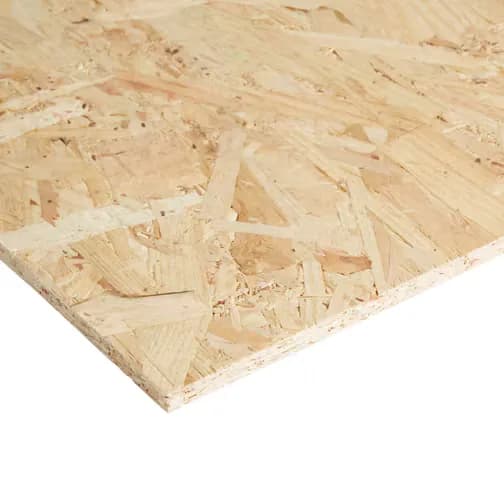
If the board will be visible, remember that OSB has a distinctive strand pattern rather than a smooth furniture-style finish. It can be painted or sealed, but the surface texture will still influence the final look.
Thickness affects rigidity, weight and suitability. Larger spans and heavier use generally require a thicker board, while smaller projects may be easier and cheaper to complete with thinner sheets.
Sheet size matters too. Full-size boards can cover large areas efficiently, but smaller panels may be easier to transport, handle and cut in tight spaces. Compare dimensions carefully so you buy enough material with a sensible allowance for cuts and waste.
Square-edge OSB is straightforward for wall panels, packaging, shelving supports and areas where edges are fixed over framing. It is also useful when boards will be trimmed to fit.
Tongue-and-groove OSB is worth considering for floors and large boarded areas because adjoining sheets interlock. This can help create a more continuous surface, provided the boards are fitted and fixed correctly.
OSB performance varies by grade, so check whether the board is suitable for dry, humid or structural conditions. If the project involves damp air, temporary weather exposure or unheated spaces, moisture suitability should be a key comparison point.
Where required, edges and surfaces may need sealing or covering. This is especially important if cuts expose fresh material or if the finished board needs additional protection.
Before ordering, plan how the boards will be cut and fixed. Think about screw spacing, support positions and whether joins need to fall on joists, battens or studs.
For a cleaner result, mark cuts carefully and use suitable blades and fixings for sheet materials. If the OSB will be painted, stained or varnished, compare boards with the finish in mind as surface appearance can vary.
Use our barcode scanner to match products instantly to find the best prices, find products with ease using our voice search and build wish lists and your favourites at the click of a button.