Hurry, don't miss savings on selected furniture & more.* Shop all offers
18 Products






Living and Home Small Manual Aluminium Alloy Kitchen Meat Mincer Grinder
Living And HomeMincers: Your essential buying guide
A manual mincer is operated by turning a handle and is often suited to occasional, smaller batches. An electric mincer uses a motor, which can make it more convenient for larger quantities or regular use, but it usually needs more storage space and careful cleaning.
Many mincers include interchangeable plates for different textures. Coarser plates are useful for rustic burgers, chilli and sausagemeat, while finer plates suit smoother mince, pâtés and fillings. Check which plates are included and whether replacements are easy to find.
Some mincers can also process foods such as cooked vegetables, breadcrumbs or soaked pulses, depending on the model and attachments. Always check the product guidance, as not every mincer is designed for non-meat ingredients or very hard foods.
Cleaning effort varies by design. Removable feed trays, cutting blades, plates and screw components make cleaning more straightforward. Look for clear disassembly instructions and check whether any parts are dishwasher-safe, as many metal components may need hand washing and thorough drying.
Useful attachments can include sausage funnels, kibbe makers, multiple grinding plates and food pushers. Choose attachments based on how you cook rather than quantity alone; a simple mincer may be enough for burgers, while sausage making needs the right funnel sizes.
A good mincer should match the way you cook, the batch sizes you prepare and the texture you want from your ingredients. Use the points below to compare mincers more confidently before choosing a model.
Manual mincers are typically straightforward, compact and suitable for occasional use. They can be a good choice if you only mince small quantities and want a simple appliance without a motor.
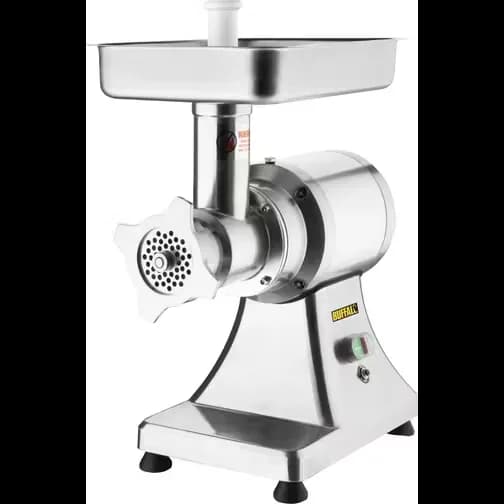
Electric mincers are better suited to regular prep or larger batches. When comparing electric models, consider motor power, stability on the worktop, feed tube size and whether the controls are easy to use with food-safe handling.
The grinding plates determine how fine or coarse the mince will be. A coarse plate works well for chunkier textures, while a fine plate helps create smoother mixtures for recipes such as pâté-style fillings or finely minced meat dishes.
If you cook a range of dishes, a mincer with several plate sizes gives more flexibility. Also check how easily the plate can be fitted, removed and cleaned after use.
For occasional burger nights or small family meals, a compact mincer may be enough. If you prepare mince in bulk, compare hopper size, output rate and whether the machine can handle repeated use without awkward pauses.
A wider feed tray can make prep easier, but it should still be used safely with the supplied pusher. Avoid relying on capacity alone; ease of assembly and cleaning matters just as much for regular use.
Mincers come into contact with raw ingredients, so easy cleaning is essential. Removable parts, smooth surfaces and clear access to the blade and plate area can save time after every use.
Stainless steel and durable metal components can feel robust, while plastic parts may reduce weight. Check the size of the main unit and attachments if cupboard space is limited.
Attachments such as sausage funnels or kibbe accessories can make a mincer more versatile, especially if you enjoy making food from scratch. However, extra accessories are only useful if they fit your cooking habits and are simple to clean.
If you are comparing food preparation appliances more broadly, it can help to browse nearby kitchen appliance categories as well, while keeping in mind that mincers are specifically designed for grinding rather than blending, chopping or mixing.
Use our barcode scanner to match products instantly to find the best prices, find products with ease using our voice search and build wish lists and your favourites at the click of a button.