Hurry, don't miss savings on selected furniture & more.* Shop all offers
16 Products
Makeup Brushes: Your essential buying guide
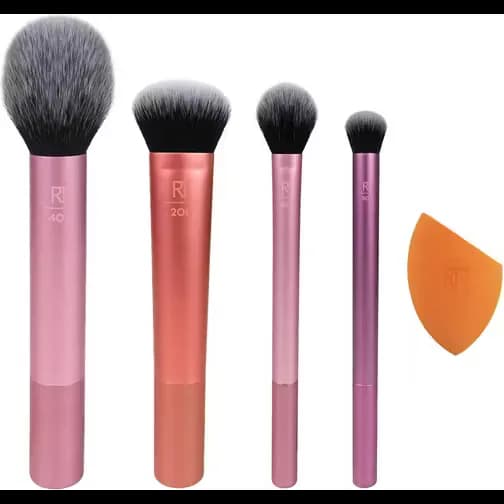
A practical starter kit usually includes a foundation or buffing brush, a powder brush, a blush or bronzer brush, an eyeshadow blending brush and a small angled or detail brush. If you use minimal makeup, a few multi-use brushes may be enough.
Synthetic brushes are a popular choice for liquids, creams and powders because they are widely available and easy to clean. Natural bristles are often associated with powder products, but many shoppers prefer synthetic options for ethical, maintenance or sensitivity reasons.
Individual brushes are useful when you know exactly what is missing from your routine. Brush sets can be better for building a kit or replacing several tools at once, but it is worth checking that the set includes shapes you will actually use.
Dense buffing brushes are useful for blending liquid or cream foundation into the skin, while flat foundation brushes can help with precise application. The best choice depends on whether you prefer a polished, buffed finish or more controlled placement.
Brushes used with liquid or cream products are best cleaned regularly to help remove residue. Powder brushes may not need washing as often, but they should still be kept clean and dry so colours apply smoothly and bristles stay in good condition.
Makeup brushes vary by shape, density, bristle material and intended product type. Comparing these details helps you choose brushes that feel comfortable to use and work with your preferred cosmetics.
For liquid and cream base products, look for dense brushes that can buff and blend without soaking up too much product. Rounded, domed and flat-top shapes are common choices for foundation, concealer and cream bronzer.
For powders, softer and fluffier brushes help distribute product lightly across the skin. Larger brushes suit setting powder and bronzer, while smaller tapered shapes give more control for blush, highlighter and targeted setting.
A dense brush usually gives more coverage and a polished finish, while a loose, fluffy brush creates a softer wash of colour. Angled brushes can help sculpt the cheeks or define brows, and pencil or smudging brushes are useful for detail work around the eyes.
If you like quick makeup, choose versatile shapes that can handle more than one step. If you prefer precise application, separate face, eye and detail brushes may offer better control.
Long-handled brushes can feel balanced for at-home application, while short handles are easier to fit into a makeup bag. Travel sets may be convenient if you do your makeup away from home, but check that the brush heads are still practical for your routine.
A brush roll, pouch or stand can help protect bristles and keep tools organised. This is especially useful for larger sets where similar brush shapes can be easy to mix up.
Soft bristles can feel more comfortable on the skin, but density and cut matter just as much as softness. Check whether the brush is designed for creams, liquids or powders so it suits the formulas you use most often.
Regular cleaning helps remove product build-up and keeps application more consistent. Allow brushes to dry fully before storing them, and avoid leaving damp bristles enclosed in a makeup bag.
A full makeup brush set can be a simple way to refresh your tools, especially if it includes face, eye and detail brushes. Before comparing sets, look at each brush included and consider whether it matches the products you use day to day.
Single brushes are better for filling a specific gap, such as replacing a worn foundation brush or adding a smaller blending brush. This can help you avoid paying for tools that will sit unused.
Use our barcode scanner to match products instantly to find the best prices, find products with ease using our voice search and build wish lists and your favourites at the click of a button.