Hurry, don't miss savings on selected furniture & more.* Shop all offers
11 Products
Golf Gloves: Your essential buying guide
A golf glove should feel snug across the palm and fingers without bunching or restricting movement. Check the brand’s size guide where available, and consider cadet sizing if your palm is wider or your fingers are shorter than standard sizing.
Most golfers wear a glove on their lead hand. For a right-handed golfer this is usually the left hand, while a left-handed golfer usually wears a glove on the right hand. Some players wear gloves on both hands in cold or wet conditions.
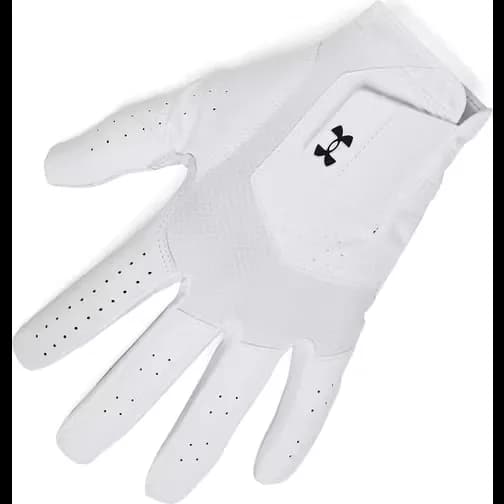
Leather gloves are often chosen for a soft feel and close contact with the club, while synthetic gloves can offer durability, flexibility and easier care. Many gloves combine both materials to balance feel, stretch and wear resistance.
If you regularly play in rain or damp conditions, a dedicated wet-weather golf glove can be useful because it is designed to maintain grip when moisture is present. Standard leather gloves may feel less secure when very wet.
Replace a golf glove when it becomes stretched, shiny, slippery, torn or uncomfortable. How long it lasts depends on how often you play, how tightly you grip the club, the weather and how well the glove is dried and stored after use.
The best golf glove for you depends on fit, grip feel and the conditions you usually play in. Use this guide to compare key features before choosing a glove for practice, competition or casual rounds.
Check whether the glove is listed for the left hand, right hand or as a pair. This matters because most golfers wear a glove on the lead hand, not necessarily their dominant hand.
Fit should be close and smooth, especially across the palm and around the fingers. A glove that is too loose can move during the swing, while one that is too tight can feel restrictive over a full round.
Leather golf gloves are popular with players who want a soft, responsive feel on the grip. They can feel premium, but may need more careful drying and storage after damp rounds.
Synthetic golf gloves are worth comparing if you want flexibility, consistent shape and everyday durability. Hybrid designs may use leather on key contact areas and synthetic panels where stretch or ventilation is helpful.
For warm days, look for breathable panels, perforations or lightweight materials that help reduce clamminess. Comfort matters because a glove that feels hot or damp can distract from your grip.
For rain, damp fairways or winter practice, compare wet-weather and thermal golf gloves. These are made for more specific conditions than standard all-round gloves, so they can be useful additions to your golf kit.
Most golf gloves use an adjustable tab closure, which lets you fine-tune the fit around the wrist. A secure fastening helps keep the glove stable without needing to overtighten it.
Also compare seam placement, cuff shape and reinforced areas. These small details can affect comfort, especially if you practise frequently or play long rounds.
If you play or practise often, it can be useful to compare multipacks or keep more than one glove in rotation. Letting a glove dry properly between uses can help it stay comfortable for longer.
Golf gloves sit alongside other grip-related choices, such as your club grips, but they are not a substitute for worn equipment. If your glove is wearing quickly in one spot, it may be worth checking your grip pressure and club handle condition too.
Use our barcode scanner to match products instantly to find the best prices, find products with ease using our voice search and build wish lists and your favourites at the click of a button.