Hurry, don't miss savings on selected furniture & more.* Shop all offers
4 Products
Joseph Joseph Chopping Boards: Your essential buying guide
It depends on how you cook. Wooden and bamboo boards are popular for everyday prep and serving, plastic boards are practical when you want lightweight, colour-coded options, and glass boards are easy to wipe clean but can be harder on knives. If knife care matters, look for a board with a kinder cutting surface.
Using separate boards for raw meat, fish and ready-to-eat foods can help reduce cross-contamination. Many shoppers choose a set or colour-coded boards so it is easier to keep different food types apart during meal prep.
Choose a size that suits both your worktop and your usual cooking. Small boards are handy for quick prep, medium boards suit everyday chopping, and large boards give more space for carving, bread slicing or preparing several ingredients at once.
Many wooden boards are not suitable for dishwashers because heat and moisture can cause warping or cracking. Always check the care instructions. Plastic boards are more commonly dishwasher-safe, but guidance can vary by product.
Useful features include non-slip edges, juice grooves for carving, handles for lifting, reversible surfaces and slim designs for easy storage. If you cook often, durability, stability and ease of cleaning are just as important as appearance.
A good chopping board should feel stable, suit your prep style and fit comfortably into your kitchen routine. Use this guide to compare materials, sizes and practical features before choosing.
Wooden chopping boards offer a classic look and are often chosen for food prep and serving. They usually need more careful cleaning and occasional maintenance, so they are best for shoppers happy to look after them properly.
Bamboo boards are typically lightweight with a natural finish, while plastic boards are practical for busy kitchens where easy cleaning and separate boards for different foods are a priority. Glass boards can look sleek and wipe clean easily, but may not be the best match if you want to protect knife edges.
For quick snacks, garnishes and small kitchens, a compact chopping board is easy to store and rinse. For regular cooking, a medium board gives enough space for most vegetables, herbs and everyday ingredients.
If you often carve meat, slice loaves or prepare several ingredients at once, compare larger boards with generous surface areas. Make sure the board still fits your worktop, sink and storage space.
A chopping board should stay put while you cut. Non-slip feet, grippy edges or a heavier build can help keep the board steady, especially on smooth kitchen surfaces.
Juice grooves are useful for carving and chopping juicy fruit or vegetables, helping to catch liquid before it runs across the worktop. Reversible boards can also give you extra flexibility for different prep tasks.
Before comparing designs, check how each board should be cleaned. Some boards can go in the dishwasher, while others need hand washing and drying straight away to help keep them in good condition.
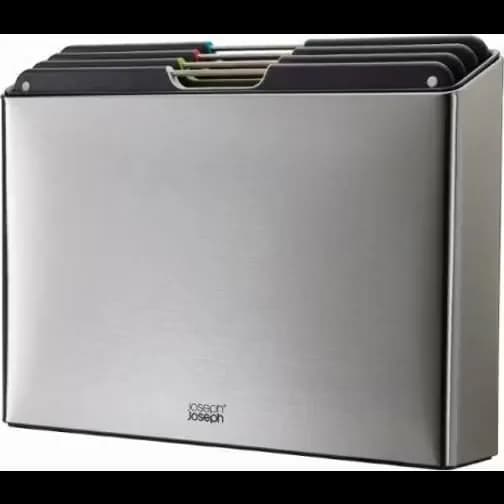
Slim boards, hanging holes and handled designs can be easier to store in smaller kitchens. If you want a tidy prep area, a set with a stand can keep multiple boards organised.
Single boards are ideal when you need one dependable prep surface, while sets can be useful for separating raw meat, fish, vegetables and bread. Colour-coded sets make this separation easier to remember.
Specialist boards, such as carving boards with grooves or bread boards with crumb-catching surfaces, can be worth comparing if you regularly prepare specific foods.