Hurry, don't miss savings on selected furniture & more.* Shop all offers
31 Products






New Balance Little Kid's 327 Bungee Lace - Black with White
New Balance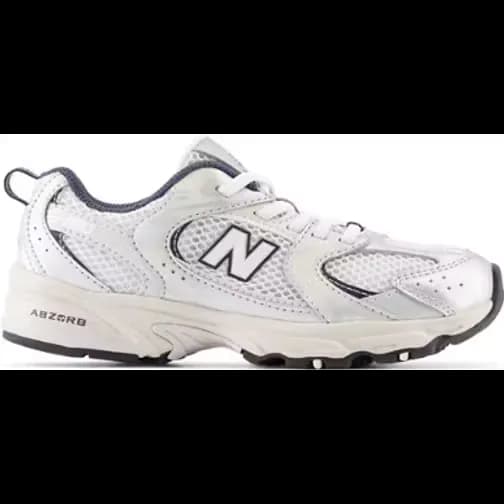


New Balance Little Kid's 530 Bungee - Summer Fog/Nimbus Cloud/Navy
New Balance

New Balance Little Kid's 530 Bungee - White/Natural Indigo/Silver Metallic
New Balance


New Balance 740 Lace Trainers White Silver Metalic - White/Grey
New BalanceNew Balance Childrens Shoes: Your essential buying guide
Measure both feet and use the larger measurement as your guide, as children’s feet can differ slightly. Leave a little growing room at the toe, but avoid shoes that slip at the heel or feel loose around the midfoot.
Look for a secure fastening, supportive heel area, flexible sole and materials that suit regular wear. A wipe-clean upper, comfortable lining and sensible tread can make school shoes easier to manage day to day.
It depends on the child’s age and confidence. Hook-and-loop fastenings are quick for younger children, laces can offer a more adjustable fit, and slip-ons are convenient if they still hold the foot securely.
Check the fit every few weeks for younger children and whenever they mention rubbing, tightness or discomfort. Shoes may also need replacing if the sole is worn down, the heel is misshapen or the upper no longer supports the foot properly.
For everyday wear, look for soles with grip, flexibility and enough cushioning for walking and play. Very stiff soles can feel uncomfortable, while very smooth soles may not be practical on wet playgrounds or polished floors.
Children’s shoes need to balance comfort, fit and everyday practicality. Whether you are comparing school shoes, casual pairs or smarter options, the right choice depends on where they will be worn, how easy they are to fasten and how well they support growing feet.
Children’s feet grow quickly, so fit matters more than simply choosing the next size up. Check toe room, heel hold and width, especially if your child is between sizes or has a higher instep.
A good fit should feel secure without pinching. If a shoe needs thick socks to stay on, or the heel lifts with each step, it is unlikely to be the most comfortable everyday choice.
For school, prioritise comfort over a full day, secure fastenings and materials that cope with regular wear. For weekends, lighter casual shoes may be enough, while smarter children’s shoes can be useful for family occasions and parties.
If your child needs footwear for sport, wet weather or warm holidays, compare those needs separately rather than expecting one pair to do everything.
Fastenings can make a big difference to busy mornings. Hook-and-loop straps are simple for younger children, elasticated styles can be easy to pull on, and laces work well once a child can tie them securely.
For active children, check that the fastening keeps the shoe close to the foot. A shoe that is easy to put on should still feel stable when running, climbing or walking longer distances.
Leather and leather-look uppers can be practical for school-style shoes, while canvas and textile options often suit lighter casual wear. Consider how easily the shoes can be cleaned, especially for playgrounds, parks and changeable UK weather.
Look at the stitching, toe area and sole join when comparing pairs. These are the parts that often take the most wear during everyday use.
Children’s shoes should work with uniforms, coats, sports kit and weekend outfits. Neutral colours can be easier to pair, while brighter styles may be useful for casual wear or children who like to choose their own look.
If you are refreshing more than footwear, comparing clothing and accessories at the same time can help you plan practical outfits for school, holidays and everyday wear.