
Loading buyer guide
Hurry, don't miss savings on selected furniture & more.* Shop all offers
Retailer Christmas toy lists can be tempting, especially when they mix big brands, wooden play, collectibles and outdoor gifts. Here’s how to turn the John Lewis Top Ten Toys 2026 list into a practical shortlist rather than buying into festive hype.
Use our barcode scanner to match products instantly to find the best prices, find products with ease using our voice search and build wish lists and your favourites at the click of a button.
How do you check christmas toys for recalls before buying?
Christmas toy shopping is easier when you know where to look for official safety warnings. Here’s how to use GOV.UK and OPSS recall information before buying slime, sensory toys, wooden toys or marketplace kits.
How should parents shop when christmas toy stock looks patchy?
Patchy Christmas toy availability can make a wish list feel urgent, especially when a tracker shows sold-out or limited lines. The calmer approach is to treat stock alerts as leads, then verify retailers, compare alternatives and avoid rushing into inflated or uncertain listings.
Which toys from Amazon’s 2026 christmas list are actually worth shortlisting?
Amazon’s 2026 Toys We Love list can be a useful starting point, but it is still a retailer selection rather than an independent test. Here’s how to turn the named toys into a smarter shortlist by play style, likely use and budget.
Are screen-free toys the safer christmas bet than another kids’ tablet?
Screen-free Christmas gifts are getting fresh attention, but search interest is not the same as proof a toy will suit your child. The better bet is to compare wooden toys, interactive pets, dolls, slime, squishies, collectibles, audio story toys and board games by age, mess, batteries, storage and repeat play.
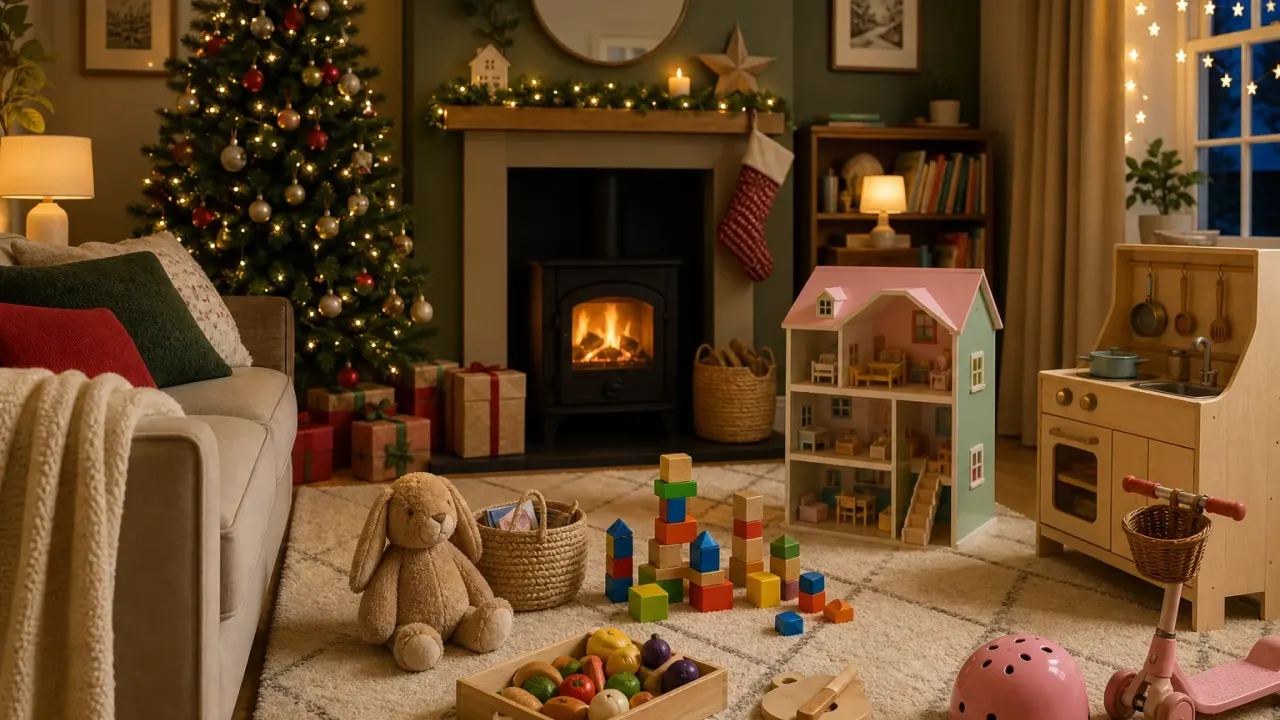
John Lewis has named its Top Ten Toys for Christmas 2026, framing the selection around families spending less time on screens and more time on collaborative building, role play, imaginative storytelling and outdoor adventure [1]. That makes the list useful for inspiration, but not enough on its own to decide what belongs under the tree.
There is also a date note worth treating carefully. The supplied John Lewis Partnership evidence has publication metadata of 3 November 2026, while the page excerpt itself displays “Christmas News 20 Aug 2026” [1]. That does not change the shopping point: it is a retailer prediction for Christmas 2026, not an independent product test.
Below is a buyer-focused way to interrogate the ten named toys. Use it alongside live product modules for changing availability and offers, and compare similar Toys by what they will actually do in your home rather than by festive buzz alone.
The list includes Momiji Sugar Plum Wood Message Doll, John Lewis Wooden Breakfast in Bed Set, K-Pop Demon Hunters Rumi Singing Doll, Marvin’s Magic Treasured Tricks Wooden Set, Mon Ami Colette Duck Soft Toy, Connetix Ball Run Launcher Pack Set, Plus-Plus Learn To Build Space Superset, LEGO Icons 10361 Winter Village Collection Holiday Express Train, Micro Scooters Mini Micro Eco Gruffalo Foldable LED Scooter and Le Toy Van Paddington Doll’s House [1].
John Lewis presents the wider theme as a “Great Play Revival”, with intergenerational play, collaborative building, role play and outdoor play prominent in the announcement [1]. The retailer also says “playtime” toys make up nearly half of sales in its toy department, and states that outdoor equipment sales are up 82% this year [1]. Those figures are retailer-specific evidence from John Lewis, so they should not be read as proof of the whole UK toy market.
The practical takeaway is to split the list into play jobs: pretend play, comfort or collecting, construction, display building and Outdoor sports. That helps you compare products and offers without assuming every named toy suits every child.
The John Lewis Wooden Breakfast in Bed Set is listed for ages 2+ and is positioned around imaginative family role play [1]. It is the kind of toy to shortlist if a child already enjoys kitchens, cafés, teddies’ tea parties or copying everyday routines. Its likely advantage is open-ended play: the same pieces can support lots of small stories rather than one fixed script.
Before buying, think about storage and duplication. If you already own a play kitchen, toy food or wooden role-play accessories, compare whether this set adds something genuinely new. A non-branded wooden food or breakfast set could do the same job if the appeal is pretend serving rather than this specific John Lewis set.
Marvin’s Magic Treasured Tricks Wooden Set is listed for ages 6+ and is described by John Lewis as bringing back the classic living-room show [1]. It is a better shortlist candidate for a child who likes performance, practising a routine and showing adults what they have learned. It may offer stronger family-play value than a one-child novelty because the audience is part of the fun.
Check the fine print before buying any magic set: how many tricks are included, whether instructions are clear for the child’s reading level, and whether small pieces need careful storage. A cheaper or non-branded beginner magic set may be enough if you are unsure whether the interest will last.
Le Toy Van Paddington Doll’s House is listed for ages 3+ and appears in the announcement as part of a return of imaginative play and the classic dolls house [1]. Doll houses can deliver excellent repeat play for children who enjoy arranging rooms and telling stories, but they are also among the bigger storage commitments in Dolls and doll houses.
The buyer question is not just “is it lovely?” but “where will it live?” Compare footprint, furniture included or sold separately, compatible figures, and whether the child already plays this way. A simpler wooden doll house may be the better buy if the Paddington theme is more appealing to the adult gift-giver than to the child.
The K-Pop Demon Hunters Rumi Singing Doll is listed for ages 4+ and is included by John Lewis under its “Gift of Connection” theme, with the retailer linking it to the continued cultural pull of K-pop [1]. It may be worth shortlisting for a child who already knows and wants that character, but it is weaker as a speculative gift if the recipient is not already interested.
Because the supplied evidence does not specify battery details, sound controls or replacement battery requirements, treat those as checks for the product listing rather than assumptions. For any singing doll, compare how noisy it is likely to be in real use, whether the sound can be switched off, and whether a non-singing fashion or character doll would give the same pretend-play value with less maintenance.
Momiji Sugar Plum Wood Message Doll is listed for ages 15+ and John Lewis describes the dolls as having hidden personalised messages and being linked to blind-box collectible appeal [1]. The age rating alone changes the buying decision: this is not a default children’s toy purchase for younger kids.
Shortlist it as a keepsake-style gift for a teenager or older recipient who likes small collectables, tokens and display items. Do not treat it as high repeat-play value in the same way as Blocks, role-play toys or outdoor kit. If the emotional message matters more than the specific brand, a personalised card, ornament or small keepsake could meet the same need.
Mon Ami Colette Duck Soft Toy is described as suitable from birth, and John Lewis frames the Mon Ami launch around design-conscious gifting and heirloom nursery pieces [1]. A soft toy can be a safe-feeling choice for baby gifting, but it is still worth comparing washability, size, texture and whether the family has asked for more nursery items.
For a newborn or baby gift, the buying decision is often about the parents as much as the child. If the recipient already has plenty of soft toys, a practical baby item, book or nursery accessory might be more useful than another plush character.
Plus-Plus Learn To Build Space Superset is listed for ages 5+ and is positioned by John Lewis as educational and intergenerational play [1]. It is a sensible shortlist candidate where adults or older siblings will help a child turn loose pieces into shared projects.
Compare piece count, build guidance and compatibility with anything already owned. If the child mostly likes free building, a non-themed construction set may offer similar repeat play. If they specifically love space, the theme could help keep attention beyond Christmas Day.
Connetix Ball Run Launcher Pack Set is listed for ages 3+ and is described as adding a kinetic twist to construction with gravity and design experimentation [1]. This is the kind of toy that can work well when a child enjoys cause and effect: build, test, adjust, repeat.
The main checks are storage and supervision. Ball runs can spread across a room, and loose pieces need a proper box if you want the toy to survive January. Compare whether you are buying a complete-enough set to be satisfying on its own or a pack that works best with existing magnetic tiles.
LEGO Icons 10361 Winter Village Collection Holiday Express Train is listed by John Lewis as exclusive to John Lewis and The LEGO Group, and the notes indicate adult supervision [1]. This sounds less like a rough-and-tumble children’s toy and more like a seasonal family build or display piece.
Shortlist it for households that already enjoy LEGO, festive displays or adult-child building sessions. Think carefully if the intended recipient wants something to play with independently every day. A smaller building set, a train-themed toy, or a non-seasonal LEGO set may offer better year-round value if display space is limited.
The Micro Scooters Mini Micro Eco Gruffalo Foldable LED Scooter is listed for ages 2+, with John Lewis saying the scooter is exclusive and features bespoke Gruffalo illustrations [1]. It sits in a different buying category from most of the list because it is not just a living-room present; it needs outdoor space, safety kit, storage and adult supervision.
The announcement states that the scooter is crafted using recycled fishing nets that would otherwise contribute to ocean waste, and that Gruffalo accessories are sold separately [1]. For shoppers, that means the headline gift may not be the whole purchase if you also need a helmet, bell, basket or other accessories.
Before shortlisting, compare the child’s age, confidence, route to nursery or park, and whether a scooter will be used beyond the festive novelty. Also check the LED feature details in the product listing, including any battery or charging requirements, because the supplied evidence does not provide those specifics. A non-character scooter could be the better value option if the Gruffalo artwork is not a must-have.
Start with the age label, then challenge it with the child’s actual stage. The John Lewis list ranges from suitable from birth for the Mon Ami soft toy to 15+ for the Momiji message doll [1]. That spread shows why “Top Ten Toys” is a broad festive edit, not a single recommendation for one age group.
Next, score repeat play honestly. Open-ended toys such as role-play sets, doll houses, construction pieces and scooters can earn their keep if the child already likes that type of play. Collectibles, character dolls and seasonal display sets may be more dependent on a specific interest.
Then look at home fit. A doll’s house, scooter or large building project asks for more space than a soft toy or message doll. If storage is already tight, prioritise compact toys, sets with a box, or items that work with Toys you already own.
Finally, compare branded versus non-branded alternatives. Character licensing and exclusivity can make a gift feel special, but they are not automatically the source of play value. Ask what the child is really asking for: Paddington, a doll house, a scooter, a singing character, a train build, or simply something to do together.
Ignore the list if it conflicts with the recipient’s known interests. A child who dislikes construction will not become a ball-run fan just because a retailer has highlighted one. Likewise, a teenager may appreciate the Momiji keepsake while a younger child would get little from it because the listed age is 15+ [1].
It is also reasonable to skip a predicted Christmas toy if it adds hidden hassle. Unclear battery needs, noisy features, accessory costs, storage problems or duplicated play patterns can all reduce value after the wrapping paper is gone.
Retailer lists are best used as prompts. They can reveal themes in Toys, Blocks, Dolls and doll houses and Outdoor sports, but the best buy is still the one that matches the child, the home and the people who will actually play with it.
The supplied evidence is a John Lewis Partnership announcement, not an independent lab test or hands-on review. Treat it as a retailer prediction and compare each toy against the child’s age, interests, storage space and likely repeat use.
The evidence points to several family-play styles rather than one universal best choice: role play with the breakfast set or doll’s house, performance with the magic set, shared building with Plus-Plus, Connetix or LEGO, and outdoor activity with the Gruffalo scooter. The best fit depends on the child and household.
Buy the branded version if the specific character, design or collectability is central to the gift. If the child mainly wants a scooter, doll house, breakfast set or building toy, compare non-branded alternatives that offer the same play pattern, alongside live prices and availability.
The supplied evidence names a singing doll and an LED scooter, but it does not provide full battery or charging details. Check the individual product listing before buying, especially if you want to avoid noisy or battery-dependent gifts.
John Lewis’s Top Ten Toys 2026 list is a useful festive filter because it gathers a mix of pretend play, building, collectibles, comfort gifts and outdoor play. But the list is still a retailer prediction, not a personalised recommendation.
The strongest shortlist will come from matching each toy to the recipient’s age, interests, home space and likely repeat play. Compare current offers, check battery and accessory details, and do not be afraid to choose a simpler alternative if it delivers the same play value.
