Loading buyer guide
Hurry, don't miss savings on selected furniture & more.* Shop all offers
Patchy Christmas toy availability can make any gift feel urgent. Before you buy, use trackers as a clue, compare products properly and decide when a substitute is the better choice.
Use our barcode scanner to match products instantly to find the best prices, find products with ease using our voice search and build wish lists and your favourites at the click of a button.
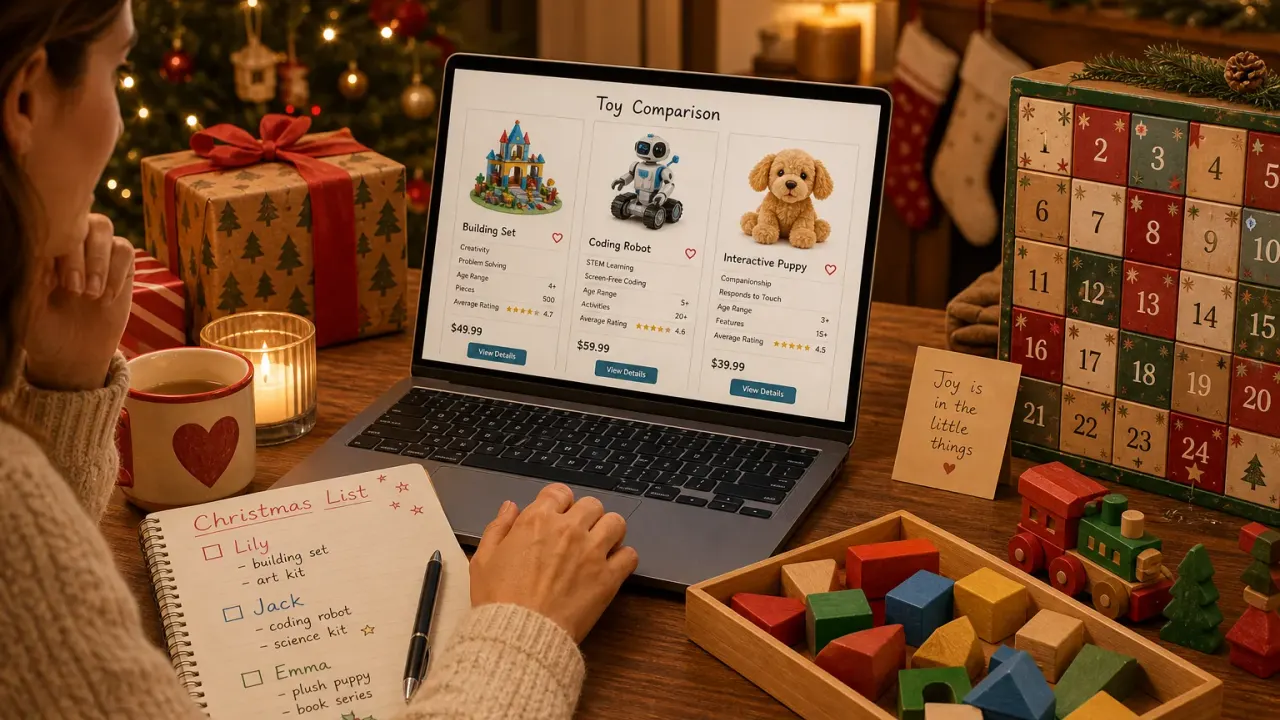
When a child has one particular Christmas toy in mind, patchy stock can make the whole shop feel more stressful than it needs to be. Stock trackers and comparison pages can help you spot possible availability, but they should be treated as leads, not as proof that an item is definitely ready to buy.
One Christmas 2026 toy stock round-up describes checked UK shops and shows what is in stock, what is sold out and where on the date of the check; it also says most shops are checked every five minutes, while more recently added shops are checked every 30 minutes . That is useful, but it is still a snapshot of checked retailers, not a guarantee that the item will still be available by the time you reach checkout.
The better approach is to combine stock alerts with ordinary buyer checks: confirm the exact product, check suitability, compare offers, and decide in advance when you would rather switch to an alternative than chase a difficult listing.
A tracker can save time when popular Toys & Hobbies items move quickly, especially if you are watching several retailers at once. The same Christmas 2026 stock source lists trackers for NeeDoh, Labubu, Jellycat stockists, Pokémon cards and Advent calendars . That can help you build a shortlist of places to check.
Before buying, open the retailer’s own product page and confirm the important details there. Check whether the item can be added to basket, whether the delivery or collection wording is clear, and whether the product name, edition, colour or character matches the gift your child expects.
Do not treat “in stock” as a promise. Stock can change, baskets can expire, and a listing may be for a different version of the toy. If you are using live product modules or comparison tools, use them to compare products and offers, then rely on the retailer’s checkout for the final stock and delivery position.
When a toy looks hard to find, unfamiliar marketplace sellers and third-party listings can become tempting. Slow down before paying. Look for clear seller details, a returns process, delivery information and a product description that matches the item you intended to buy.
Be wary of listings that rely on urgency rather than information. Phrases such as “last one” or “rare” should not override basic checks on age suitability, packaging, included parts and whether the seller looks credible. If the price appears much higher than other offers you have seen, compare alternatives before deciding the exact toy is worth it to you.
If a shopping page sends you onwards to a retailer, remember that some retailer links may involve third-party cookies that track your onward journey and may generate an affiliate commission if you purchase . That does not automatically make an offer good or bad, but it is another reason to make your own buying decision rather than relying on a single link or headline.
A child may ask for a specific brand or character, but the reason they want it is often broader. They may want something squishy, collectible, creative, sensory, cute, competitive or count-down themed. Once you identify the play pattern, you have more room to find a gift that still feels relevant.
For example, if an Advent Calendar is hard to find, compare other Advent Calendars by age suitability, number of compartments, type of contents, mess potential and whether the items will be enjoyed after Christmas Day. A smaller toy bundle, a craft kit from Arts & Crafts, a fidget selection or a character-themed stocking filler may meet the same need better than an overpriced or uncertain listing.
A consumer shopping article in October 2026 discussed alternatives after a viral Squishy Dumpling advent calendar was described as sold out, and it referred to squishy and fidget toy advent calendars that were still available to buy at that time . That historical example is a useful reminder: alternatives can be part of the plan, but availability and price still need checking on the day you buy.
Instead of searching for one item until you feel trapped, create a simple three-level list. Put the exact toy at the top, two close substitutes underneath, and one different but reliable backup below that. This keeps the decision practical if the main toy disappears or only shows up through sellers you are not comfortable using.
For squishy toys and fidget gifts, compare the feel, size, contents, age labelling and how the toy will be used. For collectibles such as cards or mini figures, check whether your child wants a specific character or simply enjoys opening packs. For plush toys, compare the character, size and wash-care information rather than assuming every similar-looking item will feel the same.
For hobby-based gifts, do not overlook creative alternatives. A child who wants a fashionable toy might still enjoy a drawing set, Acrylic Paints, Coloured Pencils, Craft Papers or another Arts & Crafts option if it connects with how they like to play. The key is not to pretend it is the same gift, but to choose something that has its own appeal.
Current prices and stock can change quickly, so the best comparison is the full offer in front of you at the time. Look at the item price, delivery cost, delivery timing, returns position, seller identity and whether the product is new, used, bundled or a different version.
A cheaper listing may not be better if it has unclear delivery, a difficult return route or vague product details. A more expensive listing may not be better either if it is simply taking advantage of panic. Set your own limit before you shop, so you know when to walk away and move to the backup.
If you are buying more than one child’s gift, compare baskets as well as individual toys. Sometimes a retailer with one attractive toy price becomes less appealing once delivery charges or minimum spends are factored in. Conversely, one retailer may be convenient if you can buy several suitable gifts together, provided the stock and delivery information is clear.
The strongest buying decision may be to pause. If the seller is unclear, the description is thin, the delivery wording does not fit your Christmas timing, or the product does not match the toy your child asked for, waiting or switching is often better than buying under pressure.
This is especially true for gifts where disappointment would be obvious: the wrong character, the wrong edition, a smaller-than-expected version, or a calendar with contents that do not suit the child’s age. If you cannot confirm the basics, choose a clearer alternative rather than hoping the listing means what you want it to mean.
Patchy stock is annoying, but it does not have to dictate the purchase. A well-chosen backup bought calmly can be better value, easier to return and more likely to be enjoyed than a rushed substitute bought because it appeared to be the only option left.
No. A tracker can show possible availability at checked shops, but you should still confirm the item on the retailer’s own product page and at checkout. One Christmas 2026 tracker source says most shops are checked every five minutes and newer shops every 30 minutes, which is useful but still not a final purchase guarantee .
Only after careful checks. Compare seller details, returns information, delivery wording, product name and images. If the listing is vague, much more expensive than comparable offers, or does not clearly match the item your child wants, a substitute gift may be the safer choice.
Plan one ideal gift, two close alternatives and one different backup. That gives you room to compare offers without feeling forced into the first listing you find. It also helps if the original toy comes back but only in an unsuitable version, colour or delivery window.
Yes. Compare the theme, contents, age suitability, number of days and likely use after Christmas. If a specific calendar is unavailable or only appears through uncertain sellers, a fidget, craft, collectible or smaller countdown-style gift may be a better fit.
Check the exact product name, age guidance, included contents, seller details, delivery timing, returns information and whether the item can actually be checked out. If using a stock page, treat it as a lead rather than a final guarantee: one Christmas 2026 source describes checked UK shops on the date of the check and says most shops are checked every five minutes, with newer shops checked every 30 minutes .
Christmas toy stock pressure is easiest to manage when you do not let one tracker result or one listing make the decision for you. Use stock alerts to find leads, then verify the retailer, compare the full offer and keep alternatives ready.
For parents shopping across Toys & Hobbies, the aim is not to chase every supposedly scarce toy. It is to buy something suitable, fairly priced for your budget, clearly described and likely to make sense for the child who will open it.