
Loading buyer guide
Hurry, don't miss savings on selected furniture & more.* Shop all offers
GoodHome can be a tidy choice if you want a coordinated own-brand look, while the wider B&Q tiles offer may give you more variation across adhesive tiles, wall styles and alternative finishes. Here’s how to compare them sensibly before buying.
Use our barcode scanner to match products instantly to find the best prices, find products with ease using our voice search and build wish lists and your favourites at the click of a button.
Best patterned tiles for statement floors
Patterned tiles can transform a hallway, cloakroom, kitchen or utility floor, but the right choice is not just about the print. Size, finish, material, pack coverage and whether the listing is genuinely suitable for floors all matter when comparing products and offers.
Gloss vs matt tiles for bathrooms and kitchens
Gloss and matt finishes can change how a bathroom or kitchen looks, feels and cleans day to day. The right choice depends on where the tile will go, how much light the room gets, the format you prefer and whether you are comparing ceramic-style tiles, peel-and-stick vinyl or bathroom wall panels.
Wetwall vs Multipanel bathroom panels: which is better value?
Wetwall listings in the current catalogue snapshot give shoppers several visible size and finish options, while the sampled Multipanel offer stands out for its Classic Cappuccino Stone design and Hydrolock Groove detail. The better-value choice depends less on brand alone and more on how many panels you need, whether accessories are included, and how confidently the retailer listing answers installation questions.
Ceramic vs porcelain tiles: which should you buy?
Ceramic and porcelain can look similar online, but the better buy depends on where the tile is going, how much wear it will face and whether you are comparing like for like against peel-and-stick tiles or wall panels.
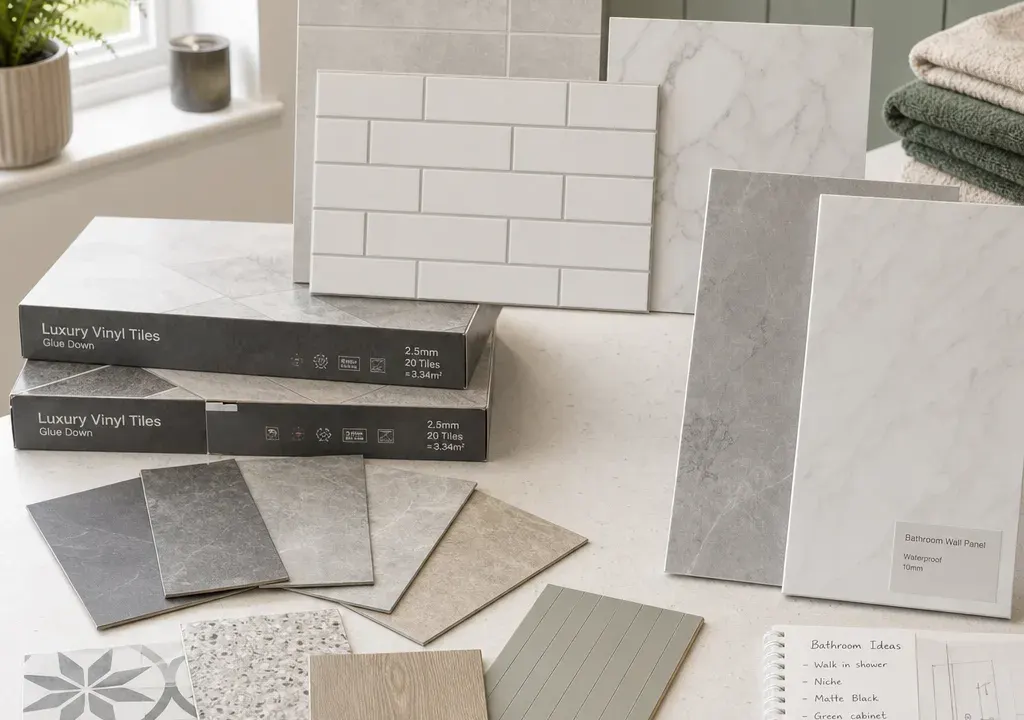
GoodHome and B&Q can look like a simple brand-versus-retailer comparison, but in practice the decision is more nuanced. GoodHome is a branded range shoppers may consider within the broader B&Q shopping environment, while B&Q’s wider tiles selection can include different brands, materials, formats and decorative finishes.
That means the better choice depends on the room, the surface, the finish you want and how much flexibility you need. A kitchen splashback, a quick refresh with self-adhesive tiles, a full bathroom wall, and a hardwearing floor all place different demands on a product.
If you want a straightforward, coordinated look and prefer to shop within a familiar home-improvement range, GoodHome tiles may be worth shortlisting. They can suit buyers who want a more edited choice and less browsing across multiple third-party styles.
If you want the widest comparison, look across B&Q tiles more broadly. In the supplied catalogue snapshot, B&Q-listed examples include D-C-Fix sticky back vinyl wall tile packs in finishes such as Jamila Natural, Jamila Blue and Jamila Gold, plus a concrete-design self-adhesive tile format. That illustrates how the wider B&Q offer can include practical refresh products as well as more conventional tile choices.
For floors, compare the dedicated Floor Tiles selection as a separate decision. Floor use needs particular attention to suitability, durability, slip feel, cleaning and installation method. For decorative walls, splashbacks and feature areas, style and ease of fitting may matter more. If you are considering an alternative to tiling a bathroom wall, Wall panel (Bathroom) options may also be worth comparing.
The most important difference is likely to be material mix. GoodHome-branded tiles may appeal if you want a consistent own-brand design language, while the wider B&Q tiles range may include other brands and formats that solve more specific jobs.
In the supplied product context, several B&Q-listed options are sticky back vinyl wall tiles from D-C-Fix. These are different from traditional ceramic or porcelain tiles: they are designed around adhesive application and decorative coverage rather than grout-and-adhesive installation. That can make them attractive for a visual update, but shoppers should check the product’s stated surface suitability, heat guidance and moisture guidance before choosing them for kitchens or bathrooms.
Traditional tiles, peel-and-stick vinyl tiles, mosaic tiles and bathroom panels should not be treated as interchangeable. Mosaic tiles can be useful when you want texture, detail or a feature strip. Larger panels may reduce the number of joins on a wall. Standard tiles may be preferable when you want a more permanent tiled finish. The best comparison starts with the surface and room conditions, not the brand name.
GoodHome is likely to be most appealing if you want a coherent look across a room without spending too long comparing every decorative option. For buyers planning a simple bathroom, kitchen or utility update, that can be useful: fewer clashing finishes, easier mood-boarding and a clearer route to matching with other home-improvement products.
The wider B&Q tiles selection is better if you are still exploring. The supplied examples show decorative sticky back wall tiles in cream, blue, gold and concrete-effect finishes. That kind of range is useful if the goal is a visible refresh rather than a neutral background surface.
When comparing styles, order your thinking like this: first choose the room mood, then the colour family, then the surface finish, then the tile size. Glossy finishes can brighten a darker area but may show marks differently from matt finishes. Patterned tiles can create impact but may date more quickly than simpler neutrals. Strong colours work best when you are confident they will still suit the room after furniture, worktops, flooring and lighting are in place.
Tile size affects the look, the fitting process and the amount of cutting. Smaller formats can suit splashbacks, alcoves and decorative panels, while larger formats can make a wall look calmer because there are fewer visible joins. Mosaic tiles are often chosen for detail, borders or curved-looking areas, but they can involve more grout lines.
The supplied catalogue examples include a Metro tile listed at 20 x 10 cm from another retailer, adhesive vinyl floor tiles listed at 12 x 12 inches, and a D-C-Fix self-adhesive format listed at 30.5 x 30.5 cm. These examples show why it is not enough to compare packs by price alone. A larger tile may cover more quickly, but may also create more waste in a small or awkwardly shaped area.
Before choosing between GoodHome and the wider B&Q range, measure the area carefully and sketch the layout. Include window reveals, sockets, pipework, bath panels, boxing-in and any cut-outs. The more interruptions a surface has, the more important it is to compare tile size, repeat pattern and wastage allowance.
Pack coverage is one of the fairest ways to compare tiles and tile alternatives. A cheaper pack is not automatically better value if it covers less area, creates more waste, or needs more extras to complete the job.
Look for the stated coverage per pack and compare it against the area you need to cover. Then add a sensible wastage allowance, especially for patterned tiles, diagonal layouts, awkward corners or future repairs. If you are choosing a design that may be difficult to match later, keeping a spare pack or a few spare tiles can be a practical move.
For the B&Q-listed D-C-Fix examples in the supplied data, the pack descriptions include details such as 18-pack wall tile sets. That tells you the unit count, but you still need to check the actual coverage and dimensions on the current product listing before buying. Unit count, tile size and coverage are related, but they are not the same thing.
Tile pricing changes, so it is better to compare value signals than rely on a single ticket price. In the supplied catalogue snapshot, B&Q-listed D-C-Fix sticky back wall tile products appeared in a lower-price pack area than many bathroom wall panel examples from other retailers. That does not make one better than the other; they are different product types for different jobs.
When comparing GoodHome with B&Q’s wider tiles range, separate the basket into product type first: traditional wall tile, Floor Tiles, Mosaic tiles, self-adhesive tile, or Wall panel (Bathroom). Then compare cost by coverage, not just by pack. A tile with a higher pack price may work out better if it covers more area or reduces cuts. A lower-cost decorative product may make sense for a rental-friendly visual update, provided the product’s suitability matches the room.
Also compare the extras. Traditional tiling may involve adhesive, grout, spacers, trim, sealant, tools and preparation materials. Self-adhesive tiles may have fewer accessory costs, but surface preparation still matters. Panels may need trims and compatible fixing products. The product on the shelf is rarely the full project cost.
Availability can be a decisive factor, especially if you are part-way through a project. If you need more stock quickly, a widely available design, standard size or current range may be safer than a niche finish. If you are matching an existing tile, check batch, colour and finish carefully before assuming a close-looking alternative will blend in.
GoodHome may be attractive if you prefer to build a room scheme around a recognisable range. The broader B&Q tiles selection may be stronger if you want to compare multiple brands, finishes and quick-refresh options in one place. The trade-off is that wider choice requires more checking: material, usage area, pack coverage, fitting method and returns conditions all need attention.
For online comparison, shortlist two or three options rather than browsing endlessly. Put them side by side by material, size, coverage, finish, suitability and total basket cost. If one product is out of stock or only available in limited quantity, remove it from the shortlist unless your project can wait.
Choose GoodHome if you want a more edited tiles choice, a coordinated room feel and a simpler decision process. It is a sensible starting point when you already like the look of the range and the specifications match your room.
Choose from the wider B&Q tiles range if you want more finishes, alternative brands or specialist formats such as sticky back vinyl wall tiles. It is also useful if you are comparing decorative refresh products against more traditional tiling options.
Do not choose purely by discount, pack price or a product image. The right tile is the one that suits the surface, covers the area efficiently, fits the room conditions and still looks right alongside the rest of your scheme.
Not automatically. GoodHome may suit shoppers who want a coordinated branded range, while the wider B&Q tiles selection may offer more variety across brands, materials and formats. Compare suitability, coverage, finish and total project cost before deciding.
Price per area is usually more useful. Pack price can be misleading because packs vary by tile size, quantity and coverage. Always check stated coverage and allow for waste.
No. Sticky back tiles are typically a decorative adhesive format and should be compared separately from ceramic, porcelain or other traditional tiles. Check the product’s stated suitability for the room, surface, heat and moisture conditions.
Wall panel (Bathroom) products may be worth comparing if you want larger sheets, fewer joins or an alternative look to conventional tiling. Compare dimensions, fitting method, trims and room suitability before buying.
There is no single rule for every project, but you should allow extra for cuts, breakages, pattern matching and future repairs. Awkward layouts, diagonal patterns and small areas with many cut-outs usually need more careful allowance.
GoodHome versus B&Q tiles is best viewed as an edited-range versus wider-choice decision. GoodHome may help you narrow the look; B&Q’s broader tiles selection may help you compare more materials, styles and formats.
Start with the room and surface, then compare material, size, pack coverage, availability and total basket cost. That approach will give you a more reliable shortlist than choosing by brand name or headline offer alone.
