
Loading buyer guide
Hurry, don't miss savings on selected furniture & more.* Shop all offers
Choosing between gloss and matt tiles is not just a style decision. Finish, size, colour, wall or floor suitability and maintenance details all affect whether a product is a good fit for a splashback, shower area, cloakroom or kitchen floor.
Use our barcode scanner to match products instantly to find the best prices, find products with ease using our voice search and build wish lists and your favourites at the click of a button.
Best patterned tiles for statement floors
Patterned tiles can transform a hallway, cloakroom, kitchen or utility floor, but the right choice is not just about the print. Size, finish, material, pack coverage and whether the listing is genuinely suitable for floors all matter when comparing products and offers.
GoodHome vs B&Q tiles: which range should you choose?
Choosing between a named GoodHome range and the wider B&Q tiles selection is less about brand loyalty and more about matching material, coverage, finish and availability to the job you are actually doing.
Wetwall vs Multipanel bathroom panels: which is better value?
Wetwall listings in the current catalogue snapshot give shoppers several visible size and finish options, while the sampled Multipanel offer stands out for its Classic Cappuccino Stone design and Hydrolock Groove detail. The better-value choice depends less on brand alone and more on how many panels you need, whether accessories are included, and how confidently the retailer listing answers installation questions.
Ceramic vs porcelain tiles: which should you buy?
Ceramic and porcelain can look similar online, but the better buy depends on where the tile is going, how much wear it will face and whether you are comparing like for like against peel-and-stick tiles or wall panels.
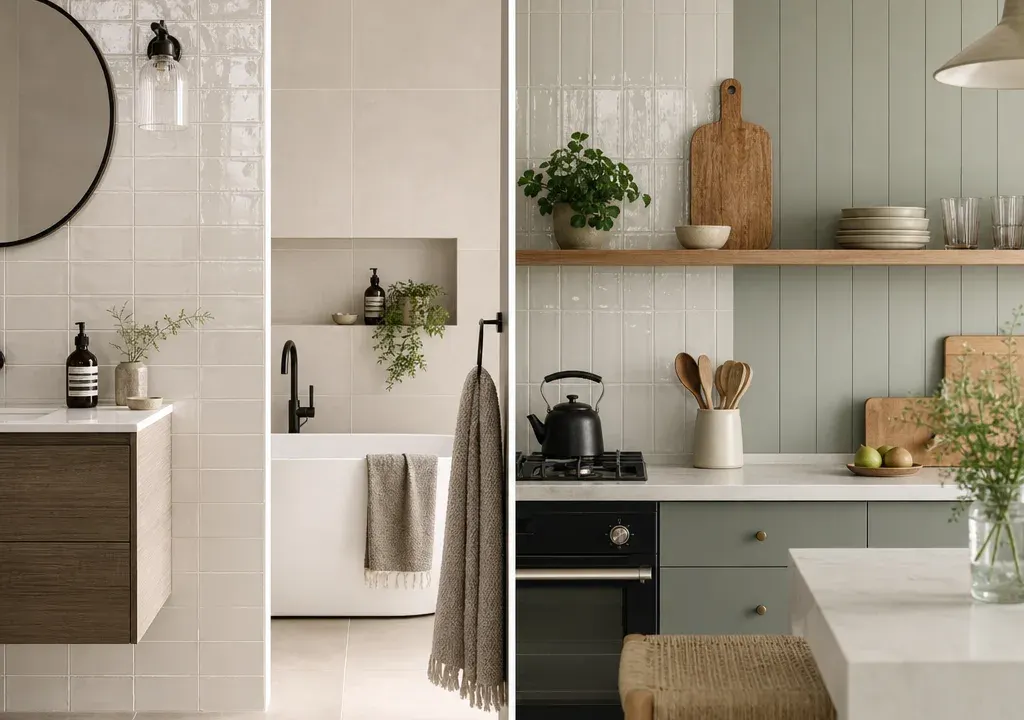
Gloss and matt tiles can both work beautifully in bathrooms and kitchens, but they suit different jobs. A glossy splashback can bounce light around a compact kitchen, while a matt wall panel or floor tile can give a softer, more understated look in a bathroom.
When comparing Tiles, look beyond the finish name. Retailer listings often reveal the details that matter most: pack type, stated wall or floor use, size, colour, material style, whether it is self adhesive, and whether the product is a tile, vinyl tile or bathroom wall panel. Those details usually tell you more about suitability than the word “gloss” or “matt” alone.
The first decision is location. A wall tile for a kitchen splashback has different demands from a floor tile in a busy hallway or a bathroom panel around a shower area. In the supplied comparison set, some products are clearly described as wall options, such as D-C-Fix sticky back vinyl wall tile packs in cream, blue and gold. Others are clearly presented as floor options, including the Achim Nexus self adhesive vinyl floor tile set and the FloorPops peel and stick floor tiles.
That distinction matters more than finish. If a listing says wall tile, do not assume it is suitable for floors. If it says floor tile, check whether the finish, size and installation type make sense for the room. Floor Tiles need to cope with foot traffic in a way decorative wall products do not.
Bathroom wall panels are another comparison group. Wetwall and Multipanel examples in the catalogue are listed as bathroom wall panels or wet room decorative panels, with larger sheet-style dimensions rather than individual tile sizes. They can create a tiled or stone-effect look with fewer visible joints, but they are a different format from traditional Tiles and should be compared on panel size, edge detail, finish and installation requirements.
Gloss finishes are often chosen for walls because they can make a room feel brighter and more polished. In a small kitchen, a glossy splashback-style tile can visually lift a darker worktop area. In a bathroom, gloss wall tiles can suit a clean, hotel-style look, particularly in white, cream or marble-effect designs.
The trade-off is that shine can make marks more visible. Fingerprints, water spots and smears may stand out more on reflective surfaces, especially in darker colours or areas close to taps and cooking zones. That does not mean gloss is difficult by default, but it does mean you should think about how often the surface will be splashed and how fussy you are about visible streaks.
When browsing Tiles, check whether the listing clearly states a gloss finish. Some products may look shiny in images, but product photos are not a reliable substitute for a stated finish. If the finish is not listed, treat it as unknown and compare other confirmed details instead, such as size, intended use and colour.
Matt finishes suit buyers who prefer a calmer, more contemporary surface. They tend to reduce glare compared with high-shine finishes, which can be useful in bright bathrooms, open-plan kitchens or rooms with strong downlighting.
The comparison set includes several products with matt clearly stated in the listing, including Wetwall bathroom wall panels in Matt Terra Light and Matt Tempesta. These are not small-format tiles, but they are useful examples of how matt finishes are often used in bathroom wall coverings to create a stone, concrete or muted decorative look.
Matt does not automatically mean maintenance-free. Textured or very flat-looking surfaces can still show soap residue, limescale or cooking splashes depending on colour and placement. If easy wiping is a priority, read the retailer’s care and installation information carefully rather than relying only on the finish category.
Format affects both the look and the practical work involved. A Metro tile listed at 20 x 10 cm suggests a classic small rectangular format, commonly chosen for splashback-style layouts. Smaller tiles can create a detailed look, but they usually mean more joints or grout lines if installed traditionally.
Peel-and-stick vinyl tiles are a separate group. The Achim Nexus self adhesive vinyl floor tile set is listed as 12 x 12, while a D-C-Fix concrete design self adhesive option is listed at 30.5 x 30.5 cm. FloorPops also appears as a pack of 10 peel and stick floor tiles. These products may appeal when you want a quicker decorative update, but you should compare the stated surface suitability, preparation guidance and durability information in each retailer listing.
Large bathroom wall panels, such as Wetwall panels listed at 2440 x 600 mm, 2440 x 900 x 4 mm and other sheet-style sizes, cover a much bigger area per piece. They can be worth comparing against tiles when you want fewer joins or a continuous decorative finish, but they are not a direct like-for-like substitute for individual ceramic or vinyl tiles.
Colour can change how a finish behaves visually. Light colours such as cream, beige and pale stone effects often make compact bathrooms and kitchens feel more open. In the comparison set, D-C-Fix Jamila Natural is listed in cream, FloorPops Bonneville is listed in beige, and Multipanel Cappuccino Stone suggests a warm stone-effect look.
Stronger colours need a little more thought. D-C-Fix Jamila Blue and Wetwall Deep Sea Blue Smoked Rose point towards more decorative choices, while D-C-Fix Jamila Gold may suit a bolder feature area. Gloss versions of bold colours can look more dramatic, while matt versions often feel softer and less reflective.
If you are unsure, think about the surrounding surfaces. Gloss can balance matt cabinets or dark worktops. Matt can calm a room that already has shiny taps, glossy units or reflective glass. The best finish is usually the one that works with the rest of the room, not the one that looks best in isolation.
Tiles in this type of search can vary widely because the category includes individual tile formats, peel-and-stick packs and larger wall panels. A low-cost pack of self adhesive vinyl tiles should not be compared directly with a full-height bathroom wall panel without considering coverage, material type, intended use and installation needs.
Retailer listings may show promotional signals such as discounts or reduced original prices. Those can be useful when comparing offers, but they should not be the only reason to buy. Check what the pack includes, the dimensions, whether it is a wall or floor product and whether the colour and finish are right for the room.
A good comparison is cost against suitability. For example, an 18-pack sticky back vinyl wall tile may look appealing for a small decorative wall area, while a larger panel may be more relevant for a bathroom wall run. The better-value product is the one that fits the job with less compromise, not necessarily the one with the biggest discount shown.
For kitchens, look closely at how the surface is described for cleaning and where it can be installed. Areas behind hobs, sinks and food preparation zones can be exposed to grease, moisture and repeated wiping. Do not assume a self adhesive decorative tile is suitable for every splashback position unless the retailer listing confirms it.
For bathrooms, consider water exposure and joints. Wall panel listings may appeal where shoppers want a large continuous surface, while traditional tiles and Mosaic tiles create more joint lines. More joints can mean more cleaning attention over time, especially in damp areas.
For floors, confirm the product is actually listed for floor use. The Achim Nexus and FloorPops examples are presented as floor tile products, while D-C-Fix wall tile packs are not. Finish choice also matters underfoot, but the listing’s stated floor suitability should come first.
Choose gloss if your priority is brightness, a polished look and a wall surface that visually reflects light. It is especially worth considering for compact kitchens, cloakrooms and splashback areas where you want a crisp decorative finish.
Choose matt if your priority is a softer look, reduced glare and a more muted surface. Matt bathroom panels and stone-effect designs can work well where you want a calm, modern finish rather than a reflective tiled wall.
Choose by product type if practicality matters more than finish. For a quick decorative update, compare peel-and-stick vinyl options. For bathroom walls, compare wall panels with wall tiles. For floors, stay within Floor Tiles and check the product is listed for floor use before worrying about colour or shine.
Read the title and product details in order: finish, material style, intended use, size, pack quantity and colour. If one of those details is missing, avoid filling in the gaps yourself. A product image can help you judge style, but it should not be treated as proof of finish or suitability.
Compare similar products together. Sticky back wall tile packs should be compared with other sticky back wall tile packs. Peel-and-stick floor products should be compared with other floor products. Bathroom wall panels should be compared with Wall panel (Bathroom) options, especially where dimensions and edge styles differ.
Finally, think about the finished room. A tile that looks attractive online still needs to work with the lighting, cabinets, sanitaryware, worktops and floor colour you already have. The most successful choice is usually the finish that suits the room’s use as well as its style.
Gloss tiles can help a small bathroom feel brighter because they reflect more light, especially on walls. Matt tiles or panels can still work well if you prefer a softer look, but colour and lighting will matter just as much as finish.
For kitchen walls and splashbacks, gloss can create a clean, bright look, while matt can feel more understated. Check the listing for cleaning and installation suitability, particularly around sinks, hobs and high-splash areas.
Do not assume so. If a product is listed as a wall tile, compare it within wall options unless the retailer clearly states floor suitability. Floor products should be chosen from listings that specifically describe them as floor tiles.
Yes, if you want a decorative update and the listing suits your surface and room. Compare pack size, dimensions, wall or floor suitability and care instructions. They should not be treated as identical to ceramic or porcelain tiles unless the product details support that comparison.
No. Bathroom wall panels are usually larger sheet-style coverings, while tiles are individual pieces or packs. Panels can be useful to compare when you want broad wall coverage, but dimensions, fitting method and finish need to be judged separately.
The gloss vs matt decision is really a choice about light, style, location and upkeep. Gloss is useful when you want brightness and a polished wall finish; matt is a strong option when you prefer a softer, lower-glare surface.
Before buying, compare Tiles by finish, size, colour, wall or floor suitability and product type. Keep peel-and-stick wall tiles, Floor Tiles, Mosaic tiles and bathroom wall panels in their proper comparison groups, then weigh the offer against how well the product fits the job.
