
Loading buyer guide
Hurry, don't miss savings on selected furniture & more.* Shop all offers
For sloped streets and uneven surfaces, the strongest mobility scooter on paper is not always the best buy. The right shortlist starts with clear specifications and a realistic view of where you will ride.
Use our barcode scanner to match products instantly to find the best prices, find products with ease using our voice search and build wish lists and your favourites at the click of a button.
Best mobility scooters for heavier users
For heavier riders, the right mobility scooter is less about headline discounts and more about confirmed user weight, a comfortable seat, stable wheel layout, sensible range and the type of journeys you actually make.
Best mobility scooters for car boot storage
Car boot suitability is not just about whether a scooter folds. Total lift weight, heaviest component, battery removal, folded shape and retailer listing detail all matter when you are choosing between portable Mobility Scooters.
Best mobility scooters with long battery range
Longer range is only useful if the scooter also suits your weight, storage space, charging routine and local journeys. For Mobility Scooters, the smartest shortlist compares stated range against battery details, scooter weight, speed, user weight and the retailer offer rather than relying on a headline mileage figure alone.
Three-wheel vs four-wheel mobility scooters
Wheel layout changes how a mobility scooter feels in tight spaces, how planted it may feel on uneven ground and how easy it is to store or transport. The right choice depends less on the number of wheels alone and more on width, turning space, weight, range, speed description and the offer available at the time you buy.
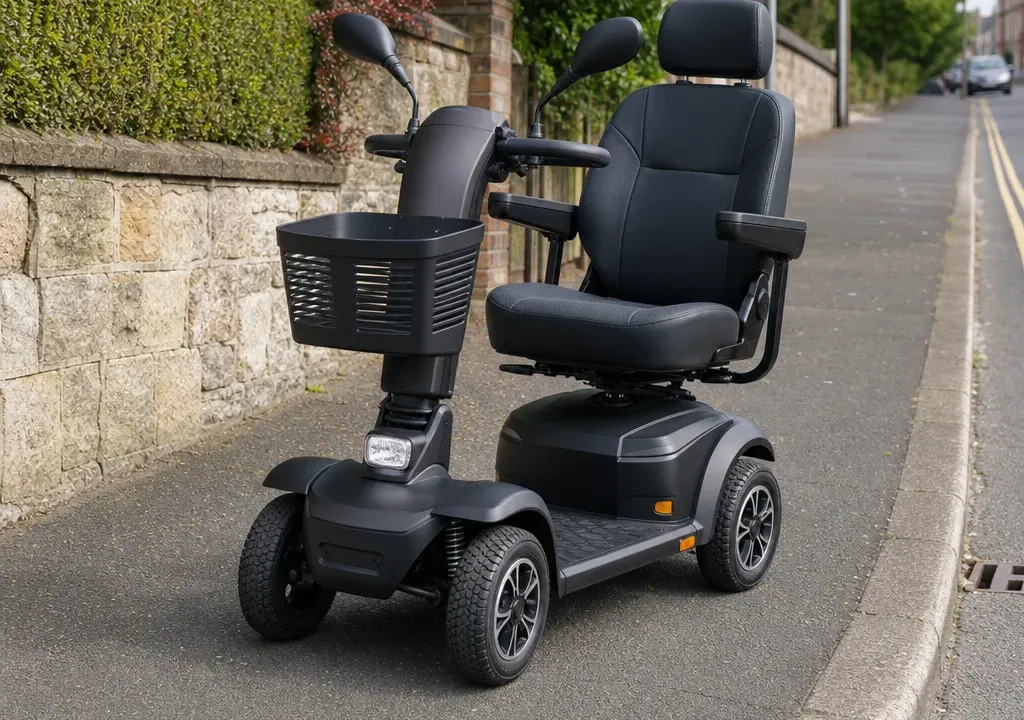
Choosing a mobility scooter for flatter pavements is one thing; choosing one for hills, cambers, dropped kerbs and broken surfaces needs a more careful comparison. A low price can be tempting, but the better buy is usually the model with the clearest evidence that it suits your route, your weight, your storage space and the surfaces you meet most often.
In the current Mobility Scooters catalogue, shoppers can compare compact folding models such as the Shoprider FreedomGo, iScooter X11, CareCruise folding scooter and Drive InstaFold with larger-looking options such as the Drive Envoy 4mph and Veleco models. There are also listings where the title needs careful checking, including ride-on or unusually low-priced items that may not be a conventional adult mobility scooter. For hills and uneven pavements, that filtering step matters.
A mobility scooter that looks like a bargain may still be the wrong choice if it struggles with your everyday journey. Before comparing offers, write down the real conditions it needs to handle: short slopes, longer inclines, uneven paving slabs, gravelly paths, dropped kerbs, narrow entrances, lifts, storage space and whether it needs to go in a car boot.
For hilly areas, prioritise listings that clearly state motor power, maximum gradient, battery range, user weight limit and tyre type. If those details are missing, treat the product as harder to compare rather than assuming it will cope. A higher-ticket scooter with clearer specifications can be easier to judge than a cheaper model with limited information.
Within Electric Vehicles, Mobility Scooters sit alongside Electric Scooters, Electric Mopeds, Hoverboards and Accessories for Electric Vehicles, but the buying criteria are different. For mobility use, comfort, stability, turning space, easy controls and the ability to handle everyday surfaces usually matter more than speed-focused features.
For hills, motor output is one of the first details to look for, but it should not be read in isolation. A listing such as the Veleco Faster, which includes 1000w in the product title, gives a visible clue that it is positioned differently from many compact folding scooters. That does not automatically make it the right scooter for every buyer, but it does make it worth comparing against gradient rating, user weight limit, battery range and total scooter size.
Maximum gradient is especially useful where supplied. It gives a clearer indication of the slope a scooter is intended to manage, although real-world performance can still depend on rider weight, battery charge, surface condition and how long the incline is. If you regularly face a steep driveway or a hilly street, do not rely on motor wattage alone; look for the gradient figure in the retailer listing or product specification.
Also check whether the scooter is described as portable, folding or lightweight. A 19kg folding model such as the Shoprider FreedomGo Instant Lightweight is likely to appeal to someone who needs lifting and storage convenience, but portability can involve compromises. For hillier routes, compare it carefully with larger four-wheel models before deciding that the lighter option is enough.
Uneven pavements make stability and ride comfort more important. Four-wheel mobility scooters, such as the iScooter X02 Pro 4-Wheel, iScooter X11 4-Wheel, CareCruise Lightweight Folding 4-Wheel and Veleco Gravis 4-wheeled listings, may appeal to shoppers who want a more planted layout than a three-wheel design. The key is still to check the full specification, because wheel count alone does not tell you tyre size, tyre type, suspension or clearance.
Tyre type is a major comparison point. Pneumatic tyres can feel different from solid tyres, while solid tyres may suit buyers who want to avoid puncture concerns. The product listing should make this clear. If it does not, ask whether the tyres are solid, pneumatic or another design before buying, especially if your route includes rough paving, park paths or frequent kerbs.
Ground clearance is easy to overlook. A scooter with low clearance may be less suitable for raised edges or rougher surfaces, even if it looks capable in photos. For uneven pavements, compare ground clearance alongside wheel size and turning circle. A compact scooter may be convenient indoors but less reassuring outside if the clearance is limited.
A claimed range figure is useful, but it should be treated as a comparison guide rather than a promise for every journey. Hills, heavier loads, colder weather, tyre condition and stop-start use can all affect how far a scooter feels useful between charges. A product title such as Drive Devilbiss 10 Mile Jaunt Portable Mobility Scooter gives a range clue, but you should still read the full battery specification and usage notes before relying on it.
User weight limit is equally important. For hills and uneven pavements, choosing a scooter near its maximum user limit may affect how comfortable the specification feels on paper. Always compare the stated weight capacity with the rider, clothing, bags and any regular shopping load.
Battery access and charging routine also matter. If the scooter will be stored in a hallway, shed, garage or car, check how charging works, whether the battery is removable where stated, and how manageable the overall scooter weight is. Folding models are attractive for storage, but a folded scooter still needs to be lifted, wheeled or positioned.
For shoppers on a tighter budget, iScooter models such as the X02 Pro 4-Wheel and X11 4-Wheel appear as lower-priced catalogue examples compared with many larger mobility scooters. They may be worth shortlisting if the full specification confirms the essentials: user weight limit, range, tyre type, gradient ability and after-sales details. Do not judge them on discount alone.
For portability, the Shoprider FreedomGo Instant Lightweight 19kg Folding Mobility Scooter, Drive InstaFold Auto Folding Mobility Scooter, Drive Devilbiss 10 Mile Jaunt Portable Mobility Scooter and CareCruise Lightweight Folding 4-Wheel Mobility Scooter all use wording that points towards folding or portable use. These are the models to compare if storage, car transport or easy handling is a priority, but hill suitability still depends on the specification rather than the folding mechanism.
For more demanding outdoor use, the Drive Envoy 4mph and Veleco models may be the sort of listings shoppers compare when they want a more substantial scooter. The Veleco Faster title includes 1000w, while Veleco Gravis listings suggest a four-wheeled mobility scooter format. These details are useful starting points, not final proof of suitability, so compare gradient, ground clearance, tyres and weight capacity before paying more.
Some catalogue items need extra caution before they enter your shortlist. A title such as Razor Pocket Mod Capri Ride-On Pink sounds more like a ride-on product than a conventional adult mobility scooter. Another listing with an unusually low price or sparse title should be checked carefully to confirm whether it is the complete scooter, an accessory, a part or a miscategorised item.
Mobility scooter prices in a comparison list can vary widely, from budget four-wheel listings to higher-priced Drive and Veleco options. The question is not simply which has the biggest discount. For hills and uneven pavements, value comes from a good match between capability and use: enough range, enough capacity, clear gradient information, suitable tyres, sensible ground clearance and a retailer listing that gives you confidence in what is included.
A cheaper folding model may be the best value for short, mostly level journeys with occasional rough patches. A more expensive, heavier scooter may be better value if your regular journey includes slopes, longer distances and poorer paving. The mistake is buying on price first, then discovering the scooter is inconvenient to store or under-specified for the route.
When comparing offers, look at the current selling price, any stated original price, retailer availability and the completeness of the product information. A product with missing key specifications can be harder to assess, even if the visible discount looks attractive.
First, remove any listing that is not clearly a full adult mobility scooter. Titles and images can help, but the product description should confirm what is included.
Second, separate compact folding models from larger outdoor-focused models. This stops you comparing a lightweight travel scooter directly with a more substantial scooter as if they were designed for the same job.
Third, check the hill and pavement essentials in order: maximum gradient where listed, motor power, user weight limit, battery range, tyre type, wheel size, ground clearance and overall scooter weight. If you cannot find a key figure, do not guess.
Fourth, compare the live offers only after the specification makes sense. A strong discount is useful, but only if the model suits your route and practical needs.
Finally, read the retailer’s product information carefully for assembly, charging, returns and what comes in the box. Those details can affect the real value of a mobility scooter just as much as the headline price.
Four-wheel scooters can feel like a more stable choice on paper, but wheel count is only one factor. Also compare tyre type, wheel size, suspension where listed, ground clearance, user weight limit and overall scooter weight.
Maximum gradient is the most directly relevant figure where it is supplied. Motor power, battery capacity, rider weight limit and tyre condition also matter, so avoid choosing on wattage alone.
It can be, but only if the listing clearly supports that use. Folding scooters are often chosen for storage and transport, so check gradient, motor power, range and user weight limit before assuming they will suit hills.
Not necessarily. A discount only represents value if the scooter fits your route, weight requirements, storage space and surface conditions. For rougher pavements and hills, clear specifications are more important than a headline saving.
Confirm that it is a complete mobility scooter rather than an accessory, part, ride-on toy or miscategorised product. Read the title, product description, images and included items carefully before comparing it with full scooter listings.
The best mobility scooters for hills and uneven pavements are the ones with specifications that match the journey, not simply the ones with the largest saving. Start with gradient, motor output, tyres, ground clearance, range and user weight limit, then compare folding convenience and current offers.
Use the Mobility Scooters category to build a sensible shortlist across compact folding models, four-wheel options and more substantial outdoor scooters. Once the practical requirements are met, price and retailer offer become much easier to judge.
