Loading buyer guide
Hurry, don't miss savings on selected furniture & more.* Shop all offers
Seasonal baby deals are easiest to judge when you know what you genuinely need next. Here is how to compare pushchairs, car seats, cots, carriers, feeding kit and nursery furniture without being rushed by a sale label.
Use our barcode scanner to match products instantly to find the best prices, find products with ease using our voice search and build wish lists and your favourites at the click of a button.
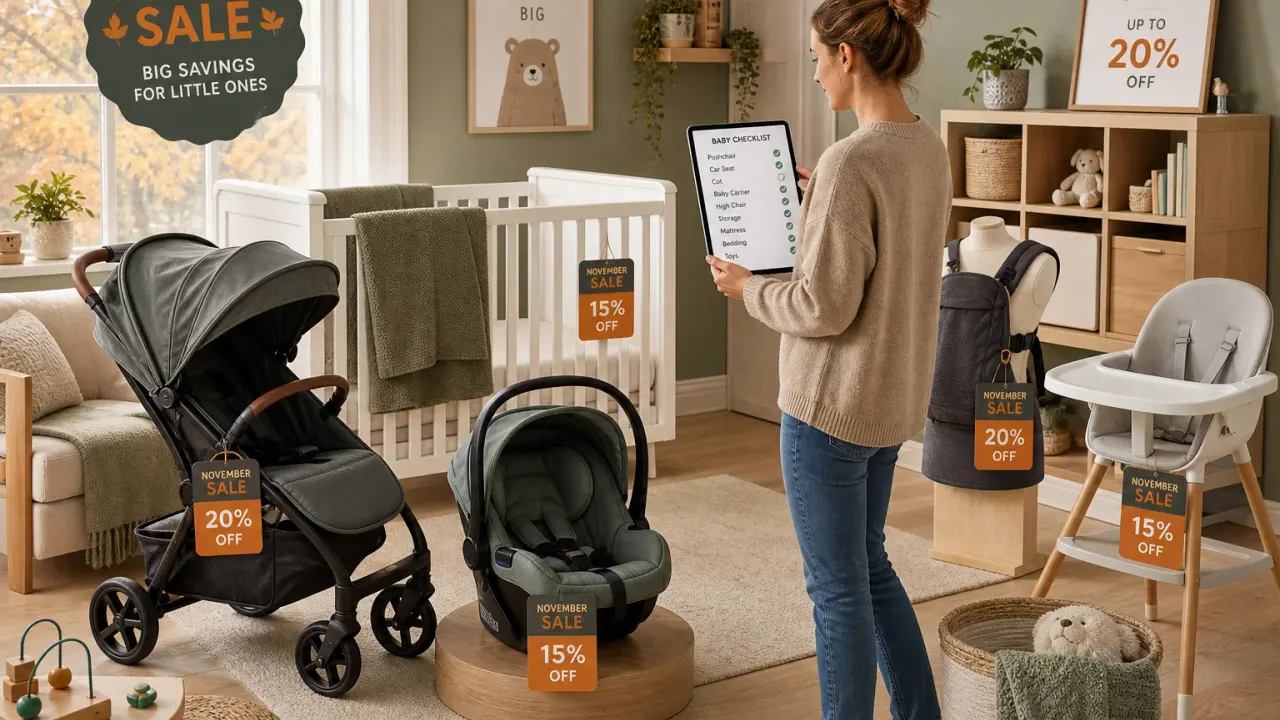
Kinderkraft’s Black Month page is a useful reminder that bigger Baby & Child purchases are rarely impulse buys. A pushchair, car seat, cot, baby carrier, high chair or nursery storage item has to fit your child, your home, your car and your routine, not just a seasonal promotion.
The brand’s Black Month period is stated as running from 9 to 30 November, with Black Friday included on 27 November . That timing can be helpful if you already know what you need, but it should not replace the basic checks that make a product suitable.
For parents, carers and gift-buyers, the goal is not to buy the most items. It is to compare products and offers carefully enough that a discounted purchase still makes sense after the sale period ends.
The Kinderkraft page frames baby shopping around changing needs, from a car seat, pushchair and cot to later purchases such as a high chair, balance bike and room furnishings . That is a sensible way to plan: buy for the stage your child is moving into, rather than stocking up on bulky kit too early.
Before comparing offers, write down what problem you are trying to solve. Do you need a travel system for a newborn, a lighter pushchair for nursery runs, a cot for a room transition, or a high chair for upcoming weaning? The clearer the need, the easier it is to ignore products that look tempting but do not fit your family’s next few months.
For gift-buyers, ask the parent what is already owned and what size, colour or configuration is wanted. Baby & Child products can overlap heavily, and a second similar accessory may be less useful than putting the same budget towards a larger planned purchase.
A pushchair deal is only useful if the setup matches how it will be used. Start by checking the child stage it is intended for, the seating arrangement, whether the handle height and fold style suit the adults using it, and whether it will fit where you store it.
If you use public transport, narrow hallways or a small car boot, compactness and handling may matter more than extra accessories. If you walk on uneven paths, basket access, wheel type and weather protection may be more important than the lowest headline price.
Compare what is included in the offer. Some pushchair bundles may include useful extras, while others may require separate purchases for rain covers, adaptors, footmuffs or changing bags. Do not assume two pushchair offers are like-for-like unless the included parts are clearly the same.
Car seats need more careful checking than most baby purchases because suitability depends on the child, the vehicle and the installation method. A lower price does not help if the seat is awkward to fit, incompatible with your car, or wrong for your child’s current stage.
Before buying, verify the size or stage guidance from the product information, the installation type, and whether any base or adaptor is included or sold separately. If more than one car will be used, compare the fit and practicality in each vehicle rather than only the main family car.
It is also worth thinking about daily handling. A seat that is moved between cars, carried into childcare, or combined with a pushchair frame needs to be manageable for the adults using it. Compare Baby Car Seats on practical fit first, then look at offers once you have narrowed the shortlist.
Cots, wardrobes, changing units and storage furniture can look straightforward online, but the buying decision should start with the room. Measure the floor space, doorways and any awkward corners before choosing a style. Leave enough clearance for drawers, cot access and safe movement around the room.
Check what is included in the furniture purchase. For cots, that may mean confirming whether the mattress is separate. For storage furniture, check whether shelves, hanging rails or drawer units are part of the package. For changing units, think about whether the design will still be useful after the changing stage has passed.
Nursery furnishings are also expensive to return if they are bulky or assembled, so compare delivery costs, packaging size, assembly requirements and returns terms before ordering. These practical details can change the true value of an offer even when the product price looks attractive.
A baby carrier needs to suit the baby and the wearer. Instead of choosing only by style, compare age or weight suitability, how adjustable it is, how it fastens, and whether different adults can use it comfortably.
Think about your real use case. Short school-run carries, longer walks, holidays and contact naps at home all place different demands on a carrier. Padding, strap adjustment and how easy it is to put on without help may matter more than extra colours or accessories.
If you are unsure, avoid buying too far ahead unless the returns terms suit you. Carrier comfort can be hard to judge without trying the shape against your body and routine.
High chairs, tableware and bottle-feeding accessories are easy to add to a basket during a seasonal event, but they still need a practical check. Ask whether the item will fit your kitchen, whether it is easy to clean, and whether it suits the stage your child is approaching.
For a high chair, compare footprint, foldability, tray design and whether it can be adjusted as your child grows. For bottles and accessories, check compatibility within the feeding system you already use so you do not end up with parts that do not work together.
Small Baby Accessories can be sensible add-ons if they solve a known problem, but they are also where overspending can creep in. Build your basket around essentials first, then decide whether extras are genuinely useful.
The Black Month window gives shoppers a defined period to review selected offers, but it does not prove that every item is the best possible buy . Use it as a deadline for checking, not as a reason to skip comparisons.
A good approach is to shortlist two or three suitable products in each category, then compare the total package: product fit, included accessories, delivery charges, returns, assembly needs and whether the item solves an immediate need. For changing prices and stock, rely on live comparison modules rather than fixed assumptions.
If an item is needed soon and the offer is on a product you had already shortlisted, buying during the event may be reasonable. If the item is for a much later stage, or you have not checked size, fit or compatibility, it is usually better to pause and compare alternatives across Baby & Child before committing.
Plan the larger, stage-based purchases first: car seats, pushchairs, cots, high chairs, carriers and nursery furniture. The Kinderkraft page highlights that baby and child needs change over time, so it is worth matching purchases to the next real stage rather than buying everything at once .
Check whether the product fits your child’s stage, your home, your car and your routine. Then compare what is included, delivery costs, returns terms and any accessories you would need to buy separately. A deal is only useful if the full package works for you.
Kinderkraft’s Black Month period includes Black Friday on 27 November . If you are shopping before that date and do not need the item immediately, it may be worth continuing to compare suitable products and offers. If the item is urgent, focus on suitability and total cost rather than waiting purely for a date.
Only if they solve a known need. Accessories can be useful, but they can also inflate the basket. Prioritise essentials, check compatibility with what you already own, and avoid adding items simply because they appear alongside a larger purchase.
Seasonal baby promotions can be useful when they line up with a purchase you already need. The safest shopping mindset is to treat the sale as a prompt to compare, not as proof that a product is right for your child.
For bigger Baby & Child buys, suitability comes first: car-seat fit, pushchair configuration, cot and furniture measurements, carrier comfort, feeding practicality and the total cost of accessories and delivery. Once those checks are done, comparing offers becomes much clearer.