Hurry, don't miss savings on selected furniture & more.* Shop all offers
12 Products
Draper Pressure Washers: Your essential buying guide
For lighter jobs such as rinsing bikes, bins and garden furniture, a lower-pressure domestic model is usually enough. For patios, driveways and more ingrained dirt, compare higher pressure and flow rate together, as both affect how quickly and effectively the washer cleans.
Pressure, often shown in bar, indicates the force of the water jet. Flow rate shows how much water the washer can move. Higher pressure can help lift dirt, while a stronger flow can rinse larger areas faster, so it is worth comparing both rather than focusing on one figure.
Pressure washers can be used for vehicle cleaning, but it is important to use a suitable setting, nozzle and distance from the paintwork. Avoid very concentrated jets on tyres, trims, badges and damaged paint, and check the washer and accessory guidance before use.
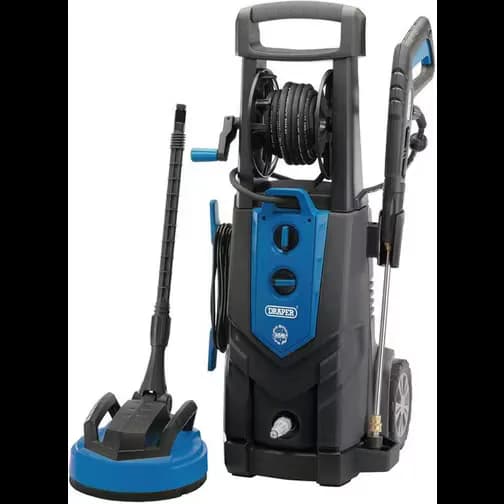
You do not always need one, but a patio cleaner attachment can make cleaning paving and flat surfaces more controlled and less splashy than using an open jet. If patio cleaning is your main job, compare pressure washers that include one or check whether a compatible attachment is available separately.
Check the pressure, flow rate, hose length, cable length, weight, storage design and included accessories. It is also worth confirming connector compatibility with your garden hose and any existing lances, spray guns or brushes you plan to use.
The right pressure washer depends on the surfaces you clean, how often you use it and how much storage space you have. Use this guide to compare key features before choosing a model for your garden and outdoor cleaning tasks.
For occasional rinsing and light dirt, a compact pressure washer can be a practical choice. It should be easier to move, store and set up, especially if you only clean smaller areas or individual items.
For larger patios, driveways or frequent outdoor cleaning, compare models with stronger pressure and flow rate, as these can reduce the time spent working over broad surfaces. Also look at hose length and cable reach, as constantly moving the unit can slow the job down.
Pressure helps break up grime, but more is not always better for delicate surfaces. Adjustable settings, variable nozzles or different spray patterns can make the washer more versatile across paving, timber, vehicles and furniture.
Flow rate matters because it affects rinsing speed. A machine with balanced pressure and flow can be more useful than one with a high pressure figure but limited water movement.
Some pressure washers come with extras such as patio cleaners, detergent bottles, extension lances or different nozzles. These can add convenience if they match the jobs you do most often.
If a model does not include the attachment you need, check whether compatible pressure washer accessories are available. Compatibility can vary, so compare connector types and product specifications before buying.
A pressure washer may be powerful on paper, but it also needs to be practical to use. Consider weight, wheel design, handle height and whether the hose and cable store neatly on the unit.
If you have limited shed or garage space, a smaller upright design may be easier to live with. If you clean away from the tap, a longer hose can make a noticeable difference.
Before comparing offers, check how the pressure washer connects to your outdoor tap and garden hose. Some set-ups may require separate connectors, especially if you are replacing an older machine or mixing accessories from different systems.
If you plan to use detergents for vehicles, patios or outdoor surfaces, look at whether the washer has a built-in detergent tank, a bottle attachment or a separate detergent feed. Always use products suitable for the surface you are cleaning.