
Loading buyer guide
Hurry, don't miss savings on selected furniture & more.* Shop all offers
Smartwatches range from simple budget models to premium Apple and Samsung options, fitness-focused watches and child-friendly designs. Use this decision-led guide to narrow the choice before comparing current offers.
Use our barcode scanner to match products instantly to find the best prices, find products with ease using our voice search and build wish lists and your favourites at the click of a button.
Best budget smartwatches
Lower-cost smartwatches can be excellent buys when the discount is meaningful, the retailer listing is clear and the model suits your phone, wrist size and intended use.
Best smartwatches for sleep tracking
Sleep tracking is only useful if the watch is comfortable enough to wear, has the right companion app, and does not need charging just as you go to bed. Here’s how to compare smartwatch offers with overnight wear in mind.
Best smartwatches for gym workouts
Gym-focused smartwatch shopping is less about picking the most expensive model and more about matching the watch to your training style. Compare workout modes, sensor details, water resistance, music controls, strap comfort and battery claims before being swayed by a headline discount.
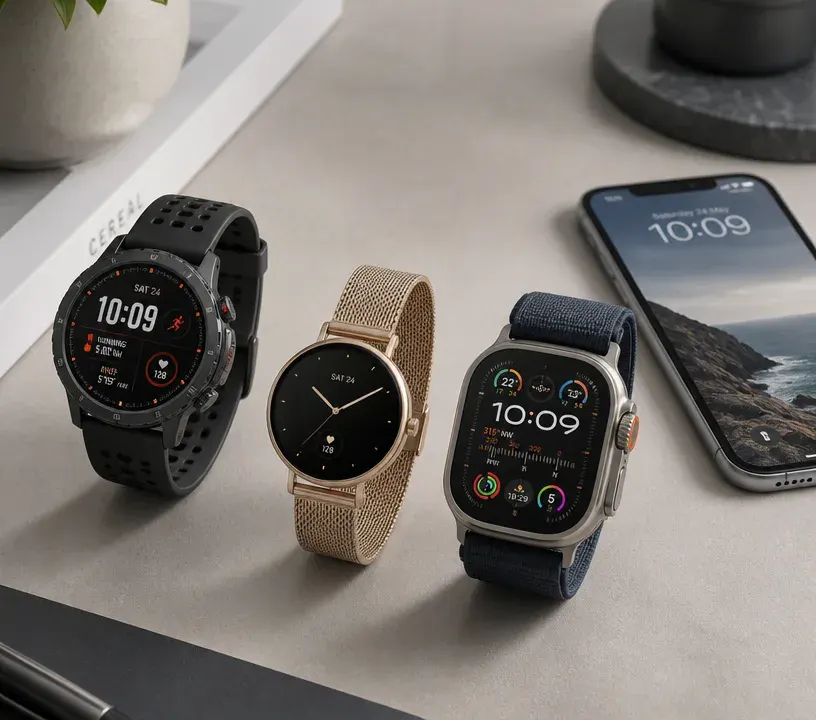
The best smartwatch for you depends first on what you need it to do. A discounted fashion-led model may be ideal for notifications and everyday wear, while a premium Apple or Samsung watch may make more sense if you want deeper phone integration. A sport-focused option can be better for training, and a kids smartwatch may be the simplest answer for a younger wearer.
ShopSmarty comparison guides use current product catalogue data, price and value signals, retailer availability and merchandising signals. They do not imply physical product testing. The aim is to help you compare Smartwatches sensibly, using the kinds of offers and models currently appearing across the Wearables category.
Before comparing colours, discounts or screen sizes, check compatibility. If you use an iPhone, an Apple Watch is usually the most natural starting point because it is designed around Apple’s ecosystem. If you use an Android phone, Samsung Galaxy Watch models and other Android-friendly Smartwatches are more likely to be relevant.
This matters because some watches look tempting on price but may not give you the experience you expect with your phone. Notifications, app support, setup, contactless features and health-app syncing can vary by platform. A strong offer is only good value if the watch works properly with the device you already carry every day.
In the current comparison set, Apple Watch Series 10, Samsung Galaxy Watch7 and Samsung Galaxy Watch Ultra-style listings show why this first step matters. They may sit in the same Smartwatches category, but they are aimed at different phone users and budgets.
Most shoppers fall into one of a few groups. The easiest way to choose is to identify your main use case, then compare only the watches that fit it.
If you mainly want alerts, time, steps and a watch that looks good with everyday outfits, a simpler lifestyle smartwatch may be enough. Radley models, for example, often appeal to shoppers looking at style-led Wearables rather than the most advanced technical specification.
If fitness tracking is your priority, look at models positioned around workouts, activity and health-style features. Fitbit and Amazfit options are common names shoppers compare in this space, while some people may be better served by Activity Trackers if they do not need a full smartwatch screen or app experience.
If you want a watch for sport, outdoor use or a specific activity, compare specialist options carefully. Sport Watches and some Garmin models may be worth considering when training features matter more than fashion styling. If heart-rate precision during structured workouts is your main concern, Chest Strap Heart Rate Monitors can also be worth comparing alongside a watch.
If you are buying for a child, do not simply buy the cheapest adult-looking watch. Kids smartwatch listings, such as the Biggerfive example in the catalogue, should be assessed for suitability, setup, size and the features you actually want for a younger user.
Many Smartwatches are sold in Bluetooth-only and LTE or cellular-style versions. A Bluetooth model usually works best when your phone is nearby. An LTE version is designed for more independent connectivity, but you should check the network, plan and setup requirements before assuming it will work the way you expect.
For many UK shoppers, Bluetooth is the better-value choice because the phone is usually in a pocket, bag or on a desk nearby. LTE becomes more interesting if you want to leave your phone behind more often, for example when exercising or travelling light.
In the supplied catalogue context, Samsung Galaxy Watch7 appears in both Bluetooth and LTE-style listings. That is a good reminder to compare the exact version, not just the model name. Two watches can look similar in search results but differ in connectivity, cost and suitability.
Smartwatch size is not just about visibility. A larger case can be easier to read and tap, but it may feel bulky on a smaller wrist or under a sleeve. A smaller watch can be neater for all-day wear, but the display may feel cramped if you use lots of apps or workout screens.
Catalogue examples such as 40mm, 44mm, 46mm and 47mm watches show how much variation there can be within the same broad category. If you already wear a traditional watch, use that as a guide. If you rarely wear anything on your wrist, a lighter or slimmer model may be easier to get used to.
Also check strap options. A watch that suits you technically can still be annoying if the strap is uncomfortable, too sporty for work, or difficult to replace. Smartwatch Strap options can help refresh the look or improve comfort, but make sure the strap style matches the watch model and case size.
Smartwatch marketing can make every feature sound essential. In reality, many buyers use the same few functions every day: notifications, time, alarms, activity tracking, quick glance information and perhaps music or contactless-style convenience where supported.
If that sounds like you, a lower-cost or mid-range smartwatch may be the sensible choice, especially when the Wearables category includes heavily discounted options. Radley, Amazfit and some Fitbit-style listings can sit in this more value-conscious comparison set depending on the current offer.
If you will use the watch constantly, want tighter phone integration, prefer a larger screen, or care about app choice, premium models become easier to justify. Apple Watch and Samsung Galaxy Watch options often appear higher up shoppers’ shortlists for this reason, but they are only worth the extra spend if their ecosystem and features match your daily habits.
A smartwatch is not always the best wearable. If you mainly want basic movement tracking and long-wear simplicity, Activity Trackers may be cheaper, lighter and less distracting. If you want discreet health-style tracking without a watch face, Smart Rings may be worth comparing. If you are focused on training accuracy around heart rate, a Chest Strap Heart Rate Monitor can be a better companion to sport than a general smartwatch.
Likewise, if you want a rugged-looking training watch with sport-specific menus and longer outdoor sessions in mind, Sport Watches may be a more focused route than a lifestyle smartwatch. Comparing these neighbouring Wearables categories can stop you paying for smartwatch features you do not need.
Discounts can be useful, but they should not be the only reason to buy. The current product candidate set includes strong-looking reductions across brands such as Radley, Garmin, Fitbit, Apple, Samsung, Amazfit and Biggerfive. Those offers can make a watch more attractive, but only after you have checked compatibility, size, features and retailer availability.
Look beyond the percentage saving and compare the final value to your use case. A deeply discounted watch that lacks the connectivity or platform support you need is not a bargain. Equally, a premium model with a smaller discount may be better value if you will wear it every day and use its features properly.
When comparing Smartwatches, check the exact model name, case size, connectivity version, colour, strap type and retailer information. Similar listings can vary in important ways, especially when product names include details such as GPS, LTE, Bluetooth, 40mm, 44mm or 46mm.
Choose an Apple Watch if you use an iPhone and want the closest match to the Apple ecosystem, provided the size, version and budget make sense.
Choose a Samsung Galaxy Watch if you use an Android phone and want a feature-rich smartwatch experience, taking care to compare Bluetooth and LTE versions before buying.
Choose a Fitbit or Amazfit-style smartwatch if your priority is everyday activity, wellness-style tracking and value rather than the fullest phone ecosystem.
Choose a Garmin or sport-focused model if your watch needs are driven by golf, training or more specialised activity use rather than general lifestyle features.
Choose a Radley-style smartwatch if looks, affordability and everyday basics matter more than advanced app depth.
Choose a kids smartwatch only after checking age suitability, setup requirements and whether its features fit how the child will actually use it.
The best choice is usually the one that matches your phone and daily routine. iPhone users should usually start by comparing Apple Watch models, while Android users may find Samsung Galaxy Watch or other Android-compatible Smartwatches more suitable. Then narrow by size, battery expectations, features and budget.
LTE can be useful if you often want to use the watch without your phone nearby. For many shoppers, a Bluetooth model is better value because the phone is usually close enough for everyday use. Always check the exact version and any setup requirements before choosing LTE.
Buy a smartwatch if you want a screen, notifications, apps and a more watch-like experience. Consider Activity Trackers if you mainly want simpler movement and fitness tracking in a lighter, usually less distracting device.
Choose a size that balances readability with comfort. Larger cases such as 44mm, 46mm or 47mm can be easier to read, but may feel bulky. Smaller models can be neater for everyday wear, especially on smaller wrists.
They can be, but only if the model fits your phone, wrist size and intended use. Compare the exact product version and current retailer offer rather than relying on the discount percentage alone.
Smartwatches are easiest to compare when you begin with your phone, then decide how you will actually use the watch. After that, size, connectivity, strap comfort and value become much clearer.
Use the Smartwatches range to compare current options across lifestyle, fitness, sport, premium and kids models. If a full smartwatch feels like too much, neighbouring Wearables such as Activity Trackers, Smart Rings, Chest Strap Heart Rate Monitors and Sport Watches may lead you to a better fit.
