
Loading buyer guide
Hurry, don't miss savings on selected furniture & more.* Shop all offers
Shiny tiles, laminate and wood floors can show dust, crumbs and pet hair quickly. Here is how to compare robot vacuum cleaners for hard floors by suction setting, mop features, brush type, edge cleaning, height, value and retailer availability.
Use our barcode scanner to match products instantly to find the best prices, find products with ease using our voice search and build wish lists and your favourites at the click of a button.
Self-emptying robot vacuums compared
Self-emptying docks can make a robot vacuum cleaner far more convenient, but they also add cost, bulk and ongoing consumables. The smartest buy is not always the most feature-packed model; it is the one whose dock, bags, dimensions and retailer offer fit your home and budget.
Shark vs Eufy robot vacuums
SharkNinja and Eufy appeal to slightly different robot vacuum buyers: Shark is often worth shortlisting when you want a more appliance-like set-up with hands-off emptying, while Eufy is strong for shoppers comparing compact, app-controlled models and value-led offers.
Dreame vs Xiaomi robot vacuums
Dreame and Xiaomi robot vacuums can look similar on paper, but the better buy depends on mapping, mop maintenance, dock automation and the offer available from UK retailers.
Best kettles for hard water areas
Hard water can leave scale around the spout, base and filter of a kettle, so the smartest choice is usually the model that is easiest to fill, descale and inspect rather than simply the one with the lowest ticket price.
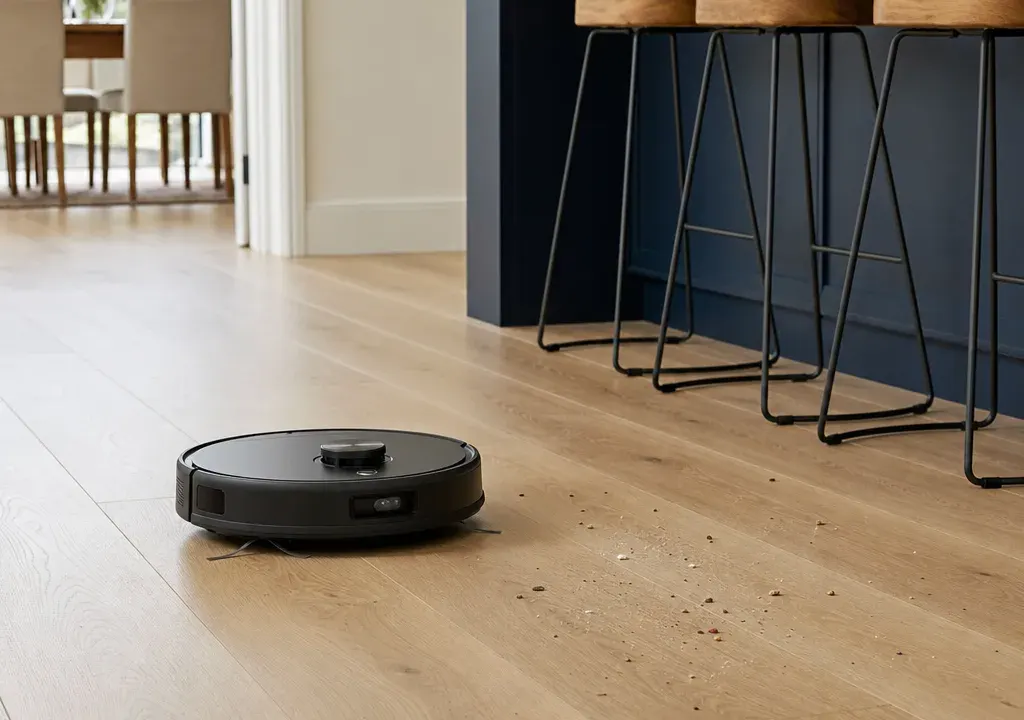
Hard floors can make a robot vacuum feel more useful day to day because dust, crumbs and hair are easy to see. They can also expose weak points: missed edges, streaky mopping, scattered debris and robots that cannot fit under furniture.
For this Robot Vacuum Cleaners guide, the focus is not on declaring one universal winner. It is on comparing the features that matter most for hard floors, using current catalogue signals such as model descriptions, retailer availability, price positioning and stated specifications where supplied. This is a comparison guide, not a physical product test.
The right shortlist will look different for a flat with laminate, a kitchen with tiles, or a family home with hard floors downstairs and rugs elsewhere. Use the sections below to decide which features are worth paying for and which are optional extras.
Before comparing models, be clear about the surfaces you want cleaned. Sealed laminate, vinyl, tile and engineered wood all behave differently. Smooth floors tend to favour consistent suction and good edge reach, while textured tiles may benefit from a robot that can make repeated passes and pick up grit from shallow grooves.
If your home has delicate wood flooring, pay particular attention to mop control and wheel condition. A robot vacuum with a mop attachment can be convenient, but you should still check the product information for water-flow settings, pad type and suitability for your flooring. Avoid assuming that every “mop” or “hybrid” model is appropriate for every hard floor finish.
If you also have rugs, thresholds or mats, compare obstacle handling and whether the robot can avoid dragging a damp mop across fabric. Hard-floor buyers often focus on mopping first, but navigation and floor detection can be just as important in mixed rooms.
Suction figures can be useful, especially when product titles include them. In the current catalogue context, examples include the Vexilar W9 Robot Vacuum Cleaner 8000Pa, the Olsen & Smith Smart Robot Vacuum Cleaner 6500Pa and the Sodial Robot Vacuum Cleaner Sweep Mop 6000pa. These numbers help you compare stated suction levels, but they do not tell the whole story.
For hard floors, you want controlled suction that collects dust and crumbs without constantly blasting lightweight debris across the room. Look for models with more than one suction setting, automatic power adjustment or a quiet mode for daily maintenance. A high setting may be useful for heavier grit, but a lower setting can be more practical for frequent cleaning.
Also compare bin capacity and how often you are willing to empty it. Strong suction is less useful if the dustbin is small and your floors collect pet hair or kitchen debris quickly. For hands-off convenience, self-emptying models such as the iRobot Roomba Plus 405 Self-Emptying Robot Vacuum Cleaner may be worth comparing against simpler, lower-cost options, but only if the dock suits your space and budget.
Mop capability is one of the biggest decision points for hard-floor shoppers. Catalogue examples described with mop, hybrid or combo wording include the Eufy L60 Hybrid Robot Black, the Sodial Robot Vacuum Cleaner Sweep Mop 6000pa and the Samsung Jet Bot Combo AI VR7MD97714G. These are useful models to compare if you want vacuuming and damp wiping in one device.
The key is to check what kind of mopping is being offered. Some robot vacuum cleaners use a simple water tank and pad for light maintenance, while more advanced models may offer greater automation. Do not assume that a mop function will remove dried-on kitchen marks or replace manual cleaning. It is usually best viewed as a way to keep already-clean hard floors fresher between proper cleans.
Compare water control, pad attachment, whether the mop can be removed, and how easy the pad is to wash or replace. If a retailer listing does not make these points clear, factor that uncertainty into your decision rather than buying purely because the word “mop” appears in the title.
Hard floors do not need the same carpet agitation as deep-pile rugs, but brush design still matters. A main roller can help lift dust and debris into the suction path, while side brushes can flick dirt out from skirting boards and furniture legs. The wrong design may scatter larger crumbs before collecting them, especially on smooth floors.
When comparing Robot Vacuum Cleaners, check whether the product uses bristles, rubber rollers or a mixed brush design. Rubber-style rollers can be appealing in homes with hair to manage, while bristled brushes may need more frequent cleaning if long hair wraps around them. Only rely on anti-tangle or pet-hair claims when they are clearly stated by the retailer or manufacturer.
If you have mostly hard floors and little carpet, brush maintenance may matter more than raw power. A model that is easy to remove, clean and re-fit can be a better long-term choice than one with impressive headline features but fiddly upkeep.
Hard floors make missed edges obvious. Dust lines along skirting boards, crumbs under kitchen units and hair around chair legs can remain even after the centre of the room looks clean. When comparing product images and descriptions, look for side brushes, edge-cleaning modes or design features that appear intended to reach into corners.
Round robots are common and can still clean edges well if the side brushes and navigation are effective. Some models may use a different body shape or brush position to improve wall coverage, but you should check the actual listing rather than assuming shape alone guarantees better results.
For rooms with lots of chair legs, plinths and narrow gaps, navigation and repeated coverage matter. A robot that can methodically cover the room may be more useful than one that relies on random movement, especially if your main frustration is missed patches rather than overall suction.
A slim robot vacuum can be a major advantage on hard floors because dust often gathers under sofas, beds, sideboards and kitchen furniture. One catalogue example with a stated height in the product title is the Lefant M210p Robot Vacuum Cleaner 7.8 cm, making it a useful reference point when comparing low-clearance designs.
Measure the gap under the furniture you actually want cleaned, then allow some extra clearance rather than choosing a robot that only just fits. Rugs, thresholds and uneven flooring can slightly change how much room the robot needs in practice.
Also remember that a slimmer body may involve trade-offs. Check bin size, battery claims, mop tank size if relevant, and whether the model includes the navigation features you want. A low profile is valuable only if the robot still has the cleaning and mapping features your home needs.
Robot vacuum cleaner offers can vary widely across retailers and models. In the supplied catalogue set, there are value-led options from brands such as Lefant, Liectroux and Olsen & Smith, mid-range examples from Eufy and Eureka, and more premium-positioned models from Samsung, Dreame and MOVA. That spread is useful because it shows why hard-floor shoppers should compare features at different budgets rather than chasing one headline saving.
A lower-priced model can be a sensible choice if you mainly want scheduled dust and crumb collection on open hard floors. Spending more may make sense if you want stronger automation, a self-emptying dock, more advanced navigation, a mop system or better support for larger layouts. The point is to match the spend to the job.
Discount percentages and crossed-out prices can be helpful signals, but they should not decide the purchase on their own. Compare the current selling price, what is included in the box, whether replacement pads or bags may be needed, and whether the retailer has stock available when you are ready to buy.
Retailer availability matters because two similar robot vacuum cleaners may not be equally easy to buy. The comparison context includes models listed across retailers such as Amazon, Argos, B&Q, eBay, Geekmaxi, Joybuy, Peter Tyson Electricals, Appliance City and Very. Availability can affect which colour, bundle or configuration you can actually choose.
When two models look close on features, compare the whole offer: included accessories, dock type, stated warranty information where available, returns information from the retailer, and whether the listing clearly explains the hard-floor functions you care about. Do not give equal weight to a vague listing and a detailed one if you are trying to make a confident decision.
For a hard-floor purchase, clear information is part of the value. If you cannot confirm mop behaviour, brush type, dimensions or replacement consumables, it may be safer to choose a model with more complete product information, even if another option looks cheaper at first glance.
Choose a budget hard-floor robot if you want frequent light cleaning in an open-plan area and do not need advanced dock automation. Compare basic suction settings, side brushes, bin access and whether the robot is low enough to reach under furniture.
Choose a robot vacuum mop if you want dust collection plus light damp wiping on suitable sealed hard floors. Prioritise removable pads, water control and clear floor-suitability information over vague “mop” wording.
Choose a premium or self-emptying model if convenience is the main reason you are buying. Compare dock size, emptying system, app controls and consumables as carefully as the robot itself. This route can be worthwhile for busy households, but it is not automatically the best value for every hard-floor home.
They can be very useful for everyday dust, crumbs and hair on hard floors, especially when scheduled regularly. The best results usually come from choosing a model with suitable suction settings, good edge reach and a brush design that does not scatter debris.
Not always. A mop function is helpful for light maintenance on suitable sealed floors, but it should not be treated as a replacement for manual mopping. If you choose a mop model, compare water control, pad maintenance and whether it is appropriate for your floor finish.
Higher stated suction can help with heavier debris, but it is not the only factor. For hard floors, navigation, brush design, edge cleaning and the ability to choose different power settings can matter just as much.
Measure the lowest furniture you want the robot to clean under, then choose a model with enough clearance rather than one that only just fits. A model such as the Lefant M210p is listed with a 7.8 cm height, which gives a useful comparison point for slim designs.
Compare the current selling price alongside features, included accessories, dock type, mop capability, replacement consumables and retailer stock. A large discount is less meaningful if the model lacks the hard-floor features you need.
For hard floors, the best robot vacuum is usually the one that balances controlled suction, sensible brush design, reliable edge cleaning and the right level of mopping for your home. A high suction figure, mop label or large discount can be useful, but none should be judged in isolation.
Use the Robot Vacuum Cleaners category to compare models side by side, then narrow your shortlist by floor type, room layout, furniture clearance, budget and retailer availability. That approach is more reliable than choosing the most heavily promoted model and hoping it suits your floors.
