
Loading buyer guide
Hurry, don't miss savings on selected furniture & more.* Shop all offers
For carpeted rooms, do not buy on a headline suction number alone. A good shortlist balances power, brush roll design, rug handling, runtime and whether the dock will make everyday use easier.
Use our barcode scanner to match products instantly to find the best prices, find products with ease using our voice search and build wish lists and your favourites at the click of a button.
Self-emptying robot vacuums compared
Self-emptying docks can make a robot vacuum cleaner far more convenient, but they also add cost, bulk and ongoing consumables. The smartest buy is not always the most feature-packed model; it is the one whose dock, bags, dimensions and retailer offer fit your home and budget.
Shark vs Eufy robot vacuums
SharkNinja and Eufy appeal to slightly different robot vacuum buyers: Shark is often worth shortlisting when you want a more appliance-like set-up with hands-off emptying, while Eufy is strong for shoppers comparing compact, app-controlled models and value-led offers.
Dreame vs Xiaomi robot vacuums
Dreame and Xiaomi robot vacuums can look similar on paper, but the better buy depends on mapping, mop maintenance, dock automation and the offer available from UK retailers.
Best kettles for hard water areas
Hard water can leave scale around the spout, base and filter of a kettle, so the smartest choice is usually the model that is easiest to fill, descale and inspect rather than simply the one with the lowest ticket price.
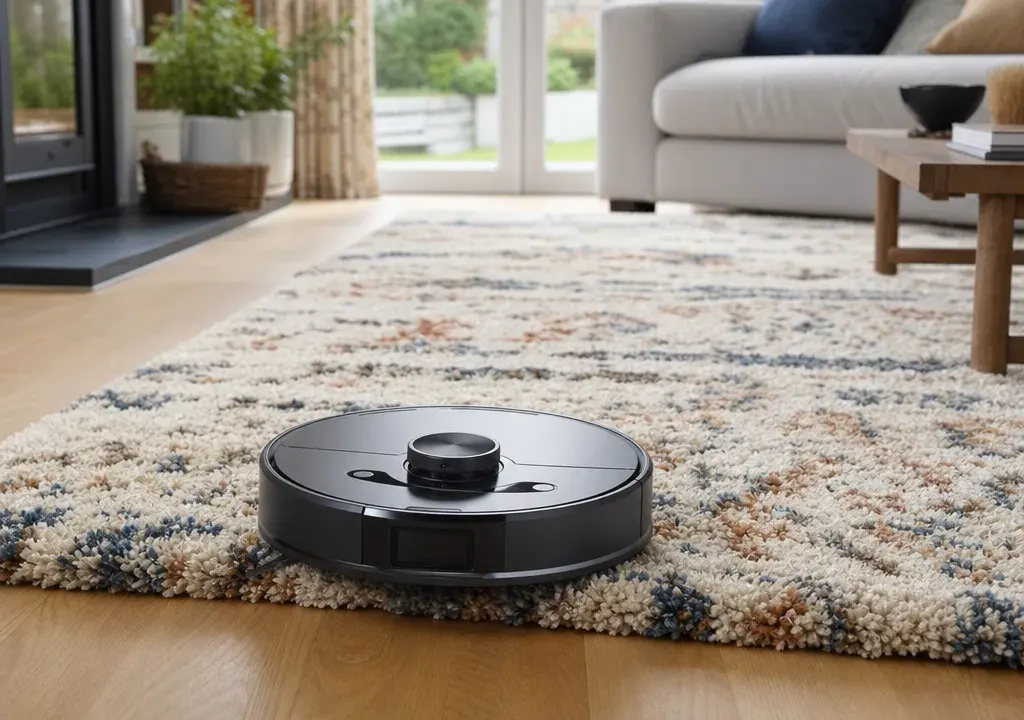
Choosing a robot vacuum cleaner for carpets and rugs is not the same as choosing one for hard floors. Pile height, rug edges, pet hair, loose fibres and furniture legs all make a difference to how well a robot can move, agitate dirt and return to its dock without intervention.
The most tempting comparison point is suction, especially when a listing gives a Pa figure. That number is useful, but it is only one part of the decision. For carpeted homes, brush roll design, carpet boost behaviour, obstacle handling, runtime and dock type can matter just as much.
The examples below use current catalogue and retailer offer information as comparison context, including models such as the Vexilar W9 Robot Vacuum Cleaner 8000Pa, Eufy RoboVac 15C, Eureka E20 Robotic Vacuum Cleaner, iRobot Roomba Plus 405 Self-Emptying Robot Vacuum Cleaner, Eufy L60 Hybrid Robot Black and Dreame X50 Ultra Complete Robot Vacuum Cleaner. This is not a physical test; it is a buying framework to help you compare Robot Vacuum Cleaners more confidently.
Before comparing models, be honest about the surfaces you need cleaned. A low-pile fitted carpet is usually easier for a robot vacuum than a deep rug with tassels or a thick bedroom carpet. If your home is mainly hard floor with one thin rug, you may not need to pay for the same level of carpet-focused specification as someone with carpeted stairs, bedrooms and pet hair in the living room.
For rugs, check three things in the product details: whether the robot can climb typical rug edges, whether it avoids getting tangled in fringe, and whether it can cross from hard floor to rug without stalling. Listings do not always describe these points clearly, so look for navigation, obstacle handling and brush roll information rather than relying only on the product name.
If you have dark rugs or strong patterns, also look carefully at the navigation and sensor description. Some robot vacuum cleaners can behave differently on challenging surfaces, so a generous returns policy and clear retailer information can be worth factoring into the overall offer.
Suction is often listed in pascals, or Pa. In the supplied catalogue, the Vexilar W9 Robot Vacuum Cleaner 8000Pa, Olsen & Smith Smart Robot Vacuum Cleaner 6500Pa and Sodial Robot Vacuum Cleaner Sweep Mop 6000pa all put a suction figure directly in the product title. That makes them easy to compare on paper, and a higher stated figure may appeal if you are targeting carpet debris.
However, suction does not tell you how well the robot will agitate carpet fibres, pick up hair from a rug or maintain airflow as the dust bin fills. A robot with a strong suction figure but a basic brush design may still struggle with embedded dirt. Equally, a model without a headline Pa figure in the title may still be worth considering if its brush system, mapping, runtime and dock set-up better suit your home.
Use suction as a shortlist filter, not the final decision. For carpeted homes, it is sensible to compare the suction claim alongside brush roll design, cleaning modes, bin size, filter maintenance and whether the robot automatically increases power on carpet.
A carpet boost mode can be useful because it raises suction when the robot detects carpet or a rug. That can save battery on hard floors while applying more power where it is needed. The key point is to check whether the listing clearly says the robot has automatic carpet detection or a manual high-power mode.
Do not assume every model with a high suction number has carpet boost. Also do not assume every hybrid or mop model is ideal for rugs. If you are comparing a vacuum-and-mop option such as the Eufy L60 Hybrid Robot Black, check how it handles carpeted areas when any mopping function is in use. You want to avoid a robot dragging a damp pad over a rug unless the model is specifically designed to manage that properly.
For buyers with several rugs, app control can also matter. Being able to set no-mop zones, room-specific routines or different power levels can make the robot more useful day to day. If those controls are not clearly listed, treat them as unconfirmed rather than assumed.
On carpet, the brush roll does much of the real work. It loosens dust, crumbs and hair so suction can lift them into the bin. When comparing Robot Vacuum Cleaners, look for details such as bristle brushes, rubber rollers, anti-tangle claims and whether replacement brushes are easy to buy.
Homes with pets or long hair should be especially cautious. Hair can wrap around a traditional brush roll, increasing maintenance. A design that is easier to remove and clean may be more valuable than a small difference in suction specification. If the retailer imagery shows the underside of the robot, use it to compare the main brush, side brushes and wheel layout.
Rug owners should also think about tassels and loose weave. A powerful robot is not automatically better if it regularly catches on fringe. For delicate rugs, the ability to create keep-out zones or clean only specific rooms can be more important than maximum power.
Carpets and rugs introduce small obstacles: raised edges, chair legs, door thresholds, cables near sofas and rug corners that can lift. A robot that needs rescuing often is less useful, even if it looks good on a specification sheet.
When comparing models, look for wording around mapping, object avoidance, sensors and edge detection. Higher-priced examples in the catalogue, such as the Samsung Jet Bot Combo AI VR7MD97714G, MOVA Z60 Ultra Roller Robot Vacuum Cleaner and Dreame X50 Ultra Complete Robot Vacuum Cleaner, sit in a different price band from simpler options, so shoppers should check whether the extra spend is going towards navigation, dock automation or cleaning features they will genuinely use.
For mixed homes, mapping can be especially useful. If you can tell the robot to clean the carpeted lounge after dinner but avoid a high-fringe rug in the hallway, it becomes much easier to live with than a basic bump-and-turn model.
Carpet generally makes a robot work harder than hard flooring. Higher suction modes can reduce runtime, and thicker surfaces can slow movement. This means the quoted battery life may not reflect how long the robot will clean when running at stronger carpet settings.
For a small flat or one carpeted bedroom, runtime may not be a major issue. For a larger home with several rugs and carpeted rooms, compare whether the robot can return to charge and resume cleaning. Also check whether the battery figure is quoted for quiet or standard mode rather than maximum suction.
Do not pay for excess runtime just because it sounds impressive. The better decision is to match battery life to the area you expect to clean in one session, then consider whether the robot’s navigation is efficient enough to cover that area without repeated missed patches.
A basic charging dock is usually smaller and cheaper, but you will empty the robot’s bin yourself. A self-emptying dock can be much more convenient, especially if your carpets collect pet hair or daily debris. The iRobot Roomba Plus 405 Self-Emptying Robot Vacuum Cleaner is an example from the catalogue where self-emptying is stated directly in the product title.
Self-emptying is not automatically the best choice for every carpeted home. The dock takes more space, may require consumables depending on the system, and usually affects the overall price. Measure the available floor area around the dock position and check whether the robot needs clear space either side to return reliably.
For mop-capable or combo models, check the dock description closely. Some docks are mainly for charging, while others may add emptying or maintenance functions. Do not infer dock features from a premium-sounding name alone; compare the actual retailer listing.
The catalogue snapshot shows a wide spread of offers, from budget listings such as the Lefant M210p Robot Vacuum Cleaner and Liectroux C30B Black through to higher-ticket models such as the Samsung Jet Bot Combo AI, MOVA Z60 Ultra Roller and Dreame X50 Ultra Complete. There are also mid-range options around the sort of price many shoppers compare first, including the Eufy RoboVac 15C, Eufy L60 Hybrid Robot Black, Vexilar W9 and Eureka E20.
Discounts can be useful, but they should not drive the decision by themselves. A large reduction on a model that lacks the carpet features you need is not better value than a smaller saving on a robot with stronger navigation, a better brush system or a dock that suits your routine.
Compare the current retailer offer as a complete package: selling price, stated original price if shown, availability, what accessories are included, dock type, returns information and replacement parts. For carpet and rug use, the cheapest option may be fine for occasional top-up cleaning, but it may disappoint if you expect it to handle busy family carpets every day.
For mostly hard floors with a few low rugs, prioritise value, slim height and straightforward app scheduling. A compact option such as the Lefant M210p, which is listed with a 7.8 cm height in the title, may be worth comparing if getting under furniture matters, but still check rug climbing and brush details.
For fitted carpets and regular crumbs, look for a balanced mid-range robot with clear suction information, sensible runtime and a brush design that looks easy to maintain. Models with stated high Pa figures, such as the Vexilar W9 8000Pa or Olsen & Smith 6500Pa, are natural comparison points, but only if the rest of the specification supports carpet cleaning.
For pet hair, long hair or busy family rooms, give more weight to brush maintenance, bin capacity, self-emptying and mapping. A self-emptying model such as the iRobot Roomba Plus 405 may be worth comparing against premium dock-based options if you want less frequent manual emptying.
For thick rugs, delicate rugs or awkward layouts, navigation and control matter most. Look for room mapping, keep-out zones and clear obstacle handling features before focusing on maximum suction.
First, identify your hardest surface: thick rug, low-pile carpet, pet-hair area or mixed hard floor and rug. Choose for that challenge rather than for the easiest room in the house.
Second, compare suction, but do not stop there. Check for carpet boost, brush roll design, height clearance, mapping controls, runtime at higher power and dock convenience.
Third, compare current UK offers across Robot Vacuum Cleaners with the full cost in mind. A model that includes a useful dock, accessible consumables or better navigation may offer stronger value than a cheaper robot that needs constant rescuing.
Finally, read the retailer listing carefully before committing. The best robot vacuum cleaner for carpets and rugs is the one whose features match your actual floors, not simply the one with the largest discount or the biggest number in the title.
Not always. A higher Pa figure can be useful, but carpet performance also depends on brush roll design, airflow, bin maintenance, carpet boost behaviour and how well the robot moves over rugs.
It can be worthwhile if your carpets collect lots of dust, crumbs or pet hair, because the robot’s small bin may fill quickly. However, self-emptying docks cost more and take up extra space, so compare the whole set-up before buying.
Some may cope with thicker rugs better than others, but you should check rug climbing, brush design, obstacle handling and whether the robot can avoid tassels or loose edges. Do not assume all models are suitable for deep pile.
They can be useful in mixed homes, but check how the model handles carpets when mopping. Look for no-mop zones, carpet detection or clear instructions from the retailer before using mop functions around rugs.
Prioritise an easy-to-clean brush roll, strong everyday suction, good bin capacity and, if your budget allows, a self-emptying dock. Hair tangles and frequent emptying can be bigger frustrations than the headline suction number.
For carpets and rugs, the smartest robot vacuum cleaner choice comes from comparing the details that affect real use: suction, brush roll design, carpet boost, navigation, runtime and dock convenience. A strong discount is welcome, but it should support the right specification rather than distract from it.
Use the current Robot Vacuum Cleaners range to build a shortlist around your floor type, then compare offers carefully before you buy. The best value is the model that will clean your carpets often, cope with your rugs reliably and fit the way your home actually runs.
