
Loading buyer guide
Hurry, don't miss savings on selected furniture & more.* Shop all offers
Choosing a pressure washer for paving, decking or a driveway comes down to more than headline pressure. Learn how to weigh performance, accessories, hose length and changing offers before you buy.
Use our barcode scanner to match products instantly to find the best prices, find products with ease using our voice search and build wish lists and your favourites at the click of a button.
Best compact pressure washers for small sheds and garages
Small outdoor storage changes what “best” means. For a compact pressure washer, the right choice is usually the one that fits your shelf, keeps its hose and accessories tidy, and still gives you enough reach for the patio, bins, bikes or car without dragging everything out of the shed.
Bosch vs Kärcher pressure washers: which should you buy?
Choosing between Bosch and Kärcher is less about picking a famous name and more about matching pressure, water flow, power, weight and accessories to the jobs you actually do. Here’s how to compare the listings without being distracted by headline discounts or oversized bundles.
What pressure washer PSI or bar do you need?
Choosing a pressure washer is easier when you start with the job, not the biggest number on the box. Match bar, PSI, flow rate and accessories to patios, cars, decking and everyday garden cleaning before comparing offers.
Best pressure washers for bikes and garden furniture
Bikes, benches and outdoor chairs need controlled cleaning rather than maximum force. The right pressure washer should give you gentle spray options, easy handling and useful accessories, without pushing you towards a heavy-duty machine you rarely need.
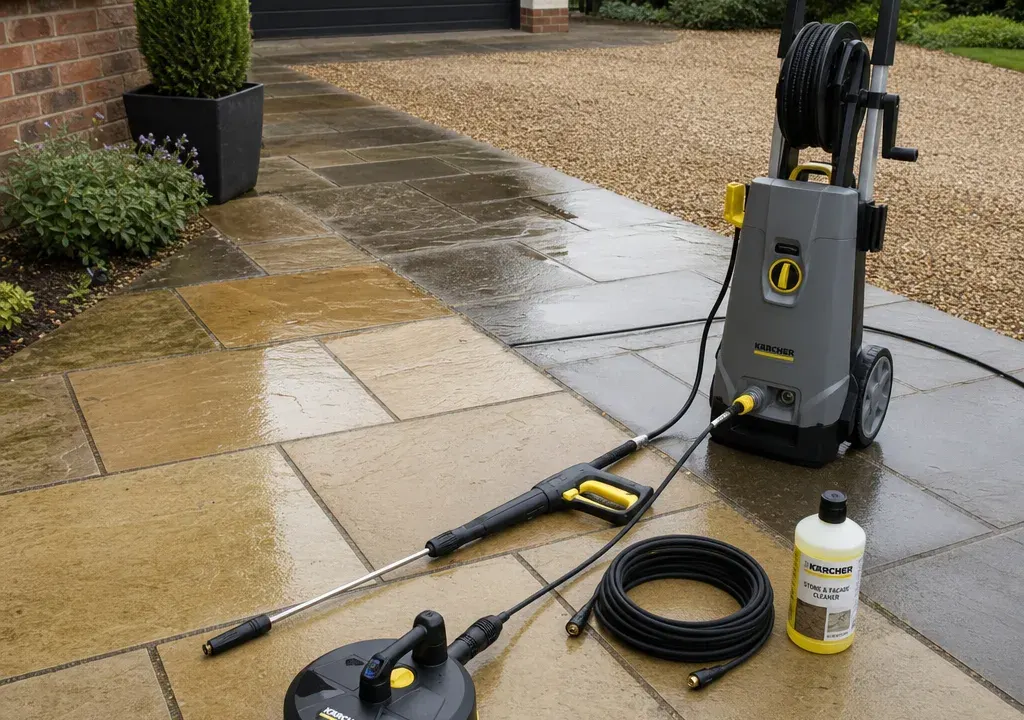
A good patio or driveway pressure washer should save time without being awkward to move, store or set up. The challenge is that product listings often lead with one or two numbers, while the real buying decision depends on how those numbers work with the hose, lance, nozzle, detergent system and accessories.
For heavier paving and driveways, many shoppers look first at Pressure Washers with higher pressure ratings. That is sensible, but it should not be the only test. A compact machine with a suitable patio cleaner and enough hose reach can be more convenient than a more powerful unit that needs moving every few minutes.
This comparison-led guide focuses on how to choose between models in Pressure Washers & Power Washers using catalogue details, price and value signals, retailer availability and merchandising information. It does not imply physical product testing, and current offers can change, so always check the live product page before deciding.
For patios, the priority is even cleaning across slabs, concrete or block paving. A patio-cleaner attachment can make a noticeable difference to control and consistency because it keeps the spray contained and helps reduce splashback compared with using a narrow jet alone.
For driveways, you may want stronger cleaning performance for tyre marks, mud and weathered dirt. However, very concentrated jets can disturb loose jointing material or damage delicate surfaces if used too close, so look for models with adjustable nozzles, interchangeable lances or clear control over spray intensity.
If you mainly clean garden furniture, bikes, bins or small paved areas, a lightweight or cordless option may be more useful than a large machine. If your main job is a wide driveway or a neglected patio, compare higher-output corded or petrol models alongside compatible Patio Cleaners and Pressure Washer Accessories.
Pressure is often shown in bar and gives a basic sense of cleaning force. In the supplied catalogue examples, the Kärcher HD 9/25 G Classic Professional Petrol Pressure Washer is listed with 250 bar, while the OutSunny 1600W Pressure Washer is listed with 130 bar and a 6M hose. Those figures are useful comparison points, but they do not tell you everything about real-world convenience.
For typical domestic patios, many shoppers will be balancing enough pressure to remove grime with easy handling, safe control and the right accessories. Higher pressure may suit tougher outdoor cleaning, while lower or mid-range pressure can still be appropriate for routine maintenance when paired with a suitable nozzle or patio head.
Also check whether the pressure rating is clearly described by the retailer. Some listings highlight maximum pressure, while others may use operating pressure or model names that do not make the exact output obvious. When two Pressure Washers look close on price, the clearer specification is often the easier one to buy confidently.
Flow rate describes how much water the machine can move, usually shown in litres per hour or litres per minute. It matters because pressure helps loosen dirt, while water volume helps rinse it away. A pressure washer with a useful flow rate can feel quicker on a large patio than one with a high pressure figure but limited water movement.
When comparing products and offers, look for pressure and flow rate together. If a listing does not show flow rate, that does not automatically make the washer unsuitable, but it does mean you have less information for judging performance on larger areas.
For a small patio, flow rate may be less critical than storage size, weight and accessories. For a driveway, larger paved area or frequent cleaning, flow rate becomes a more important detail to check before choosing between similar models.
Pressure washer bundles can look good value, but only if the included parts match what you actually clean. For patios and driveways, the most useful extras are usually a patio cleaner head, adjustable nozzle, lance options, detergent bottle or foam attachment, and enough hose to work without constantly moving the machine.
Patio Cleaners are worth comparing if you want a more controlled clean across slabs or block paving. Nozzles matter when moving between broad rinsing and more focused cleaning. Pressure Washer Lances can affect reach and comfort, especially if you want to clean low areas without bending or awkwardly changing angle.
Do not assume every accessory fits every washer. Before buying separate Pressure Washer Accessories, check compatibility with the specific model or connection type. A cheaper washer can become poor value if you then struggle to find compatible Hoses, Spray Guns or replacement parts.
A longer hose gives you more working range before you have to move the main unit. That can be especially useful on driveways, around parked cars, or across a wide patio with furniture to work around. The OutSunny example in the catalogue explicitly lists a 6M hose, which gives shoppers a concrete detail to compare against models where hose length is less obvious.
For small patios, a short hose may be manageable if the unit is light and easy to move. For driveways, repeated repositioning can quickly become irritating, particularly if the machine is connected to a mains socket and outdoor tap at the same time.
When comparing Pressure Washers, also consider cable length if it is a corded model, but check this directly on the product listing. Hose reels, storage hooks and tidy onboard storage can make a difference if you expect to use the washer often rather than just once or twice a year.
Corded electric Pressure Washers are a common choice for home patios and driveways because they can offer a balance of power, size and usability. Models such as the Makita HW101, Makita HW1200, Draper 98674, Einhell TE-HP 140 and Neo NEO-HPW-110 appear in the supplied catalogue as domestic comparison options, though the exact specification should always be checked before buying.
Cordless washers, such as the JML Starlyf Pressure Cordless Power Washer and Flymo EasiClean Li Plus examples, may appeal where portability matters more than maximum power. They can be convenient for lighter cleaning, areas away from a socket, or quick wash-downs, but compare battery details, water source options and run time information carefully if available.
Petrol pressure washers can be aimed at heavier-duty use and locations where mains electricity is less convenient. The Kärcher HD 9/25 G Classic Professional Petrol Pressure Washer is listed as a professional petrol model with a high bar figure, so shoppers should consider whether that level of machine is proportionate for domestic patios and driveways, as well as practical storage, fuel and noise considerations.
For algae staining, muddy driveways or general outdoor grime, detergent support may be useful. Some machines use an onboard tank, others use a bottle attachment or suction tube, and some bundles may not include detergent accessories at all.
Compare the detergent system before assuming it is included. A model with clear detergent support may be more convenient if you regularly clean paving, garden furniture or cars. If detergent use is only occasional, an accessory-compatible machine may be enough.
Always use cleaning products that are suitable for the surface and the washer, and follow the product instructions. The pressure washer is only one part of the cleaning setup; the wrong chemical or an overly aggressive jet can cause more trouble than it solves.
Pressure Washers & Power Washers often appear with changing offers, seasonal promotions and retailer-specific availability. In catalogue data, some products may show large discount percentages or unusually strong value signals. Treat those as prompts to investigate, not as a reason to buy without checking the details.
A strong offer is most meaningful when the specification also suits your job. For example, compare pressure rating, flow rate, hose length, included accessories, detergent support and whether the product is actually available from a retailer you are comfortable buying from. A low current price may be less compelling if the listing is unclear or missing key information.
It is also worth comparing models at different levels. A compact cordless washer may be the best-value choice for quick maintenance, while a more powerful corded model could be better for a tired driveway. For bigger or more demanding jobs, a professional-style machine may be worth considering, but only if the size, running requirements and storage needs make sense.
For regular patio maintenance, look for a manageable corded washer with a patio cleaner, adjustable nozzle and enough hose reach for the full area. A very high bar figure is less important than controlled, even cleaning and easy setup.
For a larger driveway, prioritise pressure and flow rate together, then check hose length and lance options. If the product listing does not show flow rate or hose details, compare it against alternatives that do, because those details affect how long the job may take.
For quick clean-ups and awkward spaces, consider cordless or portable options. They can be useful for balconies, bins, bikes and smaller paved areas, but compare battery, water supply and pressure information carefully. For trade-style or very heavy-duty cleaning, compare higher-output machines separately from typical home Pressure Washers so you are not paying for capability you will not use.
Before adding a pressure washer to your basket, check the exact model name, pressure rating, flow rate, hose length, included accessories, detergent support and compatibility with extra Nozzles, Hoses or Patio Cleaners. If any of those details are missing, compare another listing or model with clearer information.
Look at the total package rather than the headline discount. The better buy is the one that fits your surface, storage space and cleaning routine, while also offering a sensible current price and retailer availability.
If you are browsing Pressure Washers alongside Power Washers or Pressure Washer Accessories, keep the job in mind: patios need controlled surface cleaning, driveways need reach and rinsing ability, and occasional light cleaning may simply need a portable, easy-to-store machine.
For most patios, look for a pressure washer with enough pressure for outdoor dirt, a useful flow rate, an adjustable nozzle and ideally a patio-cleaner attachment. Hose length and easy storage also matter, especially if the patio is wide or awkwardly shaped.
You do not always need one, but a patio cleaner can make slab and paving cleaning more controlled and less messy. It is worth comparing bundles that include one against basic washers where you may need to buy the accessory separately.
Not always. Higher pressure can help with stubborn dirt, but flow rate, hose length, nozzle control and surface suitability are just as important. Too much focused pressure used incorrectly can disturb loose material or mark delicate surfaces.
Corded models are usually the more natural choice for larger driveways because they do not rely on battery run time. Cordless washers can still be useful for light cleaning and areas away from mains power, but check battery and water supply details carefully.
Compare the current price with the specification, not just the discount. Check pressure, flow rate, hose length, accessories, detergent support, model clarity and retailer availability before deciding whether an offer is genuinely good value.
The best pressure washer for a patio or driveway is the one that matches your surface, your cleaning frequency and the amount of setup you are willing to tolerate. Pressure and current price matter, but they should be weighed alongside flow rate, hose reach, accessories and detergent support.
Use the Pressure Washers category to compare products and offers side by side, then narrow your shortlist by the jobs you actually do. A well-matched washer with the right patio cleaner or nozzle will usually be more satisfying than a bargain model that looks powerful but lacks the details you need.
