
Loading buyer guide
Hurry, don't miss savings on selected furniture & more.* Shop all offers
A clear comparison-led look at power banks and charging accessories, from compact USB-C options to wireless stands and car chargers, so you can decide what genuinely suits your iPhone or Android setup.
Use our barcode scanner to match products instantly to find the best prices, find products with ease using our voice search and build wish lists and your favourites at the click of a button.
2027 foldable phones to watch
Foldable buying in 2027 will be about more than a new hinge or a bigger display. The smarter shortlist will compare book-style and flip formats, listed screen sizes, storage tiers, camera hardware, availability and how each offer sits against conventional Mobile Phones.
New phones coming in 2027: Apple, Samsung, Google and more
Phone launch shopping is easiest when you separate what is actually listed for sale, what has been officially announced, and what is still only expected. For 2027, the smartest shortlist will be built from confirmed Mobile Phones data, retailer availability and comparable specifications rather than brand rumours.
2026 foldable phones compared: Samsung, Google, Honor and rivals
Foldable phones are now split into two very different buying decisions: book-style models for tablet-like space, and flip-style models for pocketability. The smarter shortlist starts by separating those formats before comparing storage, cameras, battery size, weight, retailer availability and the final offer in front of you.
Best 2026 flagship phones from Apple, Samsung and Google
Flagship phone launches can make every handset sound like the obvious upgrade. The smarter approach is to compare the exact Apple, Samsung or Google model by screen size, storage, camera hardware, processor family, charging support, retailer availability and the offer in front of you.
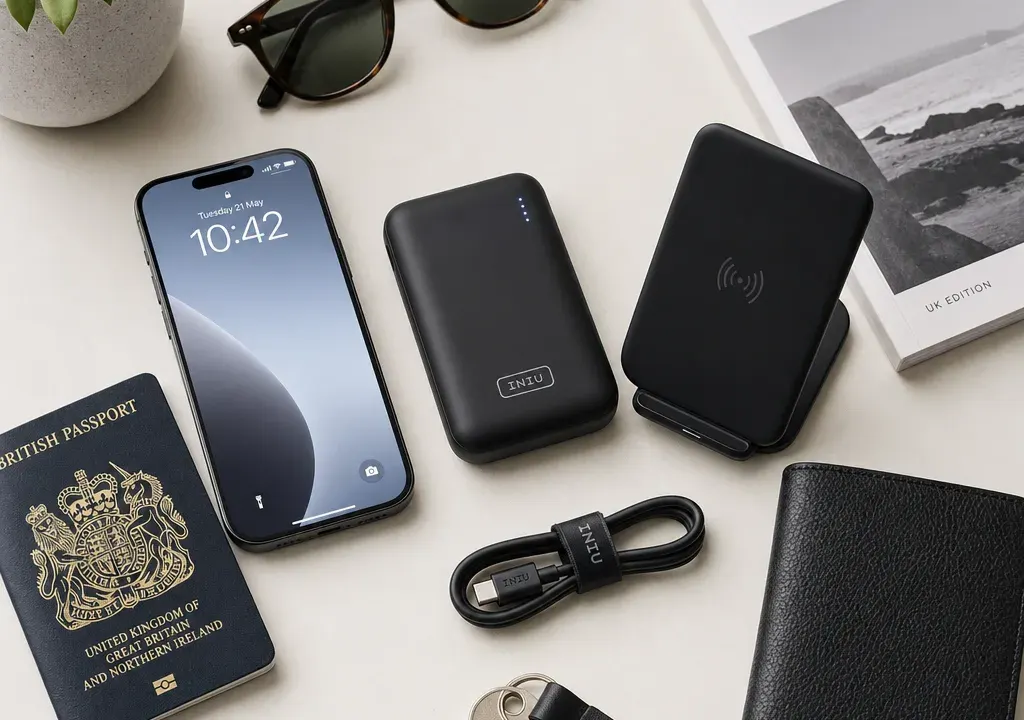
A good power bank can be one of the most useful Mobile Phone Accessories you buy, especially if your phone regularly runs low before the end of the day. The right choice depends on how you charge, where you carry it and whether you need emergency top-ups or enough power for heavier use.
For iPhone and Android buyers, the key comparison points are capacity, output type, USB-C support, number of ports, wireless charging compatibility and overall portability. Live offers can shift quickly, so it is worth comparing products and offers rather than choosing on headline discount alone.
Before comparing brands, decide what problem you are solving. If you only need a safety net for commuting, nights out or travel delays, a compact 10,000 mAh power bank is often the sensible starting point. In the current catalogue context, the Fx 10,000 mAh Powerbank with Type-C 3A output is the clearest dedicated portable power bank candidate, with its capacity and USB-C output stated in the product title.
If you want a charger for a desk, bedside table or kitchen counter, a wireless stand may be more convenient than a battery pack. Options such as the Anker 313 Wireless Charger Stand and Google Pixelsnap Wireless Charger 25W Qi2 are better viewed as everyday charging stations rather than portable backup batteries, because their usefulness depends on being connected to power.
For the car, a dedicated charger such as the Anker USB-C Car Charger 75W Max makes more sense than a power bank if your main concern is topping up on journeys. It is not a portable battery, but it may be the better buy if your phone usually runs low while using maps, music or hands-free features.
Capacity is usually shown in milliamp hours, written as mAh. A higher figure generally means more stored energy, but it can also mean extra size and weight. For many shoppers, 10,000 mAh is a practical middle ground because it offers more than a tiny emergency charger without becoming a bulky travel brick.
The Fx 10,000 mAh Powerbank is useful comparison context because its capacity is clearly stated. If you are choosing between it and an accessory without a stated battery capacity, remember that wireless stands, mains adapters and car chargers are not direct substitutes. They charge your phone, but they do not necessarily store power for later.
Do not rely on capacity alone. Charging losses, phone battery size and cable quality can all affect the real-world result, so treat mAh as a comparison tool rather than a guaranteed number of full charges.
USB-C is increasingly important across modern phones and accessories. For Android users, it has been common for years. For recent iPhone models, USB-C is also now relevant, while older iPhones may still need a Lightning cable. That means the best power bank for one household may not be the best for another.
A product that states Type-C or USB-C output, such as the Fx 10,000 mAh Powerbank with Type-C 3A output, is easier to assess for modern phone compatibility than a listing with vague port information. If you carry multiple devices, check whether the charger supports the cable types you already own.
Also look at whether USB-C is input, output or both. Input means the power bank itself can be recharged through USB-C. Output means it can charge your phone through USB-C. A product title may not always make both points clear, so compare the full product details before buying.
The number of output ports affects how useful a power bank is day to day. A single-port model may be fine if you only charge one phone at a time. If you travel with earbuds, a smartwatch, a work phone or another family member’s device, extra ports can be worth paying for.
The supplied catalogue examples do not all list port counts or dimensions in the title, so this is an area where buyers should slow down and compare product pages carefully. A charger with an impressive wattage or discount may still be less convenient if it only supports the connection you do not use.
Think about your usual cable setup as well. If every cable in your bag is USB-C to USB-C, a USB-A-only power bank would be frustrating. If you still use older cables, you may prefer a charger that includes both styles, provided the product details confirm it.
Wireless options are appealing because they reduce cable clutter and can be easier to use at a desk. The Anker 313 Wireless Charger Stand and Google Pixelsnap Wireless Charger 25W Qi2 are good examples of accessories to compare if you want convenient drop-and-charge use rather than a battery pack for your bag.
For iPhone shoppers, magnetic alignment can be a useful feature where supported, but you should still check compatibility with your exact model and case. For Android shoppers, wireless charging support varies by handset, so confirm that your phone supports the relevant wireless standard before choosing a wireless charger.
Wireless charging can be more about convenience than portability. If your main need is backup power on a train, at a festival or during a long day away from plug sockets, a conventional power bank is usually the more relevant comparison.
Charging speed depends on the charger, cable and phone working together. Product names may mention wattage or output, but that does not automatically mean your phone will charge at the maximum advertised rate. Your handset must support the relevant charging level and protocol.
The Samsung Galaxy 15W Adaptive Fast Charger, Google Pixelsnap Wireless Charger 25W Qi2 and Anker USB-C Car Charger 75W Max show how different charging accessories can be positioned around output. However, they serve different use cases: wall charging, wireless charging and car charging. They should not be compared as if they were all portable power banks.
For a dedicated power bank, output information such as Type-C 3A gives you a starting point. If fast charging is important, compare the detailed specifications and make sure your cable is suitable too.
Portability is one of the biggest differences between a power bank you use daily and one that stays in a drawer. Unfortunately, dimensions are not always visible in a short product title. Where dimensions are available, compare them against how you plan to carry it: jeans pocket, coat pocket, handbag, gym bag or rucksack.
A slim low-capacity charger can be better for evenings out, while a larger unit may suit travel days. If dimensions are missing from a short listing, look for product imagery, weight and full specification details before deciding.
Do not ignore cable storage either. A compact charger can become less convenient if you need to carry a separate long cable. Some shoppers may prefer a slightly larger setup if it works with the cables they already keep in their bag.
Brand can help narrow choices, but it should not replace checking the specification. Samsung, Anker, Google, Apple and Quad Lock all appear in the wider Mobile Phone Accessories catalogue context, but their products cover different jobs: cases, wallets, wireless charging, wall charging, car charging and mounting systems.
If you already use a particular ecosystem, choosing a compatible accessory can make sense. For example, a magnetic wallet or case may matter if you use MagSafe-style accessories, while a wireless charging head may be more relevant to a mounted phone setup. These are useful adjacent comparisons, but they are not the same as choosing a portable power bank.
The best approach is to compare the function first, then brand. Ask whether it stores power, charges from the wall, charges wirelessly, works in the car or simply protects the phone.
Discounts can make Mobile Phone Accessories look tempting, but the best value depends on whether the product solves your specific charging problem. A heavily reduced phone case or wallet case is not a better power bank just because the offer is strong.
When comparing live offers, separate true alternatives from adjacent accessories. The Fx 10,000 mAh Powerbank is the most direct fit for shoppers wanting portable battery backup. Wireless stands, mains chargers and car chargers may still be excellent purchases, but only if they match where and how you charge.
A sensible value check is to compare capacity, port type, charging speed indicators, brand confidence, availability and the current offer side by side. If two products cost similar amounts, the one with clearer specifications may be the safer choice.
For commuters and everyday backup: start by comparing compact power banks around the 10,000 mAh mark, especially those with USB-C output. This balances practicality with enough stored power for regular top-ups.
For desk or bedside charging: compare wireless stands such as the Anker 313 Wireless Charger Stand against Qi2-style options such as the Google Pixelsnap Wireless Charger 25W Qi2, making sure your phone supports wireless charging.
For drivers: a USB-C car charger may be more useful than a power bank if your phone mainly runs down during journeys. Check the output and cable compatibility before buying.
For mixed iPhone and Android households: prioritise flexible USB-C support and clear port information. If older iPhones are in the mix, remember that the correct cable still matters.
For shoppers browsing wider Mobile Phone Accessories: keep power banks separate from Mobile Phone Covers, Wallet Cases, Waterproof Cases and Armbands in your decision. Those products can be useful, but they solve different problems.
For many users, 10,000 mAh is a practical starting point because it offers useful backup power without becoming too bulky. If you only need emergency top-ups, you may prefer something smaller; if you travel heavily, a larger capacity may be worth considering.
Yes. USB-C support is useful for many Android phones and newer iPhone models. Check whether USB-C is used for input, output or both, and make sure you have the right cable for your phone.
Not usually. A wireless charger or charging stand normally needs to be connected to power, while a power bank stores charge for use away from a socket. Some products combine wireless charging with a battery, but you should confirm that in the product details.
Choose a power bank if you need backup power while away from sockets. Choose a car charger if your main problem is keeping your phone charged during journeys. Some shoppers may benefit from both, but they serve different use cases.
Often, yes, provided the ports and cables match the phones you use. USB-C is increasingly useful, but older iPhones may still require a Lightning cable, so check compatibility before buying.
The best power bank for iPhone and Android is the one that matches your routine, not simply the one with the biggest capacity or boldest offer. Compare capacity, USB-C support, output details, port count and portability first, then weigh brand and live pricing.
If you need true portable backup, focus on dedicated power banks such as the 10,000 mAh option in the current catalogue context. If you mainly charge at a desk, in the car or overnight, a wireless, mains or car charging accessory may be the smarter choice within Mobile Phone Accessories.
