
Loading buyer guide
Hurry, don't miss savings on selected furniture & more.* Shop all offers
Choosing between Belkin and Anker? Focus less on the logo and more on watts, ports, USB-C PD support and value per usable watt.
Use our barcode scanner to match products instantly to find the best prices, find products with ease using our voice search and build wish lists and your favourites at the click of a button.
2027 foldable phones to watch
Foldable buying in 2027 will be about more than a new hinge or a bigger display. The smarter shortlist will compare book-style and flip formats, listed screen sizes, storage tiers, camera hardware, availability and how each offer sits against conventional Mobile Phones.
New phones coming in 2027: Apple, Samsung, Google and more
Phone launch shopping is easiest when you separate what is actually listed for sale, what has been officially announced, and what is still only expected. For 2027, the smartest shortlist will be built from confirmed Mobile Phones data, retailer availability and comparable specifications rather than brand rumours.
2026 foldable phones compared: Samsung, Google, Honor and rivals
Foldable phones are now split into two very different buying decisions: book-style models for tablet-like space, and flip-style models for pocketability. The smarter shortlist starts by separating those formats before comparing storage, cameras, battery size, weight, retailer availability and the final offer in front of you.
Best 2026 flagship phones from Apple, Samsung and Google
Flagship phone launches can make every handset sound like the obvious upgrade. The smarter approach is to compare the exact Apple, Samsung or Google model by screen size, storage, camera hardware, processor family, charging support, retailer availability and the offer in front of you.
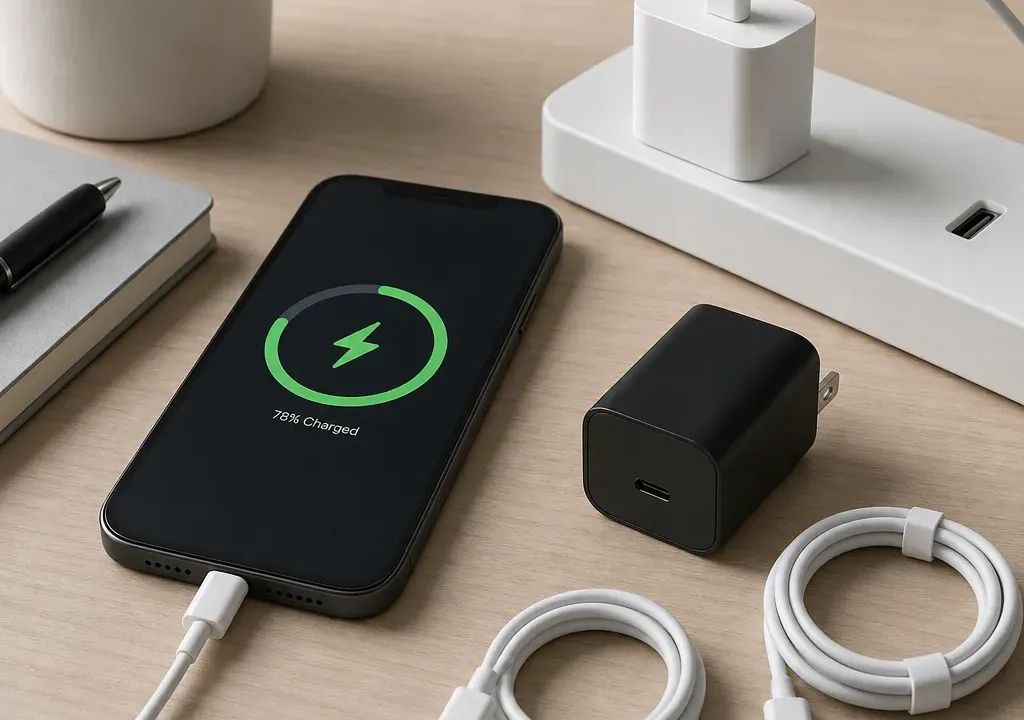
A good phone charger is easy to overlook until it charges too slowly, takes up too much socket space or cannot power the devices you carry every day. When comparing Belkin and Anker chargers, the most useful question is not simply which brand is better, but which specific charger gives you the right combination of wattage, ports, charging standard and value.
For this Mobile Phone Accessories guide, the supplied catalogue data includes Anker charger examples, including an Anker wireless charging stand and an Anker USB-C car charger rated at 75W maximum. It does not include a directly comparable Belkin charger in the current candidate set, so the fairest approach is to show how to evaluate Anker’s visible options and what to check when Belkin listings are available.
If you want the best value charger, start with the job it needs to do. A single-port wall charger for overnight phone charging, a multi-port USB-C charger for phone and earbuds, a wireless stand for a desk, and a car charger for commuting are not interchangeable purchases.
In the supplied product candidates, the clearest Anker value signal is the Anker USB-C Car Charger 75W Max, listed at £16.99 against an original price of £43.08. Using the stated maximum wattage, that works out at about £0.23 per watt. That is a helpful comparison point, but it should not be treated as the full story because maximum output can be shared between ports and real charging speed depends on the phone, cable and charging protocol.
The Anker 313 Wireless Charger Stand is listed at £12.99 against an original price of £33.28, but the supplied title does not state wattage, so a fair price-per-watt calculation is not possible from the available data. That does not make it poor value; it simply means you should check the output specification before comparing it with wired USB-C chargers or other wireless stands.
For Belkin, the current candidate data does not show a matching charger example. If Belkin options appear while you are browsing Mobile Phone Accessories, compare them on the same basis: rated wattage, port count, USB-C PD support, cable inclusion, and whether the format suits your routine.
Wattage is the headline figure most shoppers notice, but it is not automatically the best measure of value. A higher-watt charger can be useful if you charge a phone, tablet or other USB-C device, but a phone will only draw what it supports. Paying for far more output than you need may not improve day-to-day charging if your device cannot use it.
From the supplied data, the Anker USB-C car charger is rated at 75W maximum. That is a strong number for an in-car accessory, particularly if you need to charge more than one device on the move. By comparison, the Samsung Galaxy 15W Adaptive Fast Charger listed in the wider Mobile Phone Accessories set is much lower in wattage and is priced at £11.20, which equates to roughly £0.75 per stated watt. The Google Pixelsnap Wireless Charger is listed as 25W at £24.99, or about £1.00 per stated watt. These calculations are only useful where wattage is provided and comparable.
Wired and wireless wattage should also be compared carefully. Wireless charging is often chosen for convenience rather than pure speed, while USB-C wired charging is usually the more direct choice when speed and efficiency matter. If you are comparing Belkin and Anker, make sure you are comparing like with like: wall charger against wall charger, car charger against car charger, and wireless stand against wireless stand.
Port count affects real value. A single-port charger can be cheaper and smaller, but a two-port or multi-port charger may be better value if it replaces two separate plugs. Before choosing between Belkin and Anker, count what you actually charge together: phone, wireless earbuds, smartwatch, tablet, power bank or work device.
Check whether the listed wattage is total output or per-port output. For example, a charger described as 75W maximum may not deliver that full amount through every port at the same time. If you often charge two devices together, the power split matters more than the headline number.
This is also where accessories around the charger can affect the decision. A charger may look inexpensive, but if you need to buy a suitable USB-C cable separately, the total cost changes. The same applies if you are pairing a charger with Mobile Phone Covers, Wallet Cases or Waterproof Cases: bulky cases can sometimes affect how neatly a device sits on a wireless stand, so check compatibility before buying.
USB-C Power Delivery, usually shortened to USB-C PD, is one of the most important features to check when buying a modern charger. If your phone supports USB-C fast charging, a USB-C PD charger is often the more future-friendly choice than an older USB-A charger. It can also be useful if you share chargers across compatible phones, tablets and smaller tech accessories.
Do not assume every USB-C port behaves the same way. A product title may mention USB-C, but you should still check the specification for PD support, total wattage and any notes about supported charging modes. If a Belkin charger and an Anker charger are similarly priced, the one with clearer USB-C PD support and a suitable wattage for your device is usually the easier buy to justify.
For wireless chargers, look beyond USB-C PD and check the wireless charging standard, the stated output and whether a wall adapter is included. A wireless stand without a suitable plug may still require another purchase before you get the best from it.
Price per watt can make charger comparison more objective, but it has limits. It works best when two chargers are the same type, use the same charging standard and have comparable port layouts. It is much less helpful when comparing a car charger with a wireless stand or a compact single-port plug with a larger multi-port charger.
Using the supplied data, the Anker USB-C Car Charger 75W Max at £16.99 gives an approximate price per maximum watt of £0.23. The Samsung 15W charger at £11.20 gives an approximate £0.75 per watt, while the Google 25W wireless charger at £24.99 gives about £1.00 per watt. These figures are based only on the stated product titles and listed prices in the candidate data, and they do not account for cable quality, port sharing, included accessories or device compatibility.
For a Belkin vs Anker decision, use price per watt as a first filter, not a final verdict. A slightly higher price may still be sensible if the charger has the ports you need, includes a cable you would otherwise buy separately, or is the right format for your desk, bedside table or car.
Availability can decide the purchase even when two brands look similar on paper. In the supplied product candidates, Anker appears with two charger entries: the Anker 313 Wireless Charger Stand and the Anker USB-C Car Charger 75W Max. Belkin does not appear among the supplied charger candidates, so there is no fair Belkin price or wattage comparison to calculate from this dataset.
That does not mean Belkin is unavailable across the wider market; it simply means the current comparison context does not include a Belkin charger candidate. If you are browsing Mobile Phone Accessories and see Belkin chargers listed, compare them directly with Anker using the same checklist: wattage, number of ports, USB-C PD support, included cable or plug, and total price.
It is also worth comparing offers across similar charger types rather than jumping on the biggest discount. A heavily reduced wireless charger may be a poor fit if what you need is fast wired charging in the car, while a high-watt car charger is not useful for a bedside table. The best-value offer is the one that solves your actual charging problem.
Choose Anker if the available listing clearly matches your use case and the value stacks up. In the supplied data, Anker’s 75W maximum USB-C car charger looks like the strongest measurable option because both price and wattage are provided, allowing a meaningful price-per-watt check. The Anker wireless stand may suit shoppers who prefer convenience and a tidy desk or bedside setup, but you should confirm its wattage and compatibility before comparing it with wired chargers.
Choose Belkin if you find a current Belkin charger with the right wattage, USB-C PD support and port layout at a competitive total price. Without a Belkin charger in the supplied candidate set, it would be misleading to claim that Belkin is better or worse value here. The sensible approach is to compare live options side by side once Belkin products are visible in the Mobile Phone Accessories range.
If you are undecided, prioritise compatibility first, then wattage, then port count, then price per watt. Brand preference can be the tie-breaker, but it should not outweigh the practical details that determine how useful the charger will be every day.
Based on the supplied catalogue data, Anker has visible charger options while Belkin does not, so Anker can be assessed more directly here. The Anker 75W maximum USB-C car charger gives an approximate £0.23 per stated watt, but a fair Belkin comparison needs a current Belkin listing with wattage and price.
Buy the wattage your device can actually use, with some headroom if you also charge tablets or other USB-C devices. For simple phone charging, you may not need the highest-watt option. For multi-device or in-car charging, higher total wattage can be more useful.
USB-C PD is worth looking for if your phone supports USB-C fast charging or if you want a charger that can work across several compatible devices. Always check the product specification rather than assuming every USB-C charger supports the same charging speeds.
You can, but only if the wireless wattage is clearly stated and the chargers use comparable standards. Wireless chargers are often bought for convenience and placement, so value is not just about wattage.
A multi-port charger can be better value if you often charge a phone and another device at the same time. Check whether the stated wattage is shared between ports, as charging speed may drop when multiple devices are connected.
The better-value choice between Belkin and Anker depends on the exact charger in front of you. In the supplied Mobile Phone Accessories data, Anker is easier to assess because current charger candidates are visible, including a 75W maximum USB-C car charger with enough information for a price-per-watt estimate. Belkin should be judged against the same criteria when suitable listings are available.
For most shoppers, the smartest route is simple: compare products and offers by charger type, wattage, ports, USB-C PD support and total cost. If a charger fits your phone, your routine and your other Mobile Phone Accessories, it is more likely to be good value than the one with the biggest headline number alone.
