Loading buyer guide
Hurry, don't miss savings on selected furniture & more.* Shop all offers
Amazon’s early Black Friday activity gives Kitchen Appliances shoppers a reason to compare now, not a reason to rush. The safer approach is to check price history, model suitability and total value before deciding whether to buy early or wait.
Use our barcode scanner to match products instantly to find the best prices, find products with ease using our voice search and build wish lists and your favourites at the click of a button.
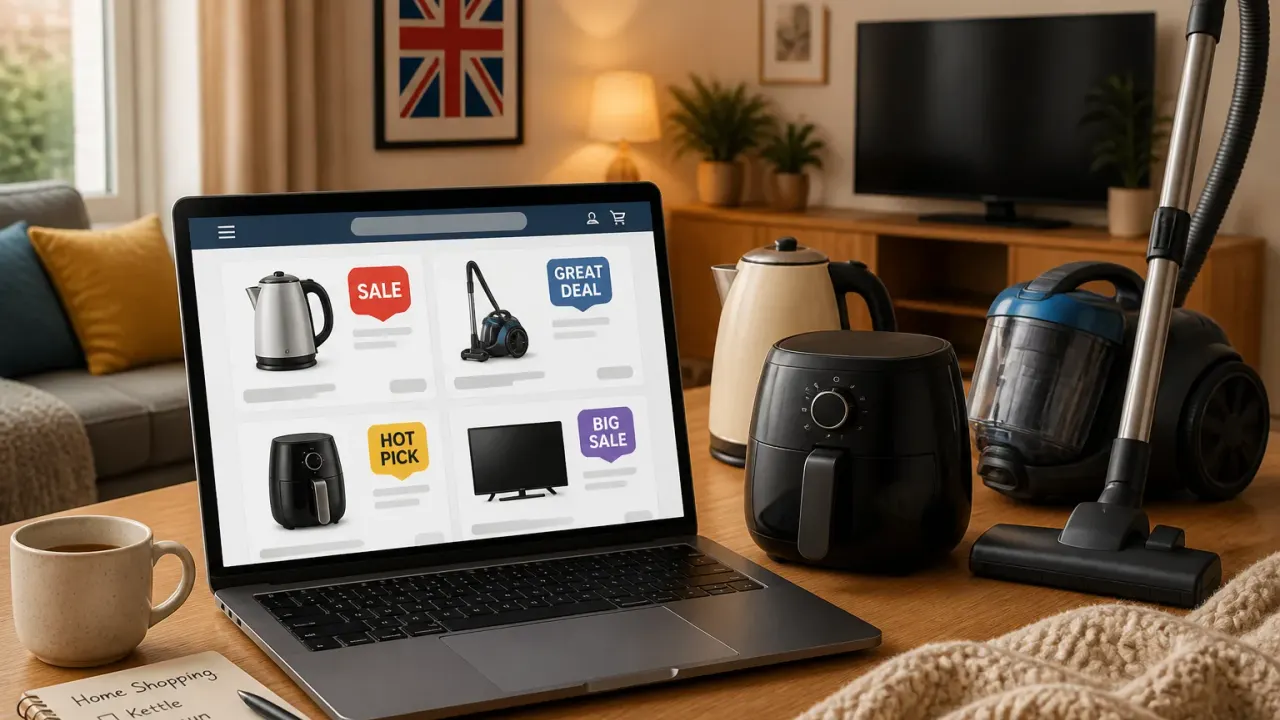
Black Friday 2026 falls on 27 November, and Amazon discounts are already being discussed before the official sale period [1]. For Kitchen Appliances shoppers, that creates a familiar dilemma: buy an early offer now, or wait to see what appears closer to the day itself.
The useful answer is not simply “buy now” or “wait”. Which? says Amazon’s official Black Friday sale is still to come, but that there are already discounts worth a closer look ahead of the event [2]. That wording matters. It suggests early offers may be worth checking, not that every reduction is the lowest price you will see.
This proposed revision focuses on Amazon-specific context for Home & Lifestyle shoppers comparing kitchen appliances and offers. It should be treated as a buying framework, not a list of live prices, because availability and discounts can change quickly.
The supplied evidence verifies two key points. First, Black Friday 2026 is on 27 November [1]. Second, Which? reports that Amazon has discounts live ahead of its official Black Friday sale, with more offers expected as the event approaches [2].
Which? also says Amazon has discounts across thousands of products every November, including Kitchen appliances, Home & garden, Baby products and Health & personal care [2]. For this article, the relevant takeaway is that kitchen shoppers may see early offers on items such as kettles, blenders, food processors and toasters, which are among the home categories highlighted in the Amazon sale coverage [2].
What the evidence does not prove is just as important. It does not prove that every current Amazon appliance offer is a genuine bargain. It also does not prove that waiting until 27 November will always deliver a lower price on the exact model you want. Treat the early offers as candidates for comparison, not automatic buys.
Buying early can be sensible if you have already chosen the exact appliance and the offer stands up after comparison. For example, if you know you want a particular kettle capacity, blender type or food processor size, you can judge the offer against your shortlist rather than being led by the largest discount badge.
The strongest early-buy case is usually a practical one: your old appliance has failed, you need the replacement soon, or the model fits a specific requirement such as counter space, jug capacity, controls or cleaning convenience. In those cases, waiting for 27 November may not be worth it if the current total cost is competitive and the product suits your kitchen.
Even then, compare more than the headline price. Check whether the same model is available elsewhere, whether the appliance is the exact version you want, and whether any bundle includes accessories you will actually use. A bundle is only useful if the extras solve a real need; otherwise it can distract from whether the core appliance is good value.
Waiting may be the better choice if you are flexible. If you simply need “a decent toaster”, “a compact blender” or “a family-sized food processor”, holding off can give you more competing offers to compare as Black Friday gets closer. Which? says more Amazon offers are expected as the big day approaches [2].
It may also be worth waiting if the early discount is hard to judge. Be cautious where the product name is confusing, the model number is slightly different from the one you researched, or the sale page emphasises a percentage saving without making it easy to compare like for like.
The same applies if the appliance is not urgent. A kitchen gadget that would be nice to have for Christmas cooking is different from a kettle you need today. If you do not need immediate delivery, a shortlist-and-watch approach can reduce the risk of buying the first acceptable offer rather than the best-fit product.
Which? says its own deal checks look at market prices over six months and compare cheapest and average prices, although not all retailers are included in its checks [2]. That is a useful principle for shoppers: a reduction should be judged against recent selling prices, not only against a stated “was” price.
For Amazon kitchen appliance deals, look for evidence that the offer is meaningfully better than the recent norm. If a kettle, blender or toaster often sells close to the same level, the Black Friday label may not change much. If the product is near a recent low and it is genuinely the model you wanted, buying earlier can be easier to justify.
Because prices and stock move, use live product modules for changing prices and availability. Static article copy should not pretend to know exact current prices at the moment a reader visits.
A low price cannot fix a poor fit. Before buying a discounted appliance, decide what you need it to do in everyday use. For kettles, think about capacity, controls, water gauge visibility and whether it will be comfortable for the people using it. For blenders, think about jug size, storage, cleaning and the types of ingredients you expect to use. For toasters, check slot size, browning controls and whether it suits your household’s bread choices.
Also consider space. A food processor or blender that lives in a cupboard may be used less often if it is awkward to lift out, while a countertop appliance needs to earn its footprint. In Home & Lifestyle shopping, convenience is part of value.
If you are comparing products and offers, make a shortlist before looking at sale pages. That helps you reject tempting but unsuitable deals, especially when Amazon pages present multiple variations, colours or bundle options.
Buy early if the appliance is already on your shortlist, the live price compares well across retailers, the model number matches your research, and the delivery and returns details suit your needs. It is also more reasonable to buy early if the appliance is replacing something essential.
Wait for 27 November if you are flexible on brand or features, the discount looks ordinary, you cannot verify the price history, or the sale page leaves you unsure about the exact model. Waiting is also sensible if you are likely to be swayed by impulse purchases that add little to your kitchen.
There is no supplied evidence here showing a measured market-wide rise in search demand for Amazon kitchen appliance deals, and news coverage alone cannot prove shopper demand. The verified point is narrower: Amazon-related Black Friday discounts are being flagged before 27 November, and shoppers should compare carefully before acting [2].
Which? says Amazon’s official Black Friday sale is still to come, but that discounts are already live and worth a closer look ahead of the event [2]. That does not mean every early kitchen appliance offer is the best price of the season.
Black Friday 2026 falls on 27 November [1]. Early offers may appear before then, but the date is still useful as a comparison point if you are deciding whether to buy now or wait.
Consider buying early if the appliance is on your planned shortlist, the price history looks strong, and the product suits your kitchen. If you are flexible or uncertain, waiting until closer to 27 November may give you more offers to compare.
Compare the exact model number, recent price history, product features, size, capacity, delivery details, returns terms and whether any bundle extras are useful. Do not rely only on a sale badge or percentage saving.
No. The supplied evidence says more Amazon offers are expected as Black Friday approaches [2], but it does not guarantee a lower price on any individual kettle, blender, toaster or other kitchen appliance.
Amazon’s early Black Friday appliance offers are worth checking, but they should not short-circuit normal buying judgement. The best reason to buy before 27 November is that you have found the right appliance at a total value that holds up after comparison.
If the product is not urgent, the model is unclear or the saving is difficult to verify, waiting can be the more disciplined choice. Keep a shortlist, compare products and offers, and use live price information before making the final decision.