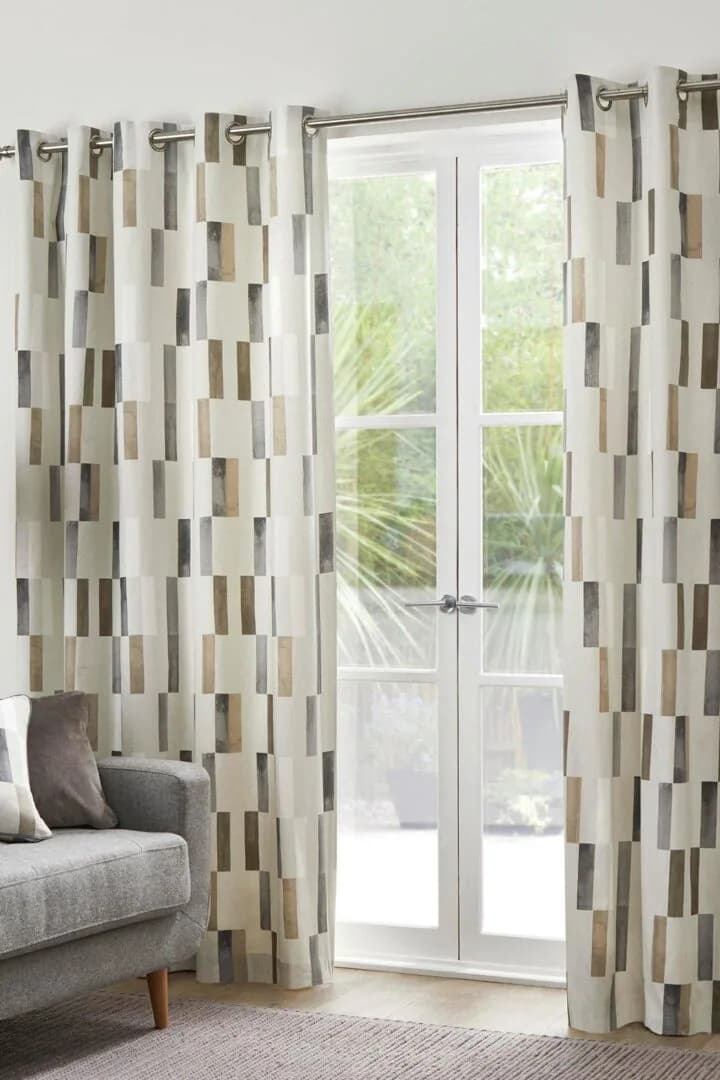
Choosing nursery curtains and blinds is really a decision about sleep, comfort and safety information, not just colour. A design that looks lovely in daylight may not reduce evening light enough, while a heavy blackout option may feel too dark or grown-up if the colour and pattern are not right for the room.
The product examples below come from the supplied catalogue candidates, so use them as comparison context rather than as a fixed ranking. Prices, discounts and availability can change, so it is worth comparing products and offers again before you buy.
Start with the nursery job: darkness, softness or flexibility
For many nurseries, the first question is whether you need a darker room for naps and early mornings. Catalogue listings that mention blackout, thermal or light-reducing features are the most relevant starting points. For example, the Catherine Lansfield Faux Silk Blackout Thermal Eyelet Curtains are listed with blackout and thermal wording, making them more directly sleep-focused than a purely decorative pair.
If you want some light through the day and mainly need a softer finish, light filtering curtains may be a better fit. The Fusion Sander 100% Cotton Light Filtering Eyelet Curtains in duck egg blue are a useful comparison point because the listing suggests a gentler light-control role rather than full blackout.
There is also a middle ground. The Fusion Galaxy Light Reducing Thermal Effect Pencil Pleat Curtains are listed as light reducing with a thermal effect. That may appeal if you want to soften brightness and add a warmer feel without necessarily choosing a full blackout listing. Always read the individual product details carefully, because terms such as blackout, lined, thermal and light reducing are not interchangeable.
Choose calm colours before busy patterns
Soft colours often work well in a nursery because they are easy to live with as the room changes. Duck egg blue, silver, natural and light brown are all represented in the supplied curtain options and can sit comfortably with neutral furniture, pale walls and children’s accessories.
The Paoletti Winchester Pencil Pleat Curtains in light brown offer a neutral comparison point, while the Fusion Oakland 100% Cotton Modern Print Curtains in natural give a lighter patterned option. If you want colour without going too bold, duck egg blue styles such as Fusion Sander or Fusion Beechwood can add interest while still feeling gentle.
Patterns can be lovely in a child’s room, but compare scale as well as colour. A small botanical or leaf trail can feel calmer than a strong check or large floral. The Fusion Beechwood leaf trail, Dreams & Drapes Wisteria floral in navy, Portfolio Home Richmond floral lavender and Portfolio Home Orleans tartan check blue all show how different a nursery can feel depending on pattern strength. For a restful sleep space, it is usually safer to let one window treatment be the main pattern and keep other textiles quieter.
Compare sizes properly, not just the design
A nursery curtain that is too narrow or too short can let light spill around the edges, especially at bedtime. The candidates include a variety of widths and drops, such as 117 cm width x 137 cm drop, 117 cm width x 183 cm drop, 168 cm width x 183 cm drop, 168 cm width x 229 cm drop and 229 cm width x 183 cm drop. That range shows why size filtering matters before you fall for a colour or print.
When comparing Curtains, check whether the stated width is per curtain or for the pair, as product listings can vary. You also need to consider where the pole or rod sits. Hanging curtains slightly wider and higher than the recess can help reduce side light, but only if the product size and heading allow it.
If your window is awkward, a fitting accessory may be part of the decision. The FORGEVIO extendable spring tension curtain rod is listed as 110–190 cm and is an example of the sort of curtain accessory shoppers may compare alongside curtains. It is not a curtain, and it will not suit every installation, but it highlights the importance of checking your fixing method as well as the fabric.
Eyelet, pencil pleat or blinds: which is more nursery-friendly?
Eyelet curtains are common in the supplied options and can be straightforward to open and close on a suitable pole. The Catherine Lansfield blackout thermal curtains, Fusion Sander, Fusion Beechwood, Fusion Oakland, Dreams & Drapes Wisteria and several Portfolio Home options are listed as eyelet curtains. They tend to create a simple, modern look, but you must check pole compatibility.
Pencil pleat curtains can suit a more traditional nursery and may offer more flexibility in how the heading is gathered. The Paoletti Winchester and Fusion Galaxy options are useful examples of pencil pleat listings. They may be a good comparison if you already have a track or prefer a softer gathered heading.
Blinds can be useful where curtains feel bulky, especially in smaller rooms, but child-related safety information becomes a key filter. If you compare Blinds, Roller Blinds, Roman Blinds, Pleated Blinds or Venetian Blinds for a nursery, look for clearly listed cordless or child-safety details. If that information is not visible in the listing, do not assume it applies. For a child’s room, many shoppers prefer the simplicity of curtains unless a blind listing gives the reassurance they need.
Blackout curtains versus lined curtains
Blackout curtains are designed for stronger light control, while fully lined curtains may improve drape, privacy and comfort without necessarily being blackout. Among the supplied examples, Catherine Lansfield is the clearest blackout-labelled option, while Portfolio Home Orleans is listed as fully lined and Portfolio Home Richmond is also listed as fully lined.
For a nursery, the choice depends on the child’s routine and the room’s exposure. A south-facing room or a room with street lighting outside may justify prioritising blackout wording. A room that already has shutters, a blind or low evening light may only need lined curtains to soften brightness and improve the finish.
Thermal wording can also be worth comparing in older homes or draughtier rooms. The Catherine Lansfield listing includes blackout thermal wording, and Fusion Galaxy includes light reducing thermal effect wording. These are catalogue descriptions rather than tested performance claims here, so compare the retailer’s product details before deciding.
Compare value by usefulness, not discount alone
Discounts can help you spot a strong offer, but the best nursery choice is not simply the item with the biggest saving. In the supplied product data, several options show notable discount signals and in-stock status, including Paoletti Winchester, Catherine Lansfield Faux Silk Blackout Thermal, Portfolio Home Orleans, Fusion cotton designs and other patterned curtains. Those signals are useful, but they should sit behind fit and function.
A lower-priced curtain that does not fit the window or block enough light will not be good value for a nursery. Equally, a more decorative curtain with a large drop may be unnecessary if you only need a small pair for a compact window. Compare the actual size, lining, light-control wording and heading style before weighing the offer.
If you are deciding between two similar products, then price and stock become more important. For example, if two duck egg or neutral options both fit your window and suit the room, current price, discount signal and availability may be the deciding factors. Recheck live offers because catalogue prices and stock can move.
Shortlist by nursery scenario
For better nap-time darkness, begin with listings that explicitly mention blackout or light reducing features. The Catherine Lansfield Faux Silk Blackout Thermal Eyelet Curtains are the most direct blackout comparison from the supplied candidates, while Fusion Galaxy is worth comparing if light reducing is enough for your room.
For a gentle, calm look, compare soft colours and natural-feeling fabrics. Fusion Sander in duck egg blue, Fusion Beechwood in duck egg blue, Fusion Oakland in natural and Paoletti Winchester in light brown all sit in a softer visual direction than stronger checks or darker florals.
For a more decorative child’s bedroom that can grow beyond the baby stage, patterned options may work well. Dreams & Drapes Wisteria in navy, Portfolio Home Richmond floral lavender, Portfolio Home Orleans tartan check blue and SO'HOME Arabesque Damask give different design routes, from floral to check to damask. The key is choosing a pattern you will still like as toys, bedding and wall colours change.
Frequently asked questions
Are blackout curtains best for a nursery?
Blackout curtains are often worth comparing if the room gets strong daylight, early morning sun or street lighting. They are not the only option, though. Light reducing, lined or layered window dressings may be enough depending on the room and your child’s routine.
Should I choose curtains or blinds for a child’s room?
Curtains are often simple to compare because there are no blind cords to consider, but blinds can work well in small windows or layered with curtains. For any nursery blind, look for clearly listed cordless or child-safety information and do not assume it is included if the listing does not say so.
What curtain colours work best in a nursery?
Soft neutrals, duck egg blue, gentle silver, pale natural tones and muted florals can help create a calm room. Stronger colours and patterns can still work, but it is worth comparing them against the bedding, wall colour and how stimulating the room feels at bedtime.
How do I choose the right nursery curtain size?
Measure the window, decide where the pole or track will sit, then compare both width and drop in the product listing. Check whether the listed width applies to each curtain or the pair, and allow enough coverage to reduce light gaps around the window.
Conclusion
The best nursery curtains and blinds are the ones that match the room’s light, the child’s routine and the fitting information you can verify. Start with blackout or light-reducing wording if sleep is the priority, then narrow by soft colour, suitable pattern, correct size and clear product details.
Use Curtains as your main comparison area if you want a soft, simple window treatment, and compare Blinds or specific blind styles only when the listing gives the safety and fitting information you need. Once the practical boxes are ticked, current offers, price signals and stock can help you choose confidently.
Live comparison
Compare our curtains picks
Prices and retailer availability are pulled from ShopSmarty when this page loads. Product selection is based on current catalogue, availability, value and merchandising signals rather than physical product testing.
Products to compare