
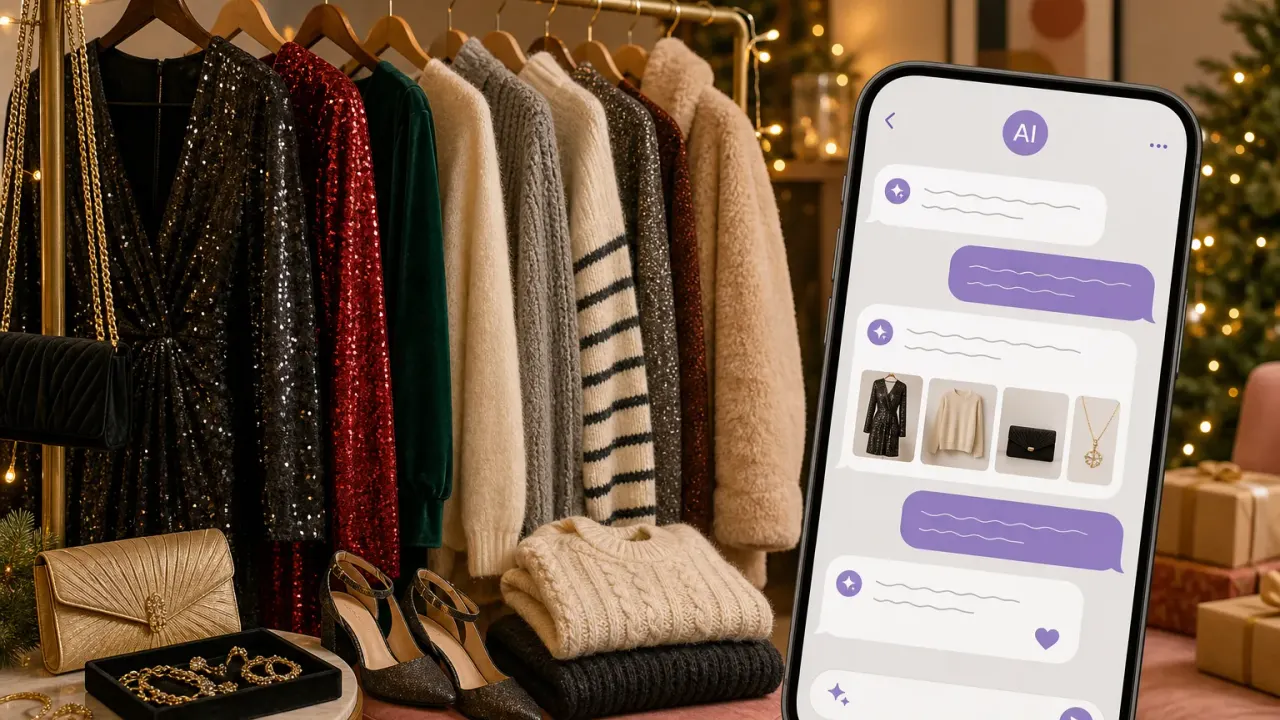
AI outfit advice can be genuinely helpful when Christmas clothing decisions feel messy. If you are juggling a work party, family meal, winter drinks and New Year plans, a conversational tool can suggest colour combinations, dress-code ideas and ways to style one piece more than once.
But shoppers should treat AI as a planning assistant, not a personal tailor, fabric expert or live stock checker. The best use is to generate ideas and comparison prompts, then verify the details yourself before buying through live product modules and retailer pages.
What has changed in AI fashion shopping?
AI-assisted shopping is becoming more visible in fashion and seasonal retail. A retail report published on 6 October 2026 said Adobe forecast UK festive online spend of £28.52bn and described AI-driven shopping as rising 214% year on year [1]. That supports the idea that more shoppers are encountering AI in the buying journey, although it does not prove demand for any specific Christmas dress, blazer, bag or pair of party shoes.
Fashion retailers are also experimenting with outfit-led AI rather than only single-product recommendations. One online fashion retailer tested AI-generated outfit suggestions in November 2025, launched a conversational shopping app inside ChatGPT for UK and US shoppers on 20 May 2026, and had already used an in-app AI stylist for outfit inspiration [2]. The same report says the retailer’s survey of 1,952 UK consumers, conducted between July and August 2026, found that 33% had abandoned a purchase they could not picture wearing and 53% said complete outfit inspiration would help [2].
The useful takeaway is not that AI knows best. It is that many fashion decisions are really styling decisions. Shoppers often want to know what a velvet trouser goes with, whether a satin shirt can work beyond December, or how to make a simple knit feel party-ready. AI can help generate those routes quickly, but the buying decision still depends on product evidence.
Where AI outfit advice can be useful
AI is strongest at broad ideation. You can ask it for outfit formulas rather than finished answers: for example, how to style black wide-leg trousers for a Christmas lunch, what to wear with a burgundy velvet blazer, or how to make a sequin skirt feel less formal.
It can also help you compare options more clearly. Instead of asking, “What should I buy?”, try asking, “What should I check before choosing between a satin midi dress, velvet trousers and a sparkly knit for two December events?” That kind of prompt can produce a useful checklist around warmth, footwear, outerwear, rewear potential and accessories.
AI can also help with price-comparison prompts, as long as you do not rely on it for exact current prices. A sensible prompt might be: “Create a checklist for comparing similar party dresses, including fabric, lining, returns, delivery, care instructions and whether the item can be worn again.” Use live product modules for current offers, availability and retailer terms.
Where shoppers should not trust AI blindly
Do not outsource fit. AI may describe a silhouette as flattering or occasion-appropriate, but it may not know your proportions, comfort preferences, preferred rise, sleeve length or whether a brand’s sizing runs differently for a particular garment. For trousers, dresses, coats and fitted tops, always check the size guide, model information where available, customer fit notes if supplied, and the returns policy.
Do not assume fabric from a styling suggestion. A tool may suggest velvet, satin, sequins, jersey or knitwear as festive options, but the actual garment may vary in weight, stretch, lining, transparency, care requirements and comfort. Product descriptions and care labels matter more than an AI’s outfit wording.
Do not treat AI as a live stock or offer checker unless the tool is directly connected to up-to-date product data. Even then, prices, sizes, colours, delivery options and promotions can change. Compare products and offers using live listings before deciding.
Do not let AI make the retailer reputation decision for you. Check whether the retailer is familiar, how returns work, whether there are any extra costs, how customer service is handled and whether the delivery timing suits your event. A clever outfit idea is not useful if the item arrives too late or cannot be returned easily.
How to use AI for Christmas clothes without overbuying
Start with your diary, not the chatbot. List the events you actually have: office party, Christmas Day, casual drinks, winter wedding, school event or New Year gathering. Then ask for outfit ideas that reuse one or two base pieces across those occasions.
A strong festive wardrobe usually starts with repeatable items: black or navy trousers, a smart blazer, a winter coat, a polished knit, a dress you can layer, or accessories that change the mood of clothes you already own. AI can suggest combinations, but you should decide whether a piece will work after the party season.
Use prompts that force practicality. For example: “Suggest three ways to wear one pair of velvet trousers for a work party, family lunch and January dinner.” Or: “What accessories would make a plain black dress feel festive without making it single-use?” These prompts are more useful than simply asking for “the best Christmas outfit”.
Be wary of one-event logic. If AI suggests a dramatic party dress, ask what shoes, coat, bag and underwear it would require. If the outfit needs several extra purchases, compare that total against a more versatile separate such as a satin blouse, smart trousers or statement earrings.
What to compare before buying an AI-suggested outfit
Fit should come first. For Clothing & Accessories, compare the measurements that are most likely to affect comfort: waist, hip, rise and length for trousers; bust, shoulder and sleeve shape for dresses and tops; and room for layering in coats and jackets.
Next, compare fabric and care. Partywear can include delicate finishes, embellishment, shine, pile or texture. Check whether the item can be washed at home, whether it needs specialist care, and whether that fits your lifestyle.
Then compare styling range. Ask yourself whether the item works with shoes, bags, coats and accessories you already own. A cheaper garment that needs new heels, a new bag and a new coat may not be the better-value option.
Finally, compare returns and timing. Christmas clothing often has a deadline attached. Before ordering, check whether you have enough time to try the item on, style it with your existing wardrobe and return or exchange it if the fit is wrong.
A sensible verdict for UK shoppers
AI outfit advice is worth using for inspiration, especially if you feel stuck or want to compare different festive looks quickly. The evidence shows fashion retailers are investing in AI styling, including tools designed around complete outfits rather than isolated products [2]. That makes sense for shoppers who need help picturing how garments work together.
But the evidence does not prove that AI styling tools improve fit, prevent returns or identify the best-value item for your wardrobe. One report explicitly notes that published information on retailer AI styling features does not include performance data such as conversion uplift, basket size or return-rate effects [2].
So the safest approach is balanced: let AI broaden your outfit ideas, then narrow the shortlist using ordinary buying checks. Size, fabric, comfort, rewear potential, returns and live offers are still the shopper’s responsibility.
Frequently asked questions
Can AI choose my Christmas party outfit for me?
It can suggest ideas, but it should not make the final decision. Use it for styling inspiration, then check fit, fabric, care instructions, returns and whether the outfit suits your real event.
Is AI useful for comparing Christmas clothing offers?
Yes, if you use it to create a comparison checklist. Do not rely on it for exact current prices or stock unless you are checking live product modules and retailer listings at the point of purchase.
What should I ask AI before buying festive clothes?
Ask practical questions such as how to rewear an item, what shoes and coat it needs, whether it can work for more than one event, and what details to compare before buying.
What clothing items should I verify most carefully?
Check fit-critical pieces first: trousers, fitted dresses, coats, blazers and party shoes. Accessories are easier to adjust, but they should still work with more than one outfit if you want better value.
Conclusion
AI can make Christmas clothes shopping feel less overwhelming, particularly when you need outfit ideas quickly. It is good at suggesting combinations, dress-code options and ways to make existing Clothing & Accessories feel more festive.
The final buying decision should still be grounded in evidence you can verify: current availability, accurate sizing, fabric details, care instructions, returns, retailer reputation and whether you will wear the item after one event. Treat AI as a styling notebook, not the checkout button.
Sources
- [1] Retail Times — Holiday shoppers are making brands earn every purchase, with AI helping them find what’s worth buying. Published 6 Oct 2026; Accessed 9 Nov 2026.
- [2] AI in Fashion Daily — How does ASOS use AI? Outfit recommendations, the AI Stylist and ChatGPT. Published 8 Oct 2026; Accessed 9 Nov 2026.
