
Loading buyer guide
Hurry, don't miss savings on selected furniture & more.* Shop all offers
Christmas lights and trees are tempting as soon as festive ranges appear, but early availability is not the same as a guaranteed bargain. Here is how to decide what to buy now, what to compare, and what can wait.
Use our barcode scanner to match products instantly to find the best prices, find products with ease using our voice search and build wish lists and your favourites at the click of a button.
Update: christmas gift shopping when budgets are tighter
Christmas gift deals can be useful, but only when the saving is clear, the terms are fair and the gift still makes sense. Here is how to keep spending under control while comparing products and offers more calmly.
Which hamleys festive 15 toys are actually worth shortlisting for christmas 2026?
Hamleys’ 2026 Festive 15 is useful as a starting point for Christmas toy ideas, but the better buy is the one that suits the child’s age, attention span, space at home and the way they actually play.
Update: christmas gift shopping when budgets are tighter
With many UK shoppers planning to spend less on holiday gifts in 2026, the safest Christmas strategy is to decide the budget first, then test every voucher, bundle and promotion against what the recipient actually needs.
When should you start buying christmas food and drink?
Christmas supermarket ranges are moving into sharper focus in November, but that does not mean every festive food shop should happen at once. The smartest approach is to separate cupboard buys, loyalty-point spending, party food and fresh orders so you can compare products and offers without rushing perishable purchases.
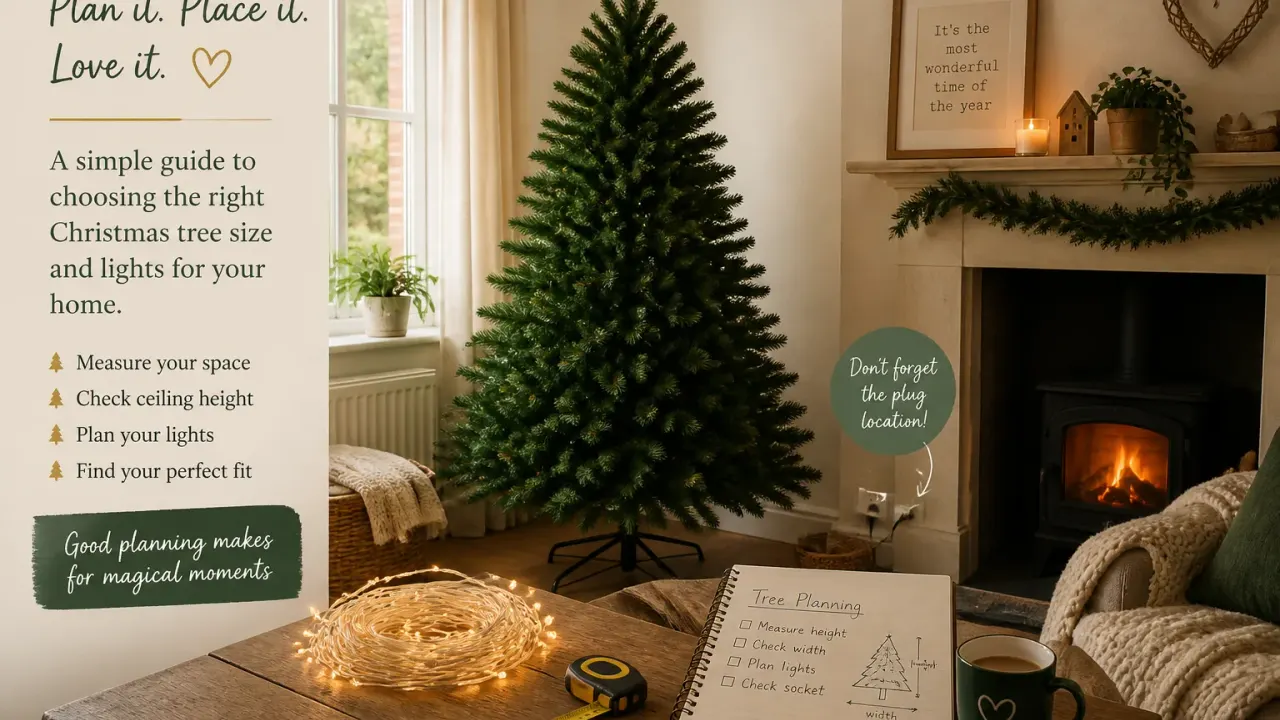
Christmas displays can make it feel as though the festive countdown has already started, but that does not mean every purchase needs to happen at once. If you are buying Christmas Lights or a Christmas tree, early browsing is most useful when it helps you plan properly: measuring the space, choosing indoor or outdoor fittings, and comparing products and offers before the busiest weeks.
The latest evidence is a seasonal retail announcement, not a verified price signal. John Lewis said its Christmas shop for the 2026 season had opened, with the range including festive trees, lights, tableware, decorations, gifts and wrapping [1]. The source also reports early festive shopping activity in several Christmas categories, but it does not prove that Christmas lights or trees are discounted, nor does it establish a market-wide trend for UK shoppers [1].
There is also a date note worth treating carefully. The retrieved source metadata gives a publication date of 3 November 2026, while the source text itself refers to 23 September 2026 and says the Christmas shop opened with 93 days to go [1]. That inconsistency does not change the buying lesson: use early availability as a planning prompt, not as pressure to make an impulse purchase.
Buying early can be sensible if you have a specific size, colour, lighting style or room layout in mind. Trees and lights are not just decorative extras; they need to fit the space, power setup and storage you already have. If you wait until the final rush, you may have less time to compare options carefully, especially if you need a particular height, shape or outdoor-safe lighting format.
Early buying is also useful if you are replacing something that failed last year. Check old lights before you browse: plug them in safely, inspect cables and bulbs visually, and decide whether you need a full replacement or only a different layout. For trees, unpack the old one if you can and check whether the stand, branches and storage bag still work for your home.
The strongest reason to buy early is certainty, not panic. If the right product matches your measurements, the power option suits your room, and the offer compares well with similar products, it may be worth buying before peak demand. But early festive displays alone are not a buying reason.
Waiting can be the better choice if you have not measured yet, are still deciding between a real-look artificial tree and a pre-lit tree, or are unsure whether your lights need to be used indoors, outdoors or both. A rushed purchase can leave you with a tree that blocks a doorway, lights that are too short for the banister, or a power cable that does not work for the socket position.
It may also be sensible to wait if you are comparing offers across different product types. A pre-lit tree can look convenient, but you should compare it with buying a plain tree and separate lights. The best choice depends on how much control you want over bulb colour, brightness, repairability and future styling. Use live product modules for changing prices and availability rather than relying on any fixed price assumption.
The available evidence confirms early Christmas retail activity, but it does not show that lights or trees are cheaper at launch [1]. For shoppers, that means the decision should be based on specification and value comparison rather than fear of missing out.
Before comparing Christmas Trees, measure the height and width of the space where the tree will actually stand. Leave room for a topper if you use one, and remember that a tree in a corner still needs enough branch spread to look balanced. If your room has low ceilings, a slimmer tree may be more practical than simply choosing the tallest option that fits on paper.
Think about floor space as well as height. A wide tree can make a living room feel cramped once presents, side tables and foot traffic are included. If you decorate in a hallway or dining area, check door clearance and whether chairs can still be pulled out comfortably.
Storage matters too. Artificial trees need somewhere to live for most of the year. If storage is tight, compare sectioned trees, slimmer profiles and packaging size where listed by the retailer. Do not assume a larger tree is better value if it becomes difficult to store or assemble.
For Christmas Lights, start with the object or area you are decorating: a tree, mantelpiece, window, stair rail, balcony or garden feature. Measure the route the lights will follow, not just the straight-line distance. Wrapping around branches, bannisters or shrubs uses more length than it appears.
Next, decide the effect you want. A subtle warm glow needs fewer lights than a dense, bright display. If you are decorating a tree, consider whether you prefer lights tucked deep into the branches or sitting mainly on the outer tips. That choice changes the length you need and can affect whether one set is enough.
If you are comparing offers, look beyond the headline pack. Check cable length, lit length, bulb spacing, timer functions if listed, colour temperature, replacement options and whether the set is designed for indoor or outdoor use. Two products can look similar online but behave very differently once installed.
Power setup is one of the easiest details to overlook. Before buying, find the nearest socket and work out whether the cable can reach without creating a trip hazard. If the lights are for a window, porch or garden, check whether the product is described as suitable for that location and whether the plug or power pack needs to stay indoors.
Battery-powered lights can be useful for wreaths, table decorations and places without a convenient socket, but compare battery type and access before buying. If the battery box is awkward to reach, changing batteries may become irritating during the season. For mains-powered lights, compare timer and memory settings if they are important to you.
Pre-lit trees simplify the look, but they also tie the tree and lights together. If you like changing colours from year to year, separate lights may offer more flexibility. If you value quick assembly and a consistent finish, a pre-lit option may be worth comparing.
Retailers opening Christmas ranges early can be helpful because it gives shoppers more time to plan. The John Lewis announcement says its Christmas shop includes categories such as festive trees, lights and decorations [1]. That is useful availability information, but it is not the same as independent proof that a product is the right size, the best offer, or likely to sell out everywhere.
A simple rule helps: do not buy until you can answer four questions. Where will it go? How will it be powered? What size or length do you need? What comparable products or offers have you checked? If one of those answers is missing, save the product and come back after measuring.
For a calmer Christmas setup, separate planning from purchasing. Browse early for ideas, shortlist products that match your room and outdoor spaces, then compare specifications and offers when you are ready to commit.
The supplied evidence shows early Christmas retail activity, but it does not prove that Christmas lights are discounted at launch. Compare current offers, product specifications and suitability before deciding.
No. Measure ceiling height, available floor width and space for a topper first. A tree that is slightly smaller but better proportioned will usually be easier to live with than one that only just fits.
They can be convenient if you want a quick, consistent look. However, compare them with a plain tree plus separate lights, especially if you like changing light colour, density or style from year to year.
Check that the product is described as suitable for outdoor use, measure the route you want to cover, and plan where the power source will sit. Do not rely on indoor lights for outdoor spaces unless the product information specifically supports that use.
You can, especially if you are flexible on style and size. Waiting may give you more time to compare offers, but buying earlier can help if you need a specific height, shape, colour or power setup.
The best time to buy Christmas lights and a tree is not set by the first festive display you see. It depends on whether you know your measurements, have checked the power setup, and can compare suitable products and offers calmly.
Early availability can be useful for planning and shortlisting, especially for specific tree sizes or lighting styles. But without evidence of a verified discount, the safer approach is to measure first, compare carefully, and buy only when the product genuinely fits your home and budget.
