
Loading buyer guide
Hurry, don't miss savings on selected furniture & more.* Shop all offers
Childhood favourites can make thoughtful adult gifts, especially at Christmas. The smarter question is not whether nostalgia is popular, but whether a LEGO set, retro toy or collectable suits the recipient, the space and the budget.
Use our barcode scanner to match products instantly to find the best prices, find products with ease using our voice search and build wish lists and your favourites at the click of a button.
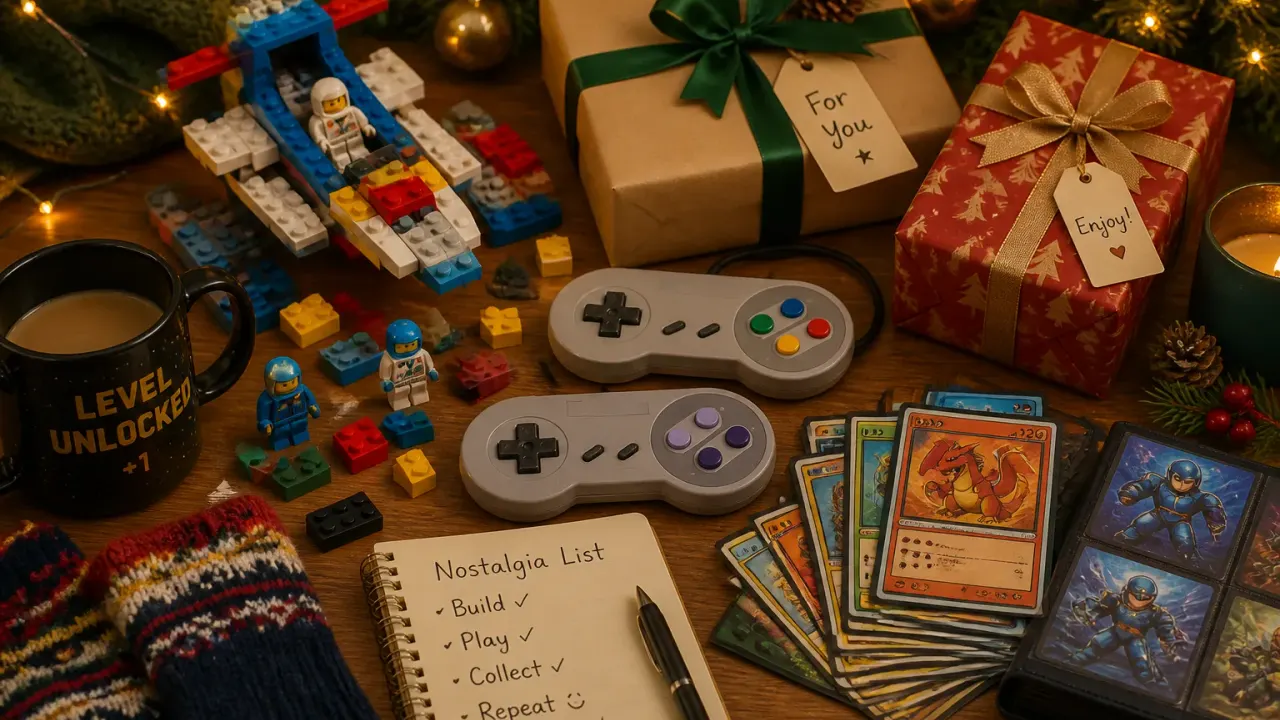
Adult nostalgia gifting has moved well beyond a novelty stocking filler. Research published by Novuna on 4 November 2026 estimated that UK adult spending on LEGO sets, Pokémon cards, retro consoles and similar childhood favourites is worth £8.6bn a year, with 54% of UK adults saying they still spend on the games, toys and collectables they loved growing up [1].
That does not mean every retro-looking product is a wise buy. The same research said half of British adults who celebrate Christmas planned to buy childhood favourites for themselves in 2026, while LEGO was named by 19% of adults as something they would most like to receive [1]. For shoppers browsing Toys & Hobbies, Blocks and Christmas gift ideas, the practical question is how to compare products and offers without letting nostalgia do all the decision-making.
The timing matters. Novuna’s findings were published as Christmas shopping was approaching in 2026, and the research directly linked adult nostalgia spending with festive wish lists and self-gifting [1]. That makes LEGO-style building sets, retro games, trading cards and collectables especially visible during the gift-buying period.
There is also wider toy-market context. Circana insights published on 5 November 2026 said the UK toy market was up 13% in value and 17% in volume year to date to September, while Q4 has represented around 45% of annual toy market value in recent years [2]. The same insight noted that Building Sets had shown good growth, although growth in 2026 was described as more evenly spread across several toy areas rather than concentrated in only a few categories [2].
The evidence supports the idea that nostalgia and building sets are commercially significant. It does not prove that a particular set, collectable or retro item will be good value for every buyer, hold its value, or be easy to resell. Treat popularity as a signal to compare carefully, not as a reason to rush.
A childhood favourite can be a brilliant gift when it matches the adult’s real habits. Before comparing offers, ask whether the recipient enjoys hands-on hobbies, display pieces, games nights, collecting, or simply the memory attached to the theme.
For LEGO and other Blocks gifts, the difference between a quick build, a detailed display model and a complex collector-style project can be substantial. If the recipient has limited time, a smaller build may be more satisfying than a large set that becomes a half-finished obligation. If they love a slow project, complexity may be part of the appeal.
For retro toys and collectables, decide whether the gift is meant to be opened and enjoyed, displayed, or kept boxed. Those are different buying decisions. A display buyer may care more about condition and packaging; a user may care more about completeness, durability and whether all the pieces are present.
Exact prices and availability change, so use live product modules when comparing current offers. A helpful value check is to think about cost per likely use rather than the headline price alone.
For a building set, consider how many hours of building it may provide, whether it becomes a display item afterwards, and whether it can be rebuilt or shared. For a retro game or console-style gift, consider whether the recipient will play it repeatedly or only enjoy the initial novelty. For trading cards or collectables, be honest about whether the enjoyment is opening, completing a collection or owning one specific item.
Set a budget before browsing. Novuna reported that adults who planned to buy nostalgic Christmas treats for themselves expected to spend an average of £158, but that is an average from one piece of research, not a recommendation for what any individual should spend [1]. Your own ceiling should come from affordability and gift expectations, not from what other shoppers say they might do.
Adult-focused building sets and collectables can create a practical problem after the wrapping paper is gone: where does the finished item go? If you are buying a Blocks gift, think about the recipient’s shelves, desk space and tolerance for dusting display pieces.
Large or intricate sets can be impressive, but they are not automatically better gifts. A smaller item that fits neatly into a home office, living room shelf or hobby space may deliver more enjoyment than a statement piece with nowhere to live.
For collectables, storage matters too. Cards, boxed figures, sealed items and retro accessories can quickly become clutter if the recipient is not an active collector. If you are not sure, choose something with a clear use or display purpose rather than assuming bigger means more thoughtful.
When shopping for adults, age guidance can still be useful because it often signals complexity, small parts and intended build experience. Do not ignore it just because the recipient is grown up.
For an adult beginner, a product aimed at experienced builders or collectors may feel frustrating. For someone who already enjoys intricate hobbies, a simpler set may feel too brief. Compare the product description, number of stages where stated, theme, and whether specialist knowledge is needed to enjoy it.
If buying for a household with children, pets or shared spaces, think about loose parts and safe storage. The sources supplied for this article do not provide product-level safety details, so check the retailer and manufacturer information for the specific item before buying.
Nostalgia products often trade on names, designs and memories people recognise. That makes authenticity an important comparison point, especially for collectables, retired toys and retro gaming items.
For new products, compare the retailer, packaging information, product title and what is included. For pre-owned or collectable items, look for clear photos, condition notes, missing-parts information and whether the seller distinguishes between original, reproduction and inspired-by items.
Be cautious about paying a premium purely because something is described as rare, vintage or collectible. The evidence here shows adult interest in childhood favourites, but it does not verify the value of any specific item. If resale value is part of your thinking, you need item-specific evidence, not just nostalgia.
For Christmas gifting, the cheapest offer is not always the best overall option. Compare returns windows, gift receipt options, packaging condition expectations and whether the item is sold as new, used or refurbished. Do this before checkout, not after the recipient opens it.
This matters more for adult nostalgia gifts because personal taste is so specific. Someone may love LEGO but not want a particular theme; enjoy retro games but already own the title; or collect one franchise but not another. If you are unsure, a flexible return option can be more useful than a marginally lower price.
When comparing offers across Toys & Hobbies, keep a short list of must-haves: the exact product version, condition, included parts or accessories, delivery timing, returns and total cost. That helps you avoid paying extra for the wrong item in the rush of festive shopping.
Novuna’s research said some adults buy nostalgic items because they bring back happy childhood memories, help them relax, or let them buy things they could only wish for as children [1]. Those are valid reasons to spend if the purchase fits the budget.
Investment is a different question. The supplied evidence does not confirm that any current LEGO set, trading card, retro toy or console will rise in value. Treat collectable-value claims carefully, and avoid spending money you would not be comfortable losing or tying up in an item that may be hard to sell.
A good adult nostalgia gift should not need a resale argument to make sense. If the recipient will build it, play it, display it or genuinely enjoy owning it, that is a clearer value case than hoping it becomes valuable later.
It can be, if the theme, complexity and display size suit the recipient. LEGO was named among adult Christmas wish-list items in Novuna’s 4 November 2026 research, but popularity alone is not enough. Compare the likely build experience, space needed and returns before buying.
They are worth considering when they connect to the recipient’s genuine interests. Check condition, authenticity, completeness and whether the item is for use, display or collecting. Avoid paying a premium just because a listing uses nostalgic language.
Compare total cost, likely use, display or storage space, complexity, age guidance, condition, authenticity, returns and gift suitability. For changing prices and availability, use live product comparisons rather than relying on a fixed price mentioned elsewhere.
Only with caution. The evidence shows adult spending and interest in childhood favourites, but it does not prove that specific current products will increase in value. Buy first for enjoyment and affordability, not assumed resale profit.
Adult nostalgia gifts work best when they are treated as thoughtful hobby purchases, not automatic crowd-pleasers. LEGO, Blocks sets, retro toys and collectables can all be meaningful Christmas presents, but the strongest choice is the one that fits the person, the space and the budget.
Before spending, compare products and offers carefully: what the recipient will do with it, how much room it needs, whether it is authentic, and how easy it is to return if you misjudge the choice. Nostalgia can point you towards a gift idea; practical checks should decide what goes in the basket.
